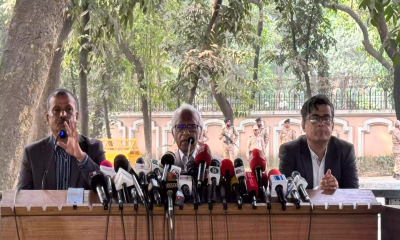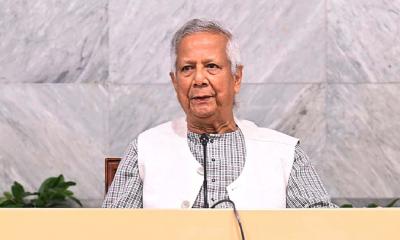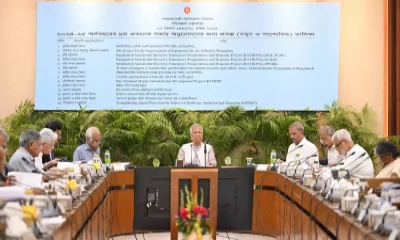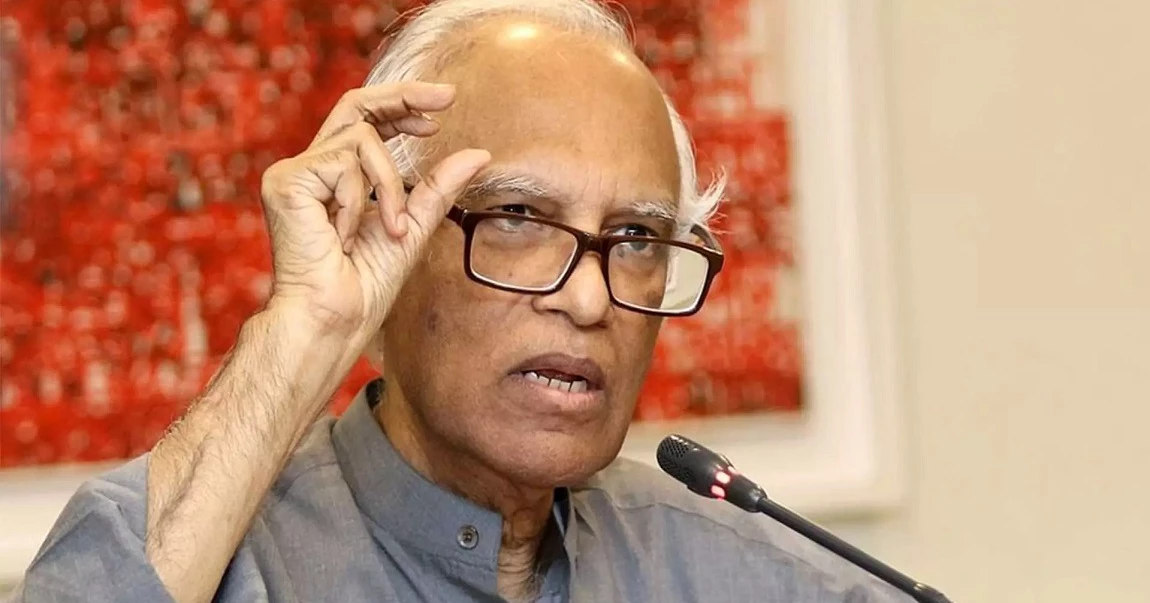
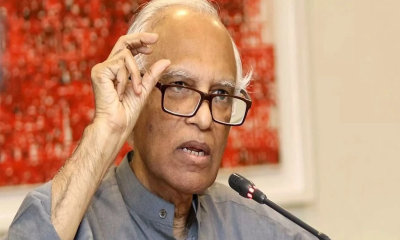
Planning Adviser Dr Wahiduddin Mahmud on Sunday (December 07, 2025) said democratic institutions alone cannot guarantee the quality of democracy unless political behaviour and political culture change.
“A parliament elected by people, a government accountable to that parliament, and independent watchdog institutions are all prerequisites.But the real test will always lie in political behaviour something that cannot change overnight,” he said an event at Bangladesh Institute of Development Studies (BIDS) in the capital.
Dr Wahiduddin said Bangladesh must prioritise an effective democratic transition, stronger accountability systems and a long-term roadmap for building a fair, discrimination-free society.
“The expectations today are modest — we are trying to secure the basic foundations of a representative democratic system. It is unfortunate, yet we must move forward with the hope that a stable and lasting framework for governance will emerge in new Bangladesh,” he said.
Dr Wahiduddin said nearly five and a half decades after independence the nation is still striving to establish a ‘functional democratic arrangement, which should have been achieved long ago.
The Adviser highlighted the link between political patronage, youth unemployment and the spread of cadre-based politics, saying these interconnected problems cannot be solved by blaming politics alone.
“Poor-quality education, high dropout rates and youth joblessness are closely tied to why many young people choose political patronage as a livelihood,” he said.
On the economic front, he said democratic governance does not automatically ensure development unless accompanied by deep administrative reforms and an end to the informal networks of collusion between business and bureaucracy.
“Reforms through new rules and regulations may help but their success depends entirely on the behavioural environment — the incentives created, the culture of trust, and the social norms within which markets operate,” he said.
He pointed to global experiences to argue that market liberalisation has produced widely different outcomes in different countries.
“In some East Asian economies, discipline, trust and strong internal accountability systems delivered sustained growth,” he said citing China and Vietnam’s reform experiences.
“Administrative accountability must be matched with a sense of responsibility.”
Turning to Bangladesh’s statistical system, he said greater transparency in data production is essential for evidence-based policymaking.
Digitalisation of BBS datasets would allow researchers and journalists to independently examine national statistics, ultimately improving their quality.
“But even then, political will remains crucial. If there is political demand for illicit gains, no regulation alone can prevent it,” he said.
Addressing the broader goal of creating a discrimination-free society, the Adviser said the debate naturally falls outside political consensus-building initiatives like the July Charter or the Consensus Commission.
“Questions of redistribution, social protection, market-state relations and reducing inequality are inherently ideological,” he said. “Parties must articulate these issues clearly in their manifestos.”
No country can prosper if it fails to ensure the minimum livelihood needs of all citizens and achieving this requires both an appropriate economic structure and genuine political commitment, said the adviser.
He said that three issues are very relevant at the present stage of the country after the July Revolution and these are transition to an effective representative democratic system, that democratic system will ensure economic development and third the quality of that development.







-20251207131533.jpg)

-20251206083331.jpeg)



-(25)-20251122062715-20251202031751.jpeg)
-(25)-20251122062715-20251204041734.jpeg)