

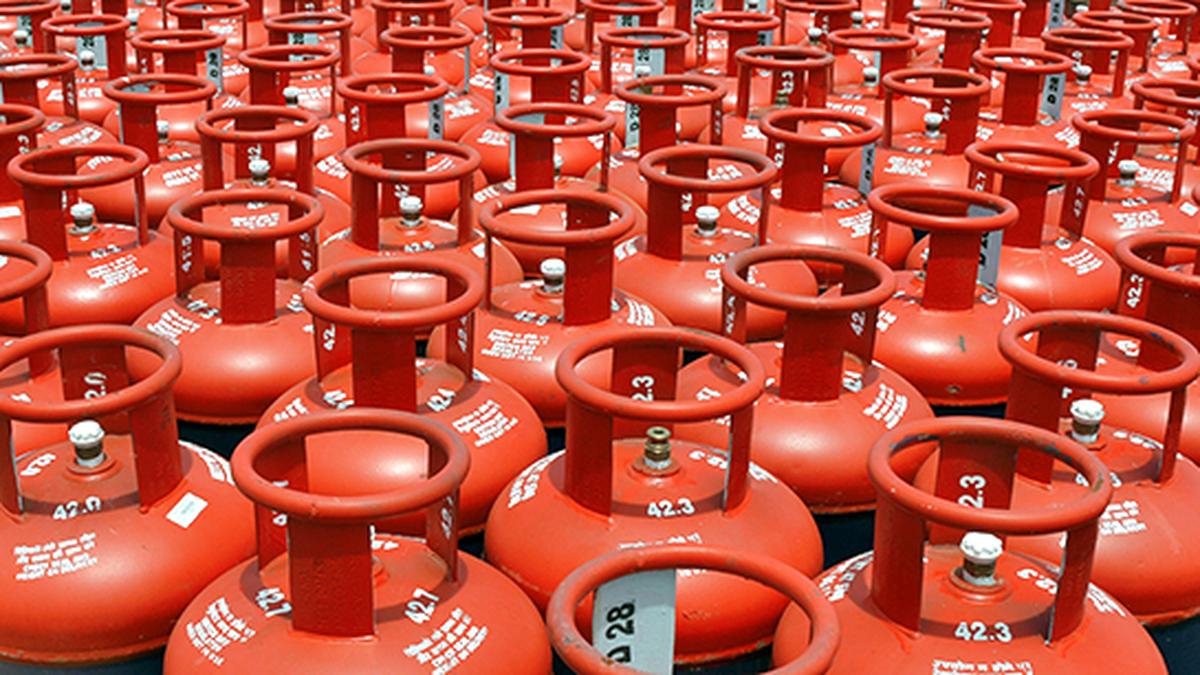
The National Board of Revenue (NBR) has taken steps to simplify the taxation framework for Liquefied Petroleum Gas (LPG) by proposing a 10% Value Added Tax (VAT) at the import stage, while withdrawing VAT currently imposed at multiple local production and trading stages in a bid to reduce tax evasion.
Sources at the Internal Resources Division said a proposal outlining the new VAT mechanism will be placed before the Advisory Council meeting today for approval. Once approved, a gazette notification will be issued. Under the proposal, the existing 7.5% VAT on local LPG production, VAT at the trading stage, and Advance Tax (AT) will be withdrawn.
NBR officials said the key objective of the move is to enhance transparency and curb revenue leakage by replacing the current multi-stage VAT collection system with a single-point collection at the import stage. At present, LPG imports are VAT-exempt, though importers pay a refundable advance tax.
Two officials from the NBR’s VAT department, speaking to The Business Standard on condition of anonymity, said the total VAT currently collected across local value-addition stages is roughly equivalent to the proposed 10% VAT at import.
"The new VAT structure should not add any extra cost to consumers," an official said, adding, "However, due to a reduction in the current non-compliance gap, the government`s revenue collection is likely to increase."
Currently, the NBR collects around Tk700 crore annually from the LPG sector.
Explaining the rationale behind the move, the official said,
"The current multi-layered VAT and refund system involving a handful of companies has compliance issues. Specifically, it is difficult to accurately determine the value addition at the local stage. The government has taken this initiative to simplify the VAT collection process in this sector."
Market impact and supply
NBR officials maintained that the revised VAT rate and collection method will not raise LPG prices for consumers, as the overall tax burden remains unchanged. They noted that simplified compliance could lower costs for importers, potentially enabling them to reduce prices for consumers.
Bangladesh’s monthly LPG demand stands at around 100,000 to 150,000 tonnes, driven by declining domestic gas production and the suspension of new household pipeline gas connections. Industrial usage has also increased due to irregular gas supply. Around 98% of total LPG demand is met through imports, mainly from Qatar, Kuwait and Iran.
Households account for nearly 81% of LPG consumption, primarily for cooking, while the rest is used by industrial, commercial and transport sectors, including auto gas.
The Bangladesh Energy Regulatory Commission (Berc) fixes LPG cylinder prices on a monthly basis in line with international market trends and demand. The current price of a 12kg LPG cylinder is Tk1,253.
VAT officials said the new system would reduce overall costs for importers, which could allow some benefits to be passed on to consumers through lower prices. Industry stakeholders have welcomed the initiative.
The LPG Operators Association of Bangladesh expressed support for the move. Its president, Mohammad Amirul Haque, told TBS,
"Collecting VAT at the import stage removes the hassles of local collection, making it easier for the government and reducing accounting complexities for businesses."
He added,
"It will also curb uneven trade, as inconsistencies in the local VAT accounts of a few non-compliant companies often lead to accusations of evasion across the entire sector."
Source: TBS

















-20260824112248.jpg)




-20260828064640.webp)