
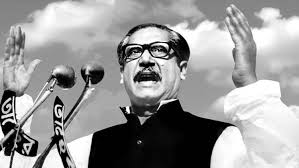
Sheikh Mujibur Rahman’s historic address at the Racecourse Maidan now Suhrawardy Udyan became the defining moment that united the Bengali people and set the stage for Bangladesh’s independence movement.
As Bangabandhu stepped onto the stage before a sea of people in Dhaka, the entire nation waited to hear his message. At the same time, Pakistan’s ruling authorities in Rawalpindi, military commanders in Dhaka Cantonment and observers in world capitals were closely watching his next move.
Although he had discussed the political situation with party colleagues beforehand, historians agree that the speech itself was entirely his own.
A message that mobilised a nation
Over the years, debates have emerged about whether the speech amounted to a formal declaration of independence or a strategic step toward it. Some commentators have pointed to the closing slogan mentioning Pakistan as evidence that Sheikh Mujib left room for negotiation.
Among ordinary Bengalis, however, there was little ambiguity. The speech inspired people across towns and villages to prepare for a struggle and to dream of freedom.
When the Pakistan army launched its brutal crackdown later that month, people across the country rose in resistance with whatever means they had, entering an unequal war even without Sheikh Mujib physically leading them.
Global attention
The address also drew intense international interest. Henry Kissinger, national security adviser to US President Richard Nixon, closely monitored the speech.
After listening to it, Kissinger reportedly wrote to Nixon that Sheikh Mujib’s call for a peaceful non-cooperation movement made it difficult for Pakistan’s President Yahya Khan to justify an immediate military crackdown.
Despite this, the crackdown eventually came, carrying heavy moral consequences that history continues to judge.
Impact recognised by scholars
International scholars also examined the movement closely. Australian political scientist Herbert Feith of Monash University followed developments and helped mobilise support for Bangladesh during the humanitarian crisis.
In a lecture at Flinders University on September 10, 1971, Feith described the Bangladesh movement as fundamentally democratic, reflecting the will of the country’s majority population.
He observed that the success of Sheikh Mujib’s non-cooperation movement had effectively made him the ruler of East Bengal.
Reflecting on the significance of the speech, Feith famously remarked that it was the moment “when Bangladesh was born as a state in the world of the mind.”
Dream and political strategy
The March 7 speech carried both the vision of liberation and careful political strategy. Sheikh Mujib’s demands including the transfer of power to elected representatives and the withdrawal of troops to barracks kept open a constitutional path toward resolving the crisis peacefully.
By doing so, he sought to give democratic legitimacy to the people’s power that had emerged through the mass movement.
More than five decades later, the speech continues to stand as a defining moment in Bangladesh’s history, symbolising the nation’s enduring dream of freedom.