
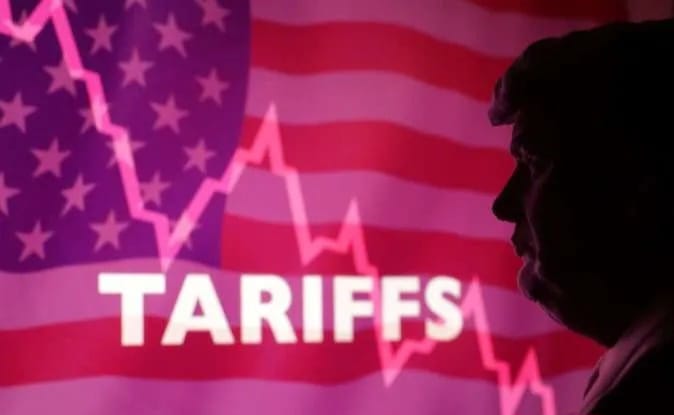
The United States Supreme Court has struck down a major part of the tariffs imposed by former president Donald Trump, a decision that has drawn approval from economists and analysts around the world while raising fresh questions about the future of US trade policy.
In a 6-3 verdict, the court ruled that the White House exceeded its authority under the International Emergency Economic Powers Act.
The judges said the law does not give the president the power to impose wide-ranging tariffs without clear consent from Congress, reaffirming that taxation authority rests with lawmakers.
Political analyst Sandile Swana of South Africa said the ruling reinforces constitutional limits on executive power. He added that the tariffs had largely hurt American businesses and consumers rather than protecting domestic industries.
Croatian economist Ljubo Jurcic described the judgment as a major setback for what he called a flawed economic strategy.
He said the tariffs damaged the US economy and warned that affected companies may now seek refunds running into billions of dollars. According to him, unilateral trade actions raised costs at home without delivering lasting gains.
Financial markets in Europe responded positively. France’s business daily Les Echos reported a broad rally, noting that the CAC 40 index briefly crossed the 8,500-point mark for the first time. Greek financial outlet OT also pointed to gains, driven by hopes that global trade tensions may ease.
Portuguese analyst Rui Cardoso called the ruling a serious political defeat for Trump.
He said countries that accepted what he termed unfair trade arrangements with Washington may now look to renegotiate. He also criticised the European Union for being too accommodating in recent trade talks.
In Africa, economists said the impact would vary but could offer some relief to exporters. Andre Thomashausen, professor emeritus at the University of South Africa, said the decision may allow companies to seek refunds and help restore fair competition.
South African economist Chris Harmse added that sectors such as automobiles and agriculture could benefit if tariff barriers are reduced.
Rwandan economist Teddy Kaberuka said the tariffs had added to global uncertainty by fuelling trade disputes and straining relations between major economies. He warned that prolonged uncertainty could slow growth, especially in Africa, where many economies remain fragile.
However, analysts cautioned that risks remain. Edward Fishman, a former US State Department and Treasury official, said the ruling limits the use of tariffs as a quick policy tool but does not rule out their use through other legal channels during trade negotiations.
While the court’s decision curbs the latest tariff push, experts say uncertainty over the long-term direction of US trade policy is likely to continue, keeping global markets and trading partners watchful.



-20260826082211.png)

-20260825070038.webp)









-20260826073100.jpg)




-20260824112248.jpg)


-20260823124453.webp)