-20251213120612.webp)
Bangladesh loses around USD 5 billion every year as patients seek medical treatment abroad, mainly due to a lack of trust in the domestic healthcare system, inaccurate diagnoses and weak service management.
The Dhaka Chamber of Commerce and Industry (DCCI) revealed the information at a seminar in the capital on Saturday.
The issue was highlighted in the keynote paper presented at the seminar titled `Building Trust in Bangladesh’s Healthcare Sector: Ensuring a Strategic Framework for Quality Control`, held at the DCCI building in Motijheel.
United Hospital Managing Director Malik Talha Ismail Bari, who presented the keynote, said Bangladeshis spend nearly USD 5 billion annually on overseas treatment, with India being the top destination.
He said around 52 percent of Indian medical visas are issued to Bangladeshi patients. In 2024 alone, about 482,000 Bangladeshi patients received medical treatment in India. Thailand, Singapore and Malaysia follow India as preferred destinations.
The keynote paper pointed out that a lack of trust among patients and their families, doubts over proper diagnosis, sudden increases in hospital bills, fear of hidden charges, concerns over counterfeit medicines and substandard equipment push many to believe that seeking treatment abroad is a safer choice.
Several major challenges stand in the way of improved healthcare services in Bangladesh, the paper said. Government health expenditure remains below 1 percent of GDP, while patients bear about 73 percent of total healthcare costs out of pocket.
Only 2.5 percent of the population is covered by health insurance, and nearly 80 percent of hospitals lack advanced diagnostic equipment.
Although the private sector provides around 60 percent of healthcare services, high costs and inconsistent quality remain major concerns, it added.
The paper also cited poor service quality, skill gaps among healthcare workers, a shortage of specialist doctors and limited availability of advanced treatment as key reasons forcing patients to seek care abroad.
Other issues include the absence of pre-fixed treatment costs, inadequate post-treatment care for complex diseases, lack of a unified health information system, weaknesses in monitoring and procurement processes, and overall low confidence in the healthcare system among patients and their families.
Bangladesh’s public healthcare spending is the lowest in South Asia, with per capita expenditure standing at only Tk 1,070. Nearly 49 percent of the population still lacks access to quality healthcare, while government healthcare initiatives remain insufficient to meet public needs, the paper noted.
The keynote also projected that Bangladesh’s healthcare market would reach USD 14 billion in 2025 and expand to around USD 23 billion by 2030–2033, nearly doubling in size.
At the same time, the medical devices market is growing rapidly and is expected to exceed USD 820 million in 2025, up from USD 442 million in 2020, driven largely by rising import demand.
DCCI said the strong growth of the healthcare sector could create new opportunities for both the economy and health services, recommending increased public and private investment in the sector.
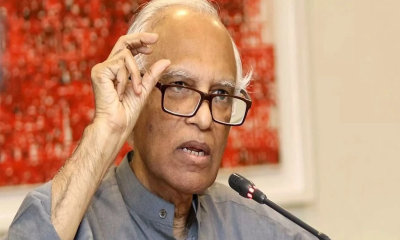
The seminar was chaired by DCCI President Taskeen Ahmed, while Bangladesh Diabetic Association President National Professor AK Azad Khan attended as the chief guest.



-20251213120612.webp)



-20251212132043.webp)








-20251207131533.jpg)