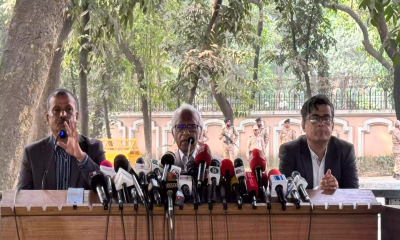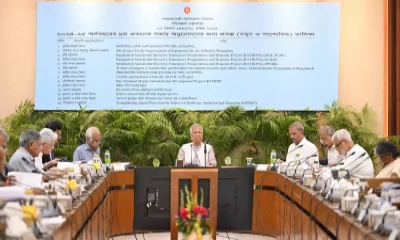
A recent survey conducted by Shushashoner Jonno Nagorik (Shujan) reveals that 90 percent of Bangladeshis support changing the fundamental principles of state governance.
The survey, conducted between May and July across all districts with 1,373 respondents—including women, men, and members of the third gender—also found that 83 percent favor establishing a caretaker government system during elections.
Additionally, 89 percent agreed that an individual should serve as prime minister for no more than two terms.
Regarding parliamentary representation, 71 percent supported allocating seats in the upper house through proportional representation.
Currently, Bangladesh’s constitution upholds nationalism, socialism, democracy, and secularism as its guiding principles.
However, the National Consensus Commission has proposed replacing these with five new principles—equality, human dignity, social justice, democracy, and religious freedom and harmony.
While some left-wing parties oppose removing the existing principles, suggesting they be retained alongside the new ones, opposition parties like BNP and Jamaat-e-Islami initially insisted on keeping the phrase “steadfast faith in Allah” but have since accepted the commission’s recommendations. The National Citizens Party expressed full agreement with the proposals.
The survey further showed that 79 percent of respondents want investigations into alleged election irregularities and fraud in recent parliamentary polls.
Other findings include strong public support for a bicameral legislature, reserved seats for women, and appointing deputy speakers from the opposition parties.
A significant majority also favor legal provisions to prevent one person from holding multiple top political roles simultaneously and to limit the prime minister’s term to two tenures.
Many support strengthening the president’s powers and amending constitutional articles related to parliamentary discipline.
Furthermore, 88 percent consider access to the internet a basic right, alongside food, education, healthcare, and housing. There is broad backing for creating a National Constitutional Council and recognizing anti-corruption, human rights, information, and local government commissions as constitutional institutions.
Most respondents support election commission oversight of executive actions during elections, establishing independent boundary commissions after each census, and disqualifying corrupt or criminal individuals from political participation. Postal and online voting for expatriates also received strong approval.
Sujon’s secretary, Badiul Alam Majumder, emphasized that the survey aims to build public consensus for reform proposals submitted to the consensus commission.
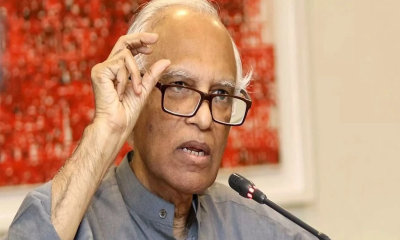
He described the current government as nonpartisan and neutral. Dhaka University professor Robayet Ferdous highlighted the importance of political reform, noting that good governance does not automatically follow elections and pointing to exposed corruption during past governments.
He added that implementing the proposed national charter would help Bangladesh advance toward a democratic, humane, and prosperous future.











-20251207131533.jpg)



-(25)-20251122062715-20251202031751.jpeg)
-(25)-20251122062715-20251204041734.jpeg)