Major retailers and tech giants are rolling out new or upgraded artificial intelligence tools for the holiday shopping rush, aiming to make gift buying easier for customers and capture a bigger portion of online sales.
AI-powered shopping is still in its early phase, but the tools launched by Walmart, Amazon and Google go far beyond the basic chatbots seen in previous years. These new assistants offer personalized recommendations, track prices and even place orders through open-ended conversations with shoppers.
These features complement updates from platforms like ChatGPT and Google Gemini. One of the season’s most notable releases came from Google, which introduced an AI agent capable of calling local stores to check whether an item is in stock.
Salesforce estimates that AI will shape about $73 billion, or 22%, of global sales between the Tuesday before Thanksgiving and the Monday after, said Caila Schwartz, the company’s director of consumer insights. That’s up from $60 billion last year and includes everything from AI-generated gift suggestions to product research done with ChatGPT.
Even with these advances, AI’s overall influence on holiday shopping remains “fairly limited,” said Brad Jashinsky, senior retail analyst at Gartner. Many retailers still lack strong tools, and some shoppers are hesitant to use them. “The more retailers launch these tools, the better they get, and the more consumers get comfortable,” he said. “But it takes time for behavior to change.”
Here are three ways AI is set to shape holiday shopping in 2025:
1. Moving beyond the search bar
AI is helping shoppers find items faster with fewer clicks.
ChatGPT now generates personalized buying guides using product pages, reviews, prices and a user`s past activity. The feature works well for complex items such as electronics or detailed categories like beauty and sports gear.
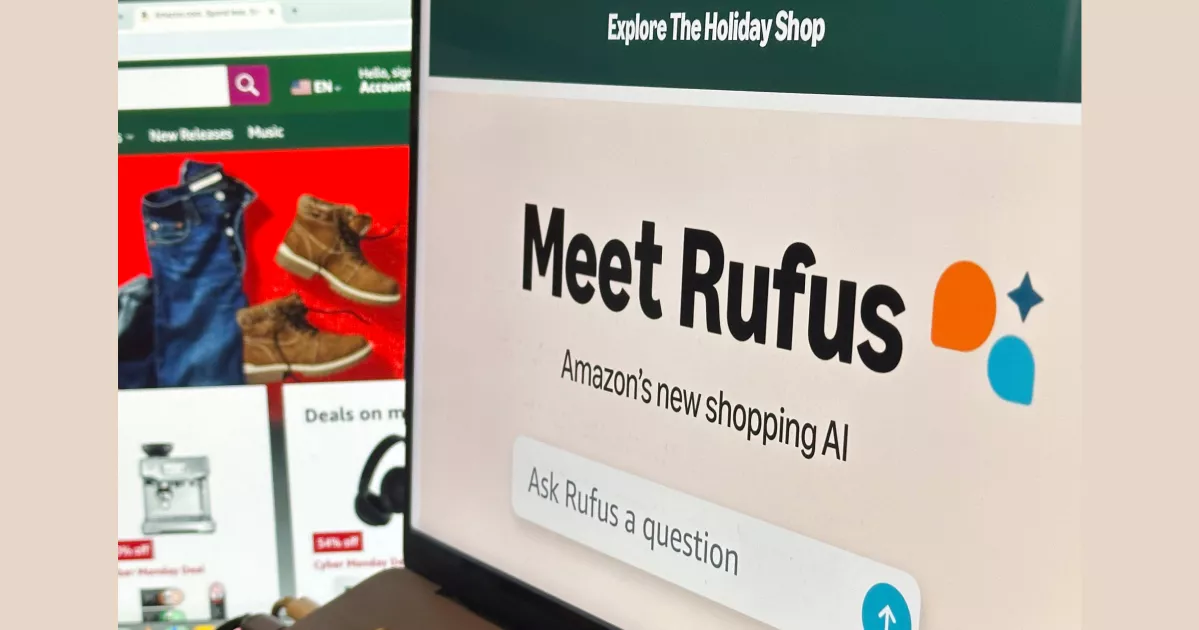
Amazon’s AI assistant, Rufus, remembers personal details shared earlier — such as a customer saying they have four children who enjoy board games — and uses browsing history and reviews to tailor suggestions.
Google’s AI Mode search tool now understands detailed natural-language questions. For example, shoppers can describe the type of sweater they want, when and where they plan to wear it, and receive refined suggestions from Google’s 50 billion product listings. The tool also generates comparison charts for prices, features and reviews, reducing the need for manual filtering.
Walmart’s AI assistant Sparky offers recommendations by occasion and summarizes user reviews. Target has added an AI gift finder in its app that uses prompts like the recipient’s age or hobbies.
2. Improved price tracking tools
Price tracking features are expanding beyond long-standing services like CamelCamelCamel and Honey.
Amazon has introduced a 90-day price history tracker and budget-based price alerts. Google upgraded its basic tracker to allow filters such as size and color, while Microsoft’s Copilot has released its own tracker.
Jason Goldberg, chief commerce strategy officer at Publicis Groupe, expects the new tools to push retailers to stay competitive. “Many shoppers who never used price alerts before will start to discover them,” he said.
3. New ways to complete purchases
Tech companies are racing to enable seamless AI-driven checkout without requiring shoppers to visit retailer websites.
OpenAI now offers instant checkout for items recommended by ChatGPT. Shoppers can buy products from Etsy sellers and select Shopify brands including Glossier, Skims and Spanx.
A partnership between OpenAI and Walmart will let ChatGPT users shop nearly Walmart’s entire online catalog through instant checkout, except for fresh food. The system currently supports only single-item purchases.
Target’s integration with ChatGPT allows shoppers to fill a cart with multiple items — even fresh food — but payment must be completed through the Target app.
Companies are also experimenting with autonomous AI agents that can make purchases independently. Amazon is testing an “auto buy” feature through Rufus, where the assistant completes a purchase once a tracked item reaches a shopper’s preferred price. Customers are notified afterward and can cancel within a limited time.
Google’s price tracker includes a “buy for me” function that automatically pays through Google Pay when the price matches the shopper’s conditions, currently available for select merchants like Wayfair, Chewy and Quince.
Google has also expanded its automated calling tool, allowing AI to phone local stores on behalf of users to check for inventory. The system discloses it is an AI caller, and stores can opt out. The feature currently focuses on toys, beauty products and electronics.
Walmart and Target have not said whether they plan to adopt similar tools.

-20260403095538.webp)
-20260329132714.webp)
-20260324062944.jpeg)
-20260323073534.jpeg)
-20260322083205.webp)












-20260403095942.webp)







-20260401064827.jpg)





-20260329045934.webp)