
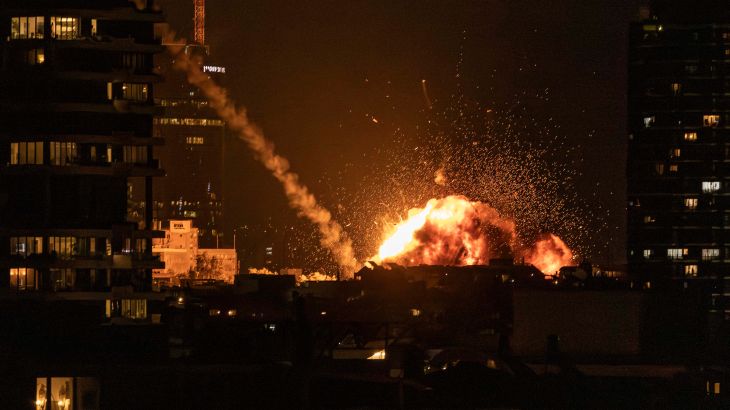
Iran’s government issued a stern warning early Sunday, saying a “great crime will never go unanswered” after state media reported that Supreme Leader Ayatollah Ali Khamenei was killed in what Tehran described as a joint US-Israeli airstrike.
Iranian state television broke regular programming to announce that Khamenei, 86, died after his compound in central Tehran was hit overnight.
The broadcaster described his death as “martyrdom” and accused the United States and Israel of carrying out a deliberate attack. Semi-official media also reported that several members of his family were killed in the strikes, though details were not independently confirmed.
Following the announcement, the government declared 40 days of national mourning and a seven-day nationwide public holiday. State media said satellite images showed extensive damage to the compound, adding that Khamenei was inside the premises when the attack began.
The death was later formally confirmed by state-run IRNA and Iranian television, without further details.
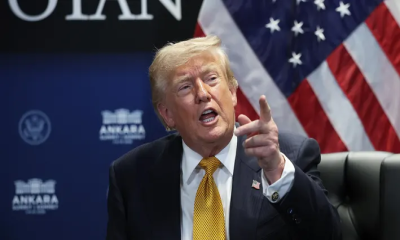
Earlier, US President Donald Trump had publicly claimed that Khamenei was killed in a coordinated American-Israeli operation.
International reactions were swift.
Australia’s Prime Minister Anthony Albanese said his country supported US actions aimed at preventing Iran from threatening global peace, while the Arab League warned the strikes had pushed the region toward a full-scale war.
Addressing an emergency UN Security Council meeting, the Arab League’s envoy accused Israel of using the Iran conflict to expand its regional dominance.
The International Atomic Energy Agency said its board will hold an emergency meeting in Vienna to discuss the military strikes, following a request from Russia.
With conflicting narratives and rapidly escalating tensions, the situation has plunged the region into deeper uncertainty, raising fears of wider confrontation.

-20260904064352.webp)







-20260828120358.webp)