
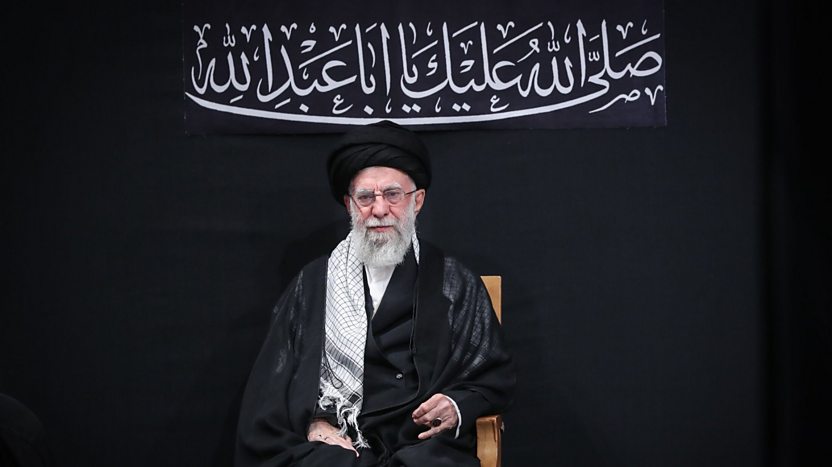
Iran has moved to activate its constitutional succession mechanism following the reported death of Supreme Leader Ayatollah Ali Khamenei, who ruled the Islamic Republic for nearly 37 years. The development has raised urgent questions about the country’s political future and the balance of power within its clerical system.
Interim leadership council steps in
Under Iran’s constitution, a temporary leadership council has assumed the duties of the supreme leader. The council comprises the sitting president, the head of the judiciary and a member of the Guardian Council selected by the Expediency Council.
The current members are reformist President Masoud Pezeshkian and judiciary chief Gholamhossein Mohseni Ejei. The council will govern on an interim basis until a new supreme leader is chosen.
Assembly of Experts to choose new leader
Iranian law requires the Assembly of Experts, an 88-member body of Shiite clerics, to select a new supreme leader “as soon as possible.” Members of the assembly are elected every eight years, though candidates must be vetted by the Guardian Council, a process that often excludes moderates and reformists.
Deliberations over succession traditionally take place behind closed doors, making it difficult to assess who may emerge as the next leader.
Uncertain succession landscape
Before his death, speculation had centred on hardline former president Ebrahim Raisi as a potential successor, but he was killed in a helicopter crash in May 2024. That has brought renewed attention to Mojtaba Khamenei, one of the late leader’s sons, though the prospect of a familial succession could trigger criticism both inside and outside Iran’s clerical establishment.
A pivotal transition
There has been only one previous transfer of power in the post of supreme leader, following the death of Ayatollah Ruhollah Khomeini in 1989. The current transition comes at a particularly volatile moment, after recent regional conflict and heightened tensions with Israel and the United States.
The supreme leader holds ultimate authority in Iran’s political system, serving as commander-in-chief of the armed forces and overseeing key institutions, including the Islamic Revolutionary Guard Corps. Analysts say the coming weeks will be crucial in determining whether Iran’s power structure remains intact or enters a period of deeper uncertainty.

-20260904064352.webp)




-20260828120358.webp)