
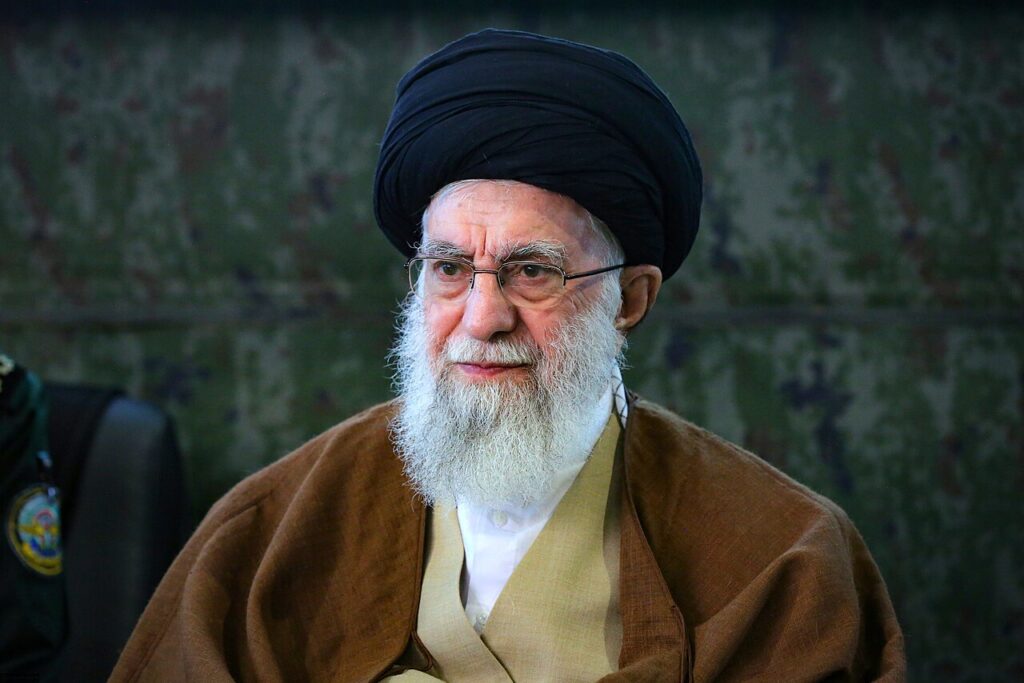
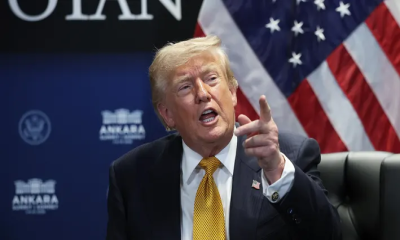
US President Donald Trump has claimed that Iran’s Supreme Leader Ayatollah Ali Khamenei was killed during coordinated US and Israeli strikes, a statement that has sharply intensified uncertainty and tension across the Middle East.
In a post on his Truth Social platform early Saturday, Trump said the 86 year-old leader died in joint attacks launched overnight.
He asserted that US intelligence, working closely with Israel, had tracked Iran’s top leadership and described the operation as a turning point for the Iranian people.
Trump urged Iranians to seize what he called a historic opportunity to reclaim their country, while calling on Iran’s security forces to side with the public.
Israeli Prime Minister Benjamin Netanyahu echoed the claim, saying there were “growing signs” that Khamenei had been killed.
A senior Israeli official was quoted by international media as saying the body had been located.
Iran, however, strongly denied the reports. State linked news agencies Tasnim and Mehr said Khamenei remained active and in command.
An official from the supreme leader’s office accused Iran’s enemies of spreading disinformation and waging “mental warfare.”
Iran’s Foreign Minister Abbas Araghchi also said there was no evidence that the country’s top leadership had been harmed.
International observers said no independent confirmation has emerged.
The United Nations Secretary-General Antonio Guterres told an emergency Security Council session that he could not verify the claims surrounding Khamenei’s fate.
Meanwhile, fighting has continued to intensify. Iranian media, citing the Red Crescent Society, reported that at least 201 people were killed and hundreds injured in strikes across 24 provinces.
Several civilian locations, including schools, were reportedly hit.
Israel said the attacks targeted senior military commanders and figures linked to Iran’s nuclear programme and vowed to continue operations.
Iran responded with multiple waves of missile and drone strikes, triggering air-defence systems in several countries hosting US military assets, including Qatar, Kuwait, Bahrain and the United Arab Emirates.
At the UN, Iran accused Washington and Tel Aviv of launching an unprovoked act of aggression, while the United States defended the operation as necessary to prevent Iran from acquiring nuclear weapons.
China and Russia warned that the situation risked spiralling out of control and called for an immediate halt to hostilities.
With conflicting claims and no verified confirmation of Iran’s supreme leader’s death, the region remains on edge as diplomatic efforts struggle to keep pace with the rapidly escalating conflict.

-20260904064352.webp)









-20260828120358.webp)