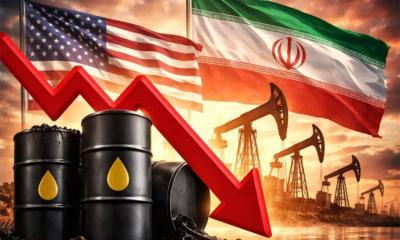


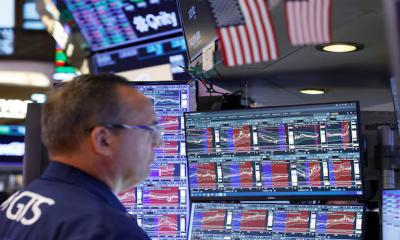
Asian stock markets fell on Monday as Federal Reserve rate hike expectations strengthened, while renewed US-Iran tensions sent oil prices sharply higher and added to concerns over persistent inflation.
Investors increased bets on higher US borrowing costs after Fed chief Kevin Warsh signalled that stubborn inflation could require further action, although he stopped short of committing to a rate hike.
At the Jackson Hole symposium in Wyoming, Warsh said inflation at 3.7 percent—nearly twice the Fed’s 2 percent target remained concerning. He also suggested that current financial conditions may not be restrictive enough to bring inflation down.
His remarks pushed up US Treasury yields and the dollar on Friday, while all three major Wall Street indexes ended lower.
Gold prices also declined as expectations of higher interest rates grew.
Asian markets followed the Wall Street sell-off, with technology stocks among the biggest losers as investors weighed the impact of potentially higher borrowing costs on companies investing heavily in artificial intelligence.
Tokyo’s Nikkei 225 fell 1.6 percent in early trading, while Hong Kong’s Hang Seng dropped 0.8 percent and Shanghai’s Composite declined 0.4 percent. Seoul, Taipei and Jakarta also moved lower, while Singapore and Wellington edged higher.
Markets are now awaiting key US economic data that could influence the Fed’s next rate decision. Employment figures are due this week, followed by the consumer price index (CPI) next week.
Oil prices meanwhile surged more than 2 percent after fresh military exchanges between the United States and Iran revived concerns over the future of the Strait of Hormuz, a crucial route for global energy supplies.
US officials said they had attacked Iranian rocket launchers on a small island in the strait, prompting Iran to retaliate against US military targets in Jordan.
West Texas Intermediate crude rose 2.3 percent to $85.33 a barrel, while Brent crude gained 2.6 percent to $90.39.
The renewed tensions came after the six-month-old US-Iran conflict had appeared to ease, raising fears that disruptions to shipping through the Strait of Hormuz could worsen again.
About one-fifth of the world’s crude oil and gas passes through the strategic waterway, and renewed disruption could add further pressure to global energy prices and complicate the Fed’s efforts to contain inflation.












-20260824112248.jpg)


-20260828064640.webp)