
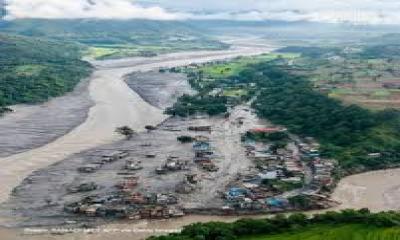
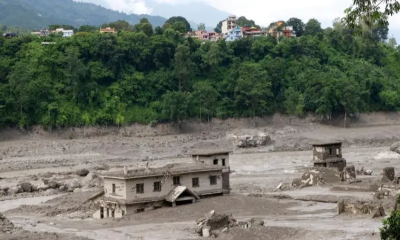
Nepal began burying victims of the deadly Himalayan floods on Monday as authorities struggled to identify hundreds of recovered bodies and search for more than 3,000 people still missing after a tsunami-like torrent of ice, rocks and debris swept through villages.
At least 797 people have died in Nepal and Tibet, while 3,048 remain unaccounted for, including tourists, pilgrims and 933 workers at hydropower projects in Nepal.
Some bodies are also believed to have been carried downstream into India.
The disaster struck Wednesday after a glacial collapse triggered a massive surge of water and debris through valleys along the border region. The US Geological Survey said the glacial collapse caused the catastrophic flow.
In Nepal, the death toll reached 781, with 2,502 people still missing, according to the country’s disaster authority. China has reported 16 deaths and 546 missing in Tibet.
The scale of the disaster has overwhelmed Nepal’s facilities.
With morgues lacking sufficient freezing capacity, authorities have begun burying some bodies before completing identification.
DNA samples are being collected so relatives can identify the victims later and carry out traditional funeral rites.
Families have gathered at hospitals and identification centres, scanning photographs of recovered bodies in desperate attempts to find missing relatives.
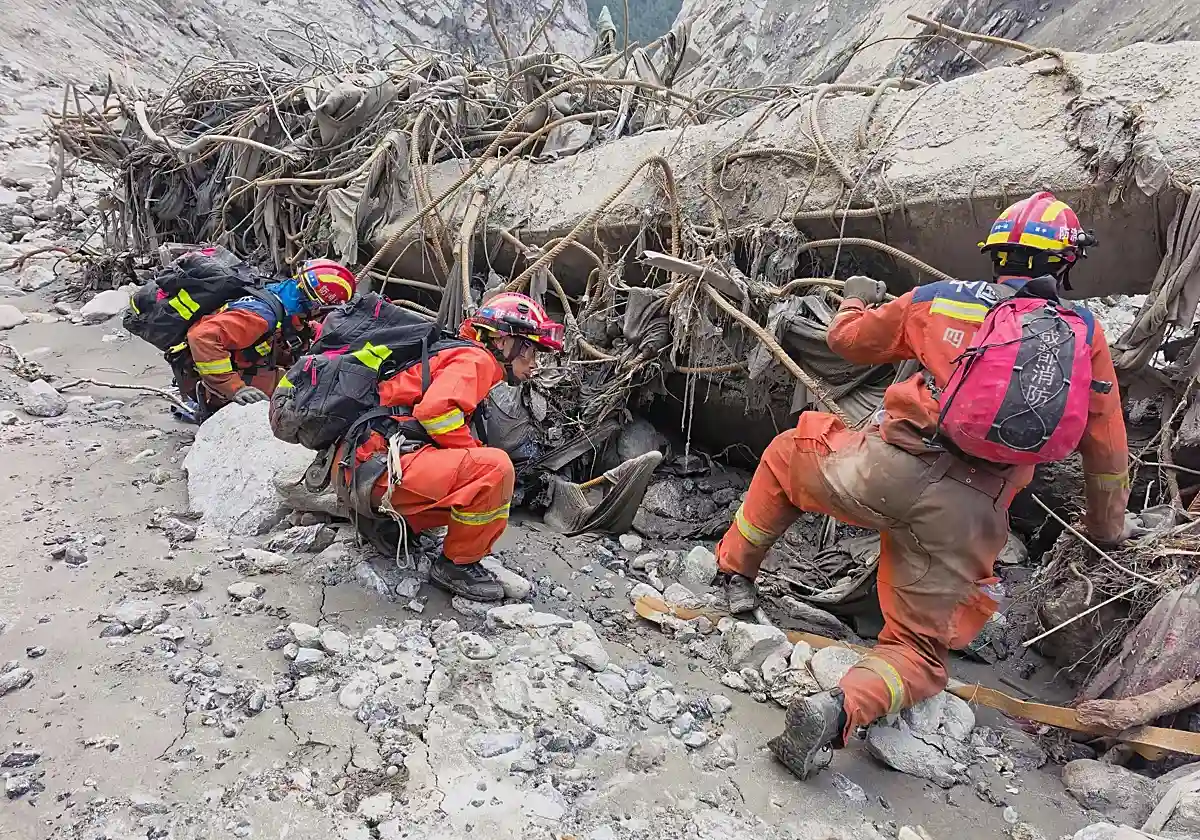
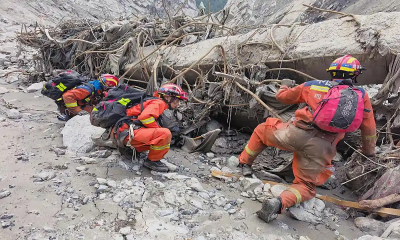
Rescue teams meanwhile continued searching for people trapped at hydropower sites.
Nepalese army troops and engineers drilled through debris at the Trishuli 3A hydroelectric project after managing to insert a pipe into a tunnel where workers are believed to be trapped.
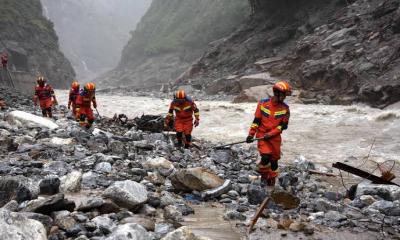
Rescue operations have been repeatedly disrupted by rain, rising river levels and newly formed lakes created by landslides.
In Tibet, Chinese rescuers were moved to safety after another lake formed near the disaster zone.
Survivors described the torrent as devastating entire settlements within minutes.
Many who escaped now face the prospect of rebuilding their lives after losing homes, possessions and family members.
International assistance has begun arriving, with the United States and Canada each pledging $3.6 million in humanitarian aid.
The UK has offered $6.8 million, while the UN has released $2.5 million in emergency funding.
Nepal’s Foreign Minister Shisir Khanal warned that reconstruction could cost billions of dollars and appealed for specialised equipment, including heavy-lift drones, forensic testing kits and freezer units for storing recovered bodies.
The disaster has also renewed concerns over the vulnerability of Himalayan communities to climate change.
Scientists have warned that rapidly melting glaciers are increasing the risk of catastrophic floods and landslides across the region, despite Nepal having among the world’s lowest per-capita carbon emissions.



-20260829064039.jpeg)










-20260824112248.jpg)



-20260828064640.webp)