

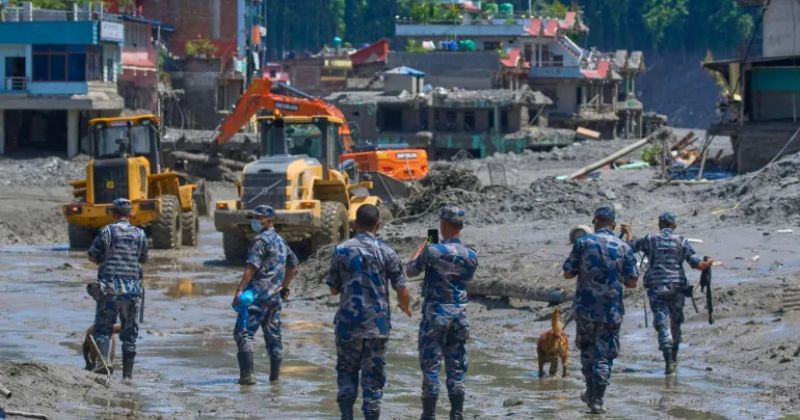
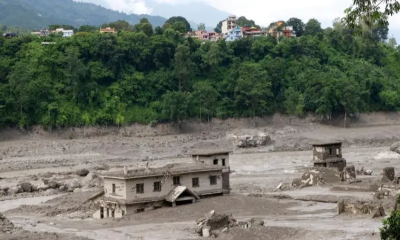
The number of people missing after devastating floods and landslides along the Nepal-China border has climbed to nearly 3,000, with rescuers racing against time to find survivors as the death toll reached 586.
The disaster has affected villages, hydropower projects and pilgrimage routes across the Himalayan region.
Nepal alone reported 626 deaths and 2,426 people still unaccounted for on Saturday, including hundreds of foreign nationals.
Across the border in Tibet, seven people have died and 554 remain missing, according to Chinese state news agency Xinhua.
Authorities have also evacuated 555 stranded tourists and 499 Chinese residents from affected areas.
The combined number of missing people from the two countries has risen sharply after Nepal added 933 hydropower workers to its list.
The earlier list included trekkers and pilgrims travelling towards Mount Kailash.
Rescue operations have been complicated by the threat of further flooding.
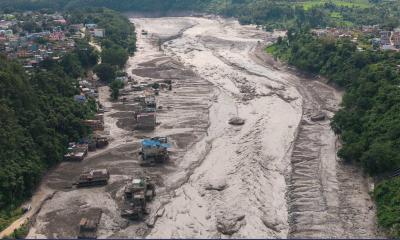
Massive amounts of ice, mud and debris created new lakes in the affected areas, raising fears that sudden releases of water could endanger rescue teams.
Nepali police warned rescuers to move to safer locations after receiving information that another water barrier had burst on the Tibetan side.
Chinese authorities temporarily suspended rescue operations in the worst-hit Gyirong area because of the renewed danger, although Xinhua later reported that two villagers had been rescued.
On the Nepali side, the military is working to rescue people trapped inside a tunnel at the Trishuli 3A hydropower project. Army spokesman Raja Ram Basnet said helicopters had been deployed, but locating the tunnel entrances had proved difficult.
About 350 workers and residents have already been evacuated from the site, while more than 100 people remain trapped in the area, according to the army.
Survivors have described the flood as arriving with terrifying speed. Hydropower worker Buddha Tamang said he escaped because he was inside a tunnel when the torrent struck, while senior officials working outside were swept away.
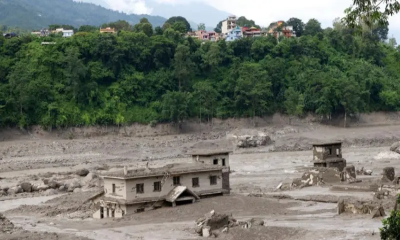
“All the settlements near the river were swept away. There is nothing left,” survivor Buddhi Ram Dangol told AFP.
The Red Cross estimates that as many as 93,000 people may have been affected by the catastrophe and warned that the psychological impact has been enormous.
Food and drinking water are also becoming scarce in some devastated areas.
The disaster has also hit travellers on pilgrimage routes to Mount Kailash. Sivaranjani Muthunathan, who was travelling with 56 others towards the Chinese border, said a sudden torrent engulfed the area after they initially believed they were stuck in a traffic jam.
Vehicles were swept away or buried in mud as the group scrambled up a hill to escape.
Meanwhile, authorities in India have recovered seven bodies from rivers flowing down from Nepal, believed to be victims of the floods, suggesting the disaster’s impact may have spread well beyond the immediate border region.

-20260829064039.jpeg)
-20260829062930.jpeg)
-20260828120358.webp)








-20260828064640.webp)
-20260824112248.jpg)


-20260823124453.webp)