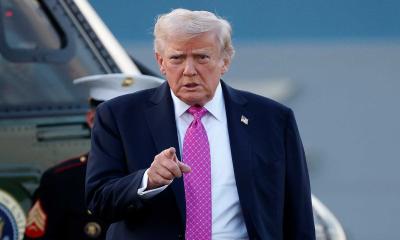

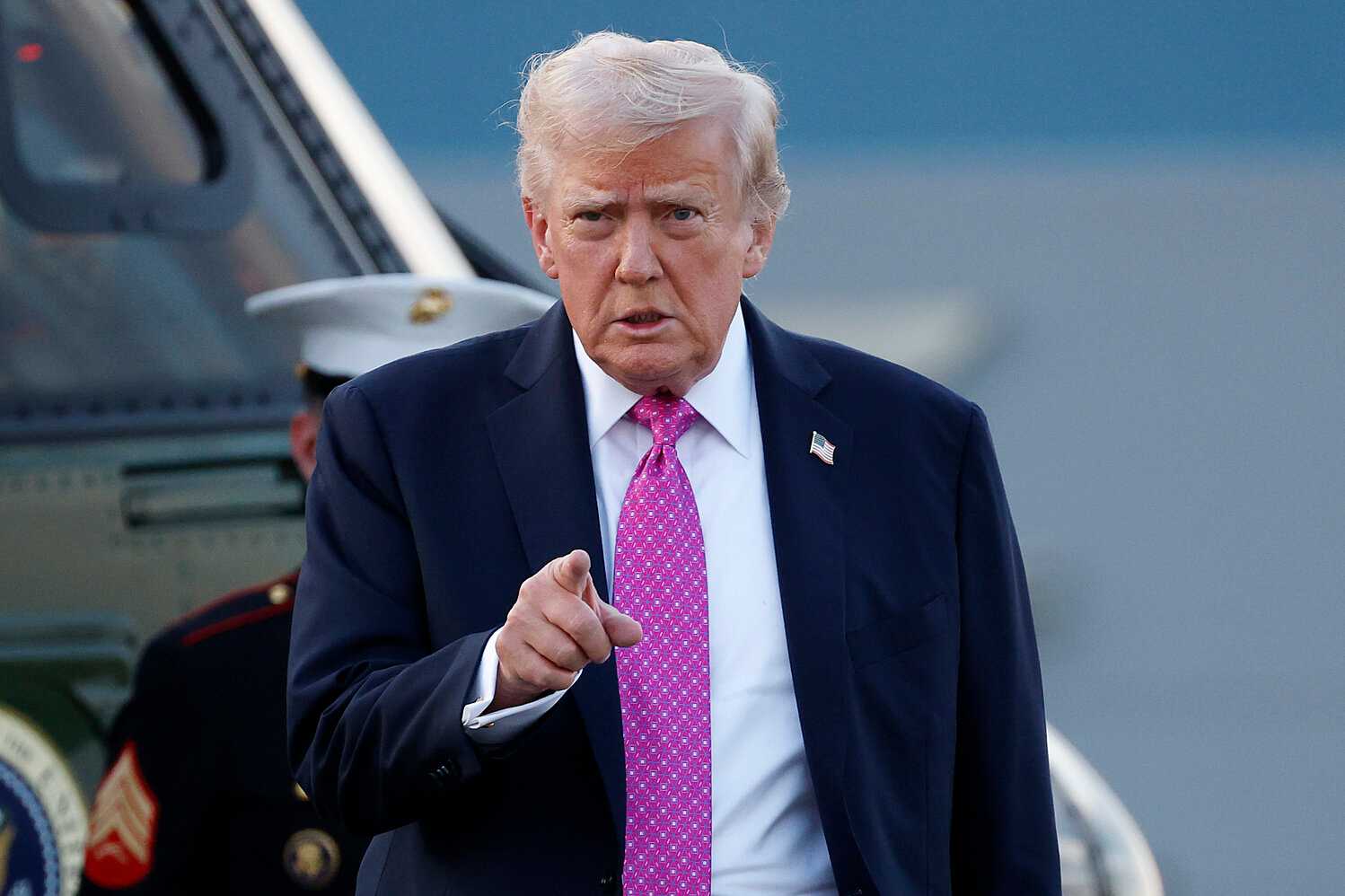
US President Donald Trump has threatened military action against Oman if it interferes with a US effort to reopen the Strait of Hormuz, as Washington and Tehran remain locked in a standoff over the crucial waterway.
Trump also called on Iran to surrender, reflecting the growing pressure on his administration to break the nearly six-month deadlock as the conflict pushes up fuel prices and creates political difficulties for Republicans ahead of the November midterm elections.
“If Oman gets in the way, we`ll bomb the shit out of them,” Trump told Fox News journalist Trey Yingst, referring to talks between Oman and Iran over future access through the strait.
Oman, a US ally in the Gulf, has not publicly responded to the threat.
Iran and Oman have been discussing navigation arrangements for weeks, and Iran’s foreign ministry said Monday that the two countries were working on a joint declaration. Iran controls the northern shore of the waterway, while Oman lies along its southern side.
The talks followed the collapse of a Pakistan-mediated interim agreement between Washington and Tehran that had sought to keep the strait open. Fighting over the waterway later resumed, drawing Gulf states and commercial shipping deeper into the conflict.
Trump also said Iran should “put up the white flag of surrender,” according to Yingst.
The Strait of Hormuz has become a major point of confrontation since the conflict began on February 28. Iran has effectively restricted traffic through the passage, which before the war carried about one-fifth of the world’s oil supplies along with other commodities.
Trump has repeatedly claimed the waterway is under US control. On Friday, he said he would declare the strait part of US territory, prompting Iran to respond that the key energy route “will remain Iranian.”
Tehran has used its control over the strait as leverage against US efforts to weaken its military and force it to abandon its disputed nuclear programme. Iran now wants greater control over access and the ability to charge transit fees, demands strongly opposed by Washington.
Trump said he was not in a hurry to reach an agreement with Tehran, despite growing public opposition to the war and the political threat posed by Democrats seeking to regain control of Congress in the November elections.
He also said his administration maintains a direct back channel with officials from Iran’s Revolutionary Guard.
“They`re good poker players, but they`re dying,” Trump said, according to Yingst.
Meanwhile, regional leaders are continuing to push for diplomacy. Turkish President Recep Tayyip Erdogan discussed the conflict with Trump by phone and stressed the need to make full use of diplomatic efforts to reduce tensions between Washington and Tehran, according to Turkey’s state news agency Anadolu.
The dispute over Hormuz has already had a major impact on global energy markets. The closure triggered a sharp rise in oil prices earlier in the conflict and raised concerns among major oil-importing countries about potential supply shortages.
The situation has also widened beyond the Gulf. Iran’s Houthi allies in Yemen have announced a parallel maritime blockade targeting Saudi ports in the Red Sea, the kingdom’s only alternative maritime route for oil exports.
With fuel prices rising for American consumers, the prolonged closure of the Strait of Hormuz is becoming an increasingly difficult issue for Trump as the US heads toward the November midterm elections.


-20260817061349.jpg)