
The elephant population in Sherpur’s Garo Hills is showing signs of recovery, with the number of animals estimated to have risen to 180-200, but shrinking forests and disappearing food and water sources are putting both elephants and local communities under growing pressure.
Forest officials estimate that at least 55 elephant calves have been born in the area over the past three years, suggesting that herds that once entered Bangladesh mainly from India on a seasonal basis are now breeding and living permanently in the Garo Hills.
The increase, however, is happening as forestland continues to disappear because of tree felling, encroachment and illegal extraction of sand and stone. Streams and waterfalls are also drying up, further reducing the elephants’ access to food and water.
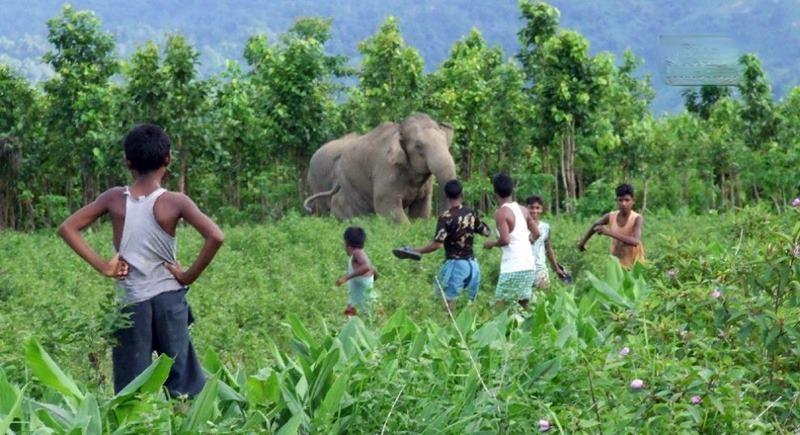
As a result, hungry and thirsty herds are increasingly moving into villages and farmland, damaging crops and homes and raising the risk of deadly encounters with people.
On World Elephant Day, observed on August 12, conservationists said protecting elephants now requires more than keeping them away from people.
They called for measures that would allow the animals and communities living around the forests to coexist.
Environmentalists and wildlife activists have urged the government to establish a dedicated elephant sanctuary in Sherpur’s hill areas.
They also warned against people entering elephant habitats to make videos, saying some content creators have been disturbing or provoking the animals while filming them.
Human-elephant conflict has already taken a heavy toll.
Forest Department data show that 47 people died in elephant-related incidents in Sreebardi, Jhenaigati and Nalitabari between 2010 and 2026.
During the same period, 35 elephants also died, most after being shot, attacked with sharp weapons or caught in electric traps. Elephant incursions have additionally caused damage worth several crore taka to homes, crops, trees and other property.
The latest reported human death occurred on January 7 this year, when a man collecting firewood in the Newatila area of Balijuri Hills in Sreebardi was killed in an elephant attack.
In July last year, a female elephant estimated to be 15 to 16 years old was found dead in Katabari Hills of Nalitabari, apparently after being caught in an electric trap.
Around a decade ago, an IUCN survey estimated that 120 to 125 elephants were living in Sherpur’s forests.
At the time, all were considered to be migrant elephants crossing from India into Bangladesh.
Forest officials now estimate the population at between 180 and 200, with continued breeding believed to be the main reason for the increase.
A recent drone survey reportedly found eight to 10 calves among a herd of 34 elephants inside the forest. At Balijuri Range in Sreebardi, three herds have been observed moving through relatively dense forest, with each herd estimated to contain 30 to 35 elephants, including seven or eight calves.
Calves have also been seen among herds in Batkuchi, Daodhara Katabari, Burunga, Kalapani and Madhutila in Nalitabari.
Officials say Asian elephants generally give birth at intervals of around four years, but suitable habitat and food in parts of the Garo Hills appear to be supporting reproduction.
Sujay Makar, president of the Sherpur Bird Club, said an adult elephant needs around 140 to 270 kilograms of food and 200 to 300 litres of water each day.
But deforestation, drying water sources and the loss of traditional elephant corridors are making it increasingly difficult for the animals to find those resources.
“As the forests lose their food and water sources, hungry and thirsty elephants are becoming disoriented and coming down into the plains,” Makar said.
The Forest Department estimates that about 120 elephants currently roam the 8,330-acre Balijuri Range, although officials acknowledge that the forest is not in ideal condition to support such a large population.
The movement of elephants into settlements has become particularly common over the past 10 to 15 years, intensifying tensions between people and wildlife.
Sherpur Government College Associate Professor Abdul Kadir, who is also president of the Sherpur District Nature and Life Club, said elephant conservation cannot be separated from protecting the wider Garo Hills ecosystem.
“If elephants survive, the Garo Hills will survive,” he said, describing the species as a flagship of the region.
Kadir called for the Garo Hills to be declared an elephant sanctuary. He also suggested reducing the cultivation of crops that attract elephants, particularly paddy, in border settlements and encouraging crops such as chilli, which elephants generally avoid.
Kazi Md Nurul Karim, divisional forest officer of the Sherpur Wildlife Management and Nature Conservation Division, said the Forest Department is working to restore the ecosystem and increase food availability for elephants.
A food-rich plantation designed to provide suitable forage for elephants is being developed across about 115 hectares of forestland in the Balijuri Range.
The department has also formed 53 Elephant Response Teams to raise public awareness and respond when elephants move into populated areas. Solar and bio-fencing have also been introduced in some locations.
To address water shortages in hilly forest areas, an elephant conservation project has proposed building around 40 artificial water bodies or lakes in forests across Bangladesh.
The Forest Department is also continuing efforts to recover forestland that has been illegally occupied.
This year’s World Elephant Day theme, “United Around the World to Save the Lives of Elephants”, highlights the animals’ compassion, intelligence, family bonds and resilience while calling for more responsible protection of wildlife.
In Sherpur, awareness programmes were organised in Jhenaigati, Sreebardi and Nalitabari by the “Hati-r Khabarakhabar o Sachetanata” group, Sherpur Bird Conservation Society, the Forest Department and other organisations.
The growing elephant population may offer hope for the species in Sherpur, but conservationists say that without restoring forests, water sources and traditional movement corridors, the increase could continue to come at a deadly cost for both elephants and people.














-20260814134111.webp)