

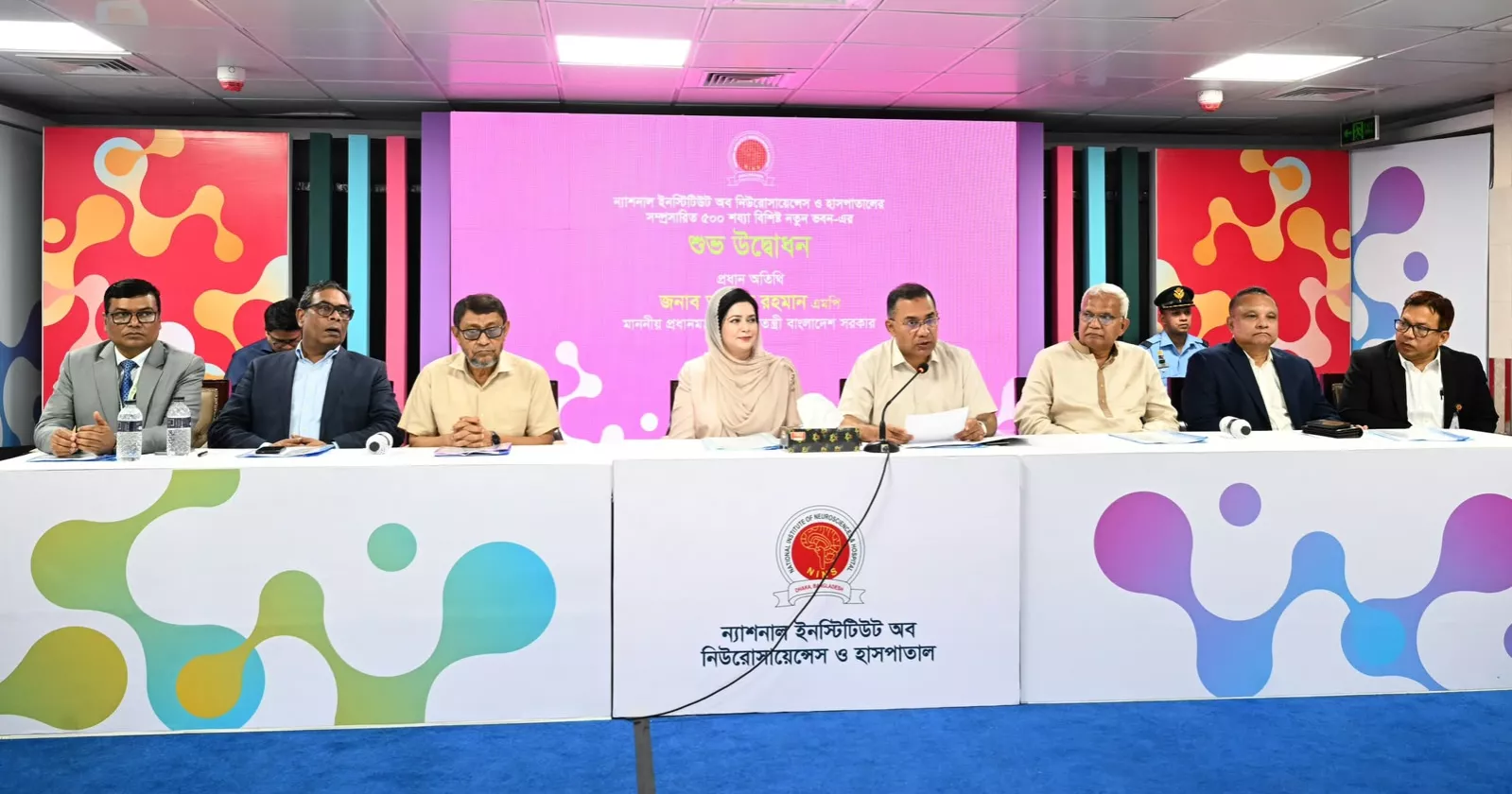
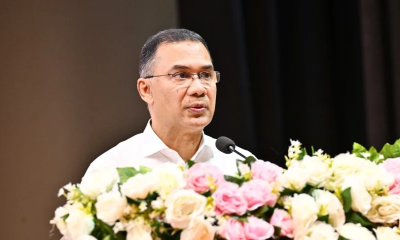
Prime Minister Tarique Rahman has called for a more patient-centred healthcare system, saying advanced technology alone cannot ensure quality treatment without empathy, trust and respectful behaviour from doctors and healthcare workers.
He made the remarks on Saturday while inaugurating a new 500-bed building at the National Institute of Neurosciences and Hospital in Agargaon.
Tarique said modern technology can help identify diseases, but doctors must also understand patients’ fears, anxiety and mental distress and make them feel reassured during treatment.
He stressed that healthcare should combine modern medical technology with skilled professionals, good governance and humane treatment to make services accessible, affordable and effective for everyone.
The prime minister urged doctors and other healthcare workers to listen carefully to patients and treat them with respect and compassion.
He also highlighted the need to maintain trust and mutual respect between medical professionals, patients and their families.
He said improving hospitals and medical infrastructure alone would not be enough if doctors feel insecure or patients and their relatives lose confidence in healthcare providers.
Tarique said the right to healthcare should be viewed not only as a fundamental right but also as an important part of the country’s social and economic development.
He stressed that quality treatment must be available regardless of where people live or how much they earn.
Healthcare services limited mainly to wealthy people in major cities, he said, cannot constitute a truly modern healthcare system.
The government is taking steps to expand affordable healthcare in remote areas and among poor and marginalised communities, he said.
Under the planned e-Health Card system, the government is working to establish a modern referral network so patients living outside Dhaka can receive appropriate treatment without having to spend heavily travelling to the capital.
The government is also working to establish fully functional primary healthcare units in every union.
Upazila hospitals will gradually be upgraded to 151 beds during the government’s tenure, Tarique said.
On child healthcare, he said work has begun to establish 200-bed specialised children’s hospitals in Khulna, Barishal, Rangpur and Rajshahi divisions, as well as in Cumilla.
“We will be able to open these five specialised children’s hospitals simultaneously next October,” he said.
Tarique said the government had allocated the highest-ever amount to the health sector in the national budget, reflecting its commitment to building a “healthy Bangladesh”.
He said the government wants to develop a healthcare system capable of providing people with all necessary medical services within the country, reducing the need to travel abroad for treatment.
However, the prime minister said government initiatives alone cannot transform the health sector. Doctors, health experts, researchers and other healthcare professionals would ultimately determine whether those efforts succeed.
He said his government was committed to building a welfare-oriented state where people would not have to go abroad for treatment and no one would be denied healthcare because of financial hardship.
“I believe that ensuring quality healthcare for ordinary people is possible through you,” he told healthcare professionals.
Earlier, Tarique inaugurated the new building by unveiling a plaque at the hospital.
His wife, Dr Zubaida Rahman, was present at the ceremony.
The new facility increases the hospital’s total capacity to 1,000 beds and is expected to expand specialised treatment for patients with complex neurological conditions.
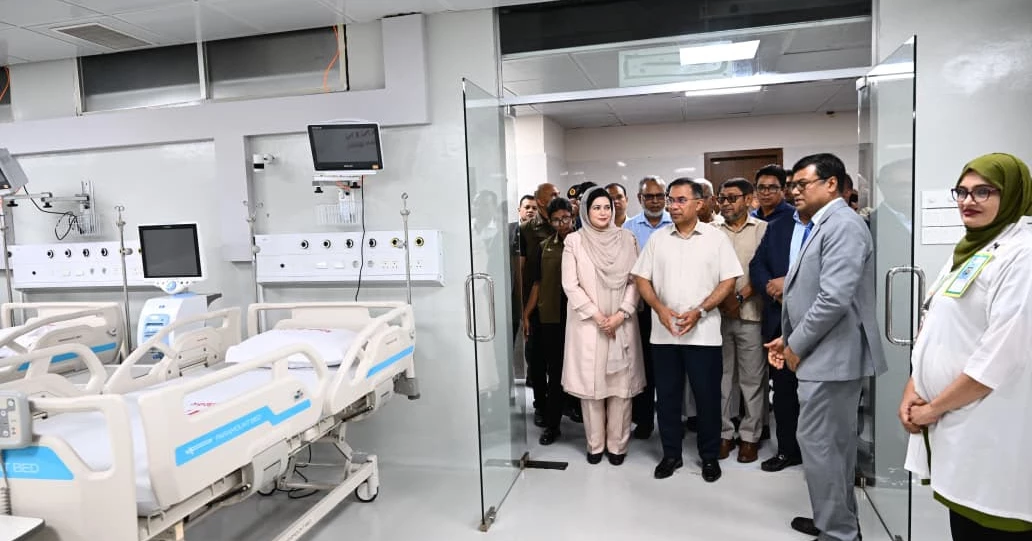
Following the inauguration, the prime minister visited several departments, including the operation theatres and intensive care unit, and asked about the treatment facilities and services available to patients.
He later addressed doctors, nurses and other staff members of the hospital.








-20260904064352.webp)










-20260828064640.webp)



-20260828120358.webp)