

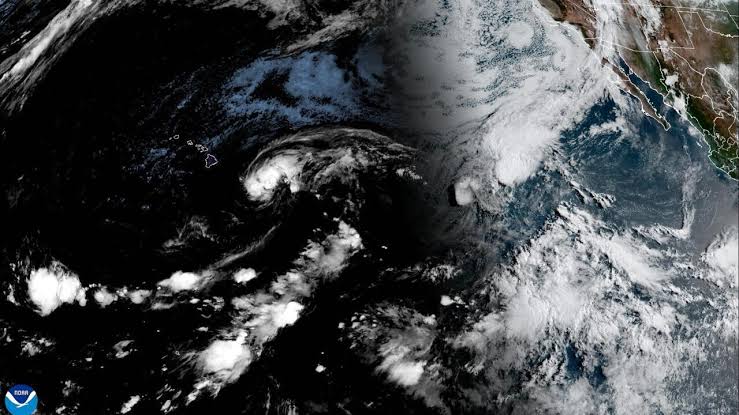
Hawaii has declared a state of emergency as Tropical Storm Lala strengthens on its way toward the Big Island, threatening hurricane-force winds, torrential rain and dangerous coastal conditions.
Lala is expected to reach the Big Island on Saturday, with winds potentially gusting up to 85 miles (137 kilometres) per hour.
A hurricane warning is in effect for Hawaii County, which covers the Big Island.
Tropical storm warnings have also been issued for Maui, Molokai and Kahoolawe, while other islands remain under tropical storm watches.
The National Oceanic and Atmospheric Administration (NOAA) forecasts up to 12 inches (30 centimetres) of rain across Maui and the Big Island, with some areas of the Big Island potentially receiving as much as 25 inches. Storm surges of 1 to 3 feet are also possible.
Rough seas and hazardous conditions could continue into Sunday.
Hawaii Governor Josh Green declared the emergency to ensure state and county authorities have enough resources to clear debris, protect infrastructure and respond to the storm.
Honolulu Mayor Rick Blangiardi urged residents to complete preparations before conditions worsen.
“I am asking everyone to finish your preparations today. Don`t wait for the weather to deteriorate,” he said.
State emergency officials advised residents to clear gutters and drains, move valuables above ground, seal gaps around doors and remove tree branches that could threaten homes.
Authorities also warned people to stay away from beaches and coastal areas because of dangerous surf and rip currents.
The approaching storm comes only weeks after Hawaii was threatened by Hurricane Fausto, which weakened before passing north of the island chain.
Hawaii last experienced a major hurricane classified as Category 3 or stronger in 1992, when Hurricane Iniki killed at least six people and caused billions of dollars in damage.
Lala is also approaching as a powerful El Niño pattern develops across the central equatorial Pacific. NOAA has estimated a 69 percent chance that the event could become stronger than any El Niño recorded since 1950 when it reaches its peak between October and December.
El Niño occurs when sea-surface temperatures in the central and eastern Pacific become unusually warm.
The pattern generally increases hurricane activity in the Pacific while reducing it in the Atlantic.
Scientists say human-caused climate change can intensify the effects of El Niño by making oceans and the atmosphere warmer, providing more energy and moisture for extreme weather such as heavy rainfall and heatwaves.

-20260904064352.webp)



















-20260828120358.webp)