

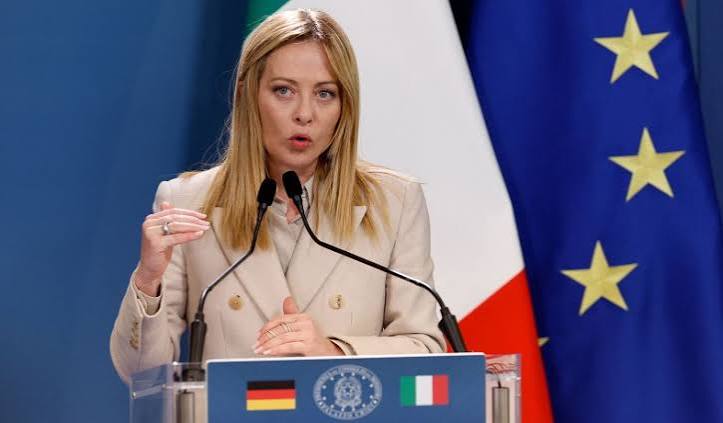
Giorgia Meloni’s government is set to become the longest-lasting administration in Italy’s postwar history, but the milestone comes with growing questions over whether her right-wing coalition can turn political stability into another election victory.
Meloni will have led the same government for 1,413 days by Friday, surpassing the previous postwar record set by former Prime Minister Silvio Berlusconi.
The achievement is particularly significant in Italy, which has gone through nearly 70 governments in eight decades.
The record could strengthen Meloni’s standing ahead of the 2027 national election.
Her Brothers of Italy (FdI) party continues to lead opinion polls, keeping her coalition in a strong position.
However, analysts say the road to another election victory is far from certain.
A major setback came this year when voters rejected a referendum linked to the government’s proposed justice reforms.
Political analyst Lorenzo Pregliasco of YouTrend said the result showed that an alternative majority could emerge against the current governing coalition.
The government has also struggled to deliver several of its major political promises.
Plans to expand the prime minister’s powers and grant greater autonomy to Italy’s regions remain unfinished.
Opposition lawmakers argue that four years of political stability have failed to produce major improvements in living standards or business competitiveness.
Italy’s economy is expected to grow by only 0.6 percent in 2026, while real wages have remained largely stagnant since the early 1990s.
Unemployment has fallen from above 7 percent to around 5 percent during Meloni’s tenure, but a large number of working-age Italians remain outside the labour market.
Government supporters, however, point to tax cuts, higher tax revenues and tighter control of public finances in a country carrying heavy debt. They also argue that Meloni has given Italy a stronger voice internationally, particularly within the European Union.
Migration policy and energy issues have also helped Rome gain greater influence in Brussels, according to supporters.
Meloni faces another political challenge from Roberto Vannacci, a former general whose newly formed Futuro Nazionale party is polling at around 7 percent.
His strong positions on immigration and LGBTQ+ issues could draw support away from Meloni’s coalition and potentially give him a decisive role after the 2027 election.
The governing alliance also benefits from divisions within the centre-left opposition and declining voter participation.
Turnout was about 64 percent in the 2022 general election and dropped to 50 percent in the 2024 European elections.
Analysts say widespread frustration is becoming a serious problem for Italian politics, with many voters increasingly convinced that no government can solve the country’s long-standing problems.
The concerns are visible in areas such as Tor Bella Monaca, a working-class district in eastern Rome where voter turnout is among the lowest in the capital.
Residents cite the cost of living, public healthcare, crime and immigration among their main concerns.
Meloni was also booed at a sporting event in the southern city of Taranto in August, where economic and environmental problems surrounding a major steel plant remain unresolved.
Despite the criticism, the prime minister retains a loyal base. Some supporters argue that reforms need time to produce results and believe the country is gradually improving.
For Meloni, the record-breaking longevity of her government offers a rare example of political stability in Italy.
The bigger test will be whether that stability is enough to convince voters to give her coalition another term in 2027.



















-20260828064640.webp)