
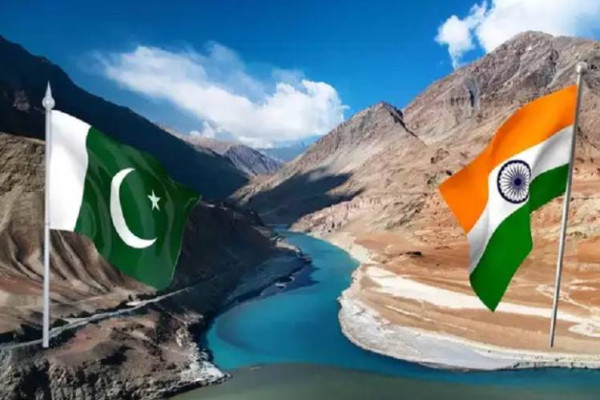
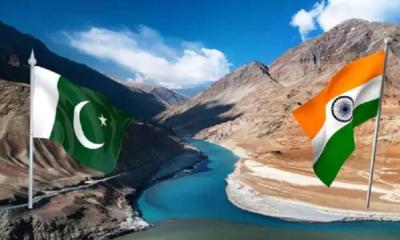
India has rejected an international tribunal’s order to continue complying with the Indus Waters Treaty with Pakistan, escalating a dispute over the decades-old water-sharing agreement between the two nuclear-armed neighbours.
The Permanent Court of Arbitration in The Hague ruled on Monday that the 1960 treaty remains legally binding and that India had no valid grounds to suspend or terminate it. The tribunal also imposed temporary restrictions on construction work at the Ratle Hydroelectric Plant in Indian-administered Kashmir.
India’s Ministry of External Affairs dismissed the ruling, saying the tribunal had no authority to interfere in New Delhi’s sovereign decisions.
“This so-called Court of Arbitration has no jurisdiction whatsoever to pronounce on India’s sovereign decisions,” the ministry said, adding that the ruling would not affect India’s ongoing or future projects.
Under the tribunal’s order, India must restrict construction on parts of the Ratle project, including the dam wall and power intake structure, until 90 days after a neutral expert appointed by the World Bank issues a decision. That decision is expected by July 2027.
The dispute centres on the Indus Waters Treaty, which was signed by India and Pakistan in 1960 and has remained in force through three wars between the two countries. The river system covered by the agreement supplies water to around 80 percent of Pakistan’s agricultural land.
India suspended the treaty in April last year following a deadly attack at a tourist site in Kashmir that killed 26 people. New Delhi blamed Pakistan for the attack, saying two of the three attackers were Pakistani. Islamabad has denied involvement.
The latest tribunal decision has brought the treaty back to the centre of tensions between India and Pakistan, with water rights closely linked to the broader Kashmir dispute.
Pakistan welcomed the tribunal’s interim measures. Its government said it was reviewing the ruling and assessing how it could contribute to restoring engagement under the treaty’s legally binding framework.
Although India is formally a member of the Permanent Court of Arbitration, New Delhi maintains that the tribunal does not have jurisdiction over the present dispute.















-20260828064640.webp)