
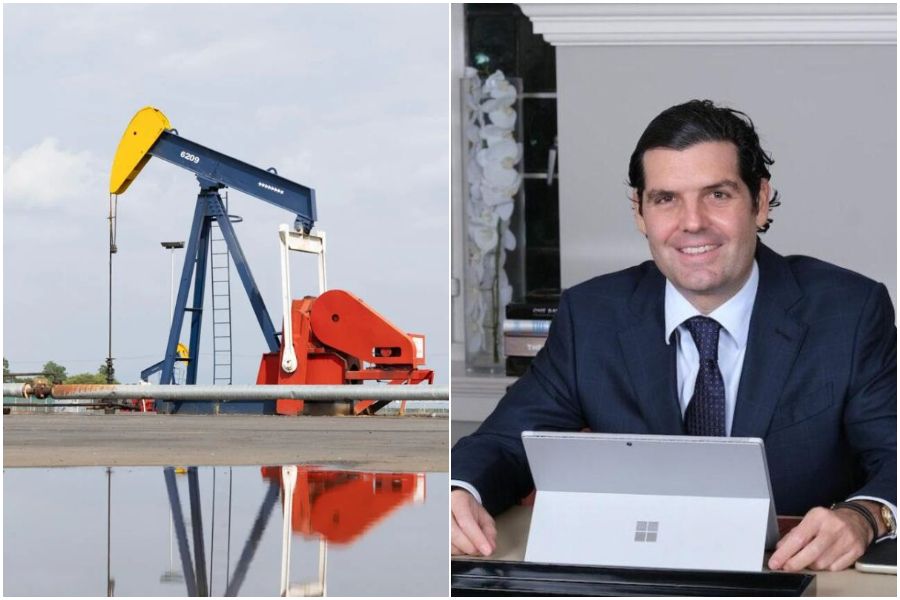
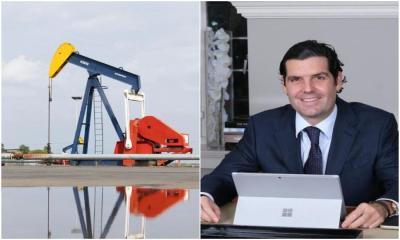
Alejandro Betancourt, a Venezuelan businessman previously linked to corruption allegations and money-laundering investigations, has emerged as a major beneficiary of Washington’s sweeping oil agreement with Caracas, gaining control of long-term concessions covering 17 oil fields.
Betancourt’s company, North American Blue Energy Partners (NABEP), has been granted 100-year concessions for fields with proven reserves of about 65 billion barrels, according to the White House. US President Donald Trump has described the multibillion-dollar agreement as the “biggest oil deal in world history.”
The deal gives NABEP a central position in Venezuela’s oil sector, where the country holds the world’s largest proven crude reserves. The company is already the second-largest private oil producer in Venezuela.
The rise of Betancourt, however, comes with a controversial history.
The 46-year-old businessman became wealthy during the administrations of Hugo Chavez and Nicolas Maduro, earning the label “bolichico” — a term used for businessmen who accumulated large fortunes under Venezuela’s socialist governments.
He was previously accused of involvement in a corruption case involving state oil company PDVSA. More than 100 senior officials were dismissed and charged after authorities alleged that manipulated figures had contributed to the disappearance of $500 million.
Venezuela’s then-attorney general Tarek William Saab accused Betancourt of inflating prices in contracts. His company Derwick Associates signed at least 12 contracts worth a combined $5 billion in 2009, according to Transparencia Venezuela.
The contracts involved importing power plants during a severe electricity crisis. The NGO said the plants generated only about 20 percent of the power that had been promised and estimated that Venezuela paid a 138 percent markup on a project worth around $2.1 billion.
Betancourt has also faced legal problems abroad. British authorities arrested him in 2025 after Switzerland launched a money-laundering investigation. Swiss prosecutors initially sought his extradition but later withdrew the request, citing specific provisions of British extradition law.
Switzerland’s attorney general also told authorities that the country had exclusive jurisdiction over the case during a phone conversation with then-US Attorney General Pam Bondi, amid reports of pressure from Washington to abandon the proceedings.
Betancourt later returned to Venezuela from Miami in June, according to media reports.
His business interests extend well beyond oil. He is involved in about 50 companies worldwide and acquired Spanish sunglasses company Hawkers in 2016. The brand later collaborated with football star Lionel Messi on a designer collection.
NABEP itself is a relatively new company. Founded in Barbados in April 2024, it became the first private company that month to sign a production-sharing agreement with PDVSA, according to a source familiar with the matter.
Oswaldo Felizzola of Venezuela’s Institute of Higher Administration Studies described the company’s emergence as taking place in a “somewhat shady environment,” noting that NABEP was already operating in Venezuela while international companies were avoiding the country because of US sanctions.
The company has since expanded rapidly. Its general director, Pedro Balart, said earlier this year that NABEP aimed to produce 300,000 barrels of oil per day by the end of 2026.
Industry estimates put its current production at between 150,000 and 180,000 barrels per day, compared with roughly 230,000 to 250,000 barrels produced by US oil giant Chevron in Venezuela.
The new agreement comes as Venezuela opens its oil, mining and electricity sectors to greater foreign and private investment under interim leader Delcy Rodriguez, who has maintained that the country’s sovereignty will remain intact despite the expanded role granted to Washington.
Venezuelan oil production rose nearly 30 percent between January and July, reaching about 1.2 million barrels per day. But that remains well below the roughly 3 million barrels a day the country was producing at the end of the 1990s.
For Betancourt, the deal marks a dramatic shift in fortunes: a businessman whose name has long been associated with Venezuela’s murky oil and power deals is now positioned at the heart of one of Washington’s biggest energy agreements with Caracas.















-20260828064640.webp)