
The 13th national parliamentary election has been set for 12 February next year, with a referendum on implementing the July National Charter scheduled for the same day.
Voting will continue uninterrupted from 7:30 a.m. to 4:30 p.m.
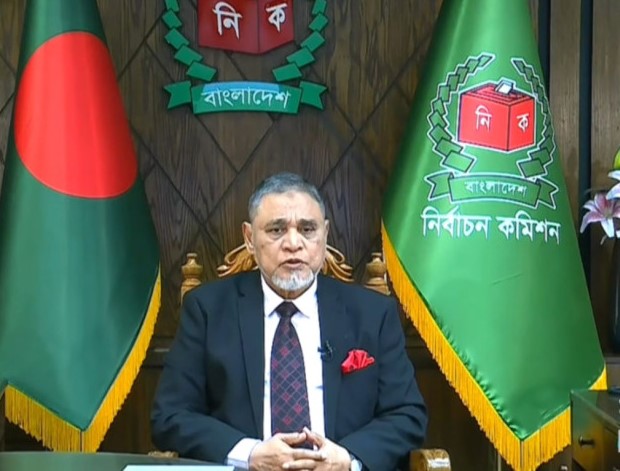
Chief Election Commissioner AMM Nasir Uddin announced the schedule in a pre-recorded speech telecast on Bangladesh Television and Bangladesh Betar at 6 p.m.
With this announcement, the formal election process has begun.
According to the CEC, candidates must submit their nomination papers by 29 December, after which scrutiny will be carried out from 30 December to 4 January.
Appeals against decisions made by returning officers can be filed until 11 January, with hearings scheduled between 12 and 18 January. The last date for withdrawing candidature is 20 January, and election symbols will be allotted on 21 January.
Campaigning may begin on 22 January and will continue until 7:30am on 10 February, two days before voting.
This year, polling hours will be extended by an hour, running from 7:30am to 4:30pm, as voters will cast both their parliamentary and referendum ballots at the same time.
The Election Commission has completed preparations for 42,761 polling centres and 2,44,739 booths, designed to serve more than 12.76 crore voters across the country.
Expatriate Bangladeshis will again be able to vote by postal ballot, and by Wednesday evening nearly three lakh overseas voters had registered. Their ballots will contain only party or independent symbols, not candidate names, and must arrive at returning officers’ offices before polls close.
The CEC said the announcement of the schedule brings the electoral code of conduct into force.
Candidates have been instructed to remove all posters, banners, and billboards within 48 hours, and government advisers and senior officials are barred from using state facilities for campaign purposes.
The government will not be allowed to approve or inaugurate development projects that could influence voters.
The EC will also send a demi-official letter to the Cabinet Division requesting full cooperation and directing that field-level officials not be transferred until the election results are published.
This election will be the first conducted under the new commission formed in November last year, following the fall of the Awami League government on 5 August 2024 during a student–public uprising.
An interim government led by Chief Adviser Professor Muhammad Yunus took office on 8 August. Speaking recently, the chief adviser called the upcoming polls a “historic opportunity to build a new Bangladesh” and stressed the need for a fair, transparent, and credible election.
In the months leading up to the schedule, major political parties debated the timing of the vote. While some, including the BNP, initially demanded elections by December, discussions between BNP acting chairman Tarique Rahman and the chief adviser in London in June led to an agreement to hold the election in early February. Since then, the government and the Election Commission have repeatedly affirmed February as the target.
A total of 56 political parties are currently registered with the commission, although the Awami League remains suspended from political activity and cannot participate. Independent candidates who meet legal qualifications may also contest.
Ensuring security during the twin polls is expected to be a major challenge.
Nearly nine lakh personnel from the armed forces and law enforcement agencies will be deployed the highest number in the country’s election history.
About 1.5 lakh police officers have already received special election training to manage law and order.
The CEC urged all voters to exercise their voting rights without fear and said the commission is committed to ensuring a peaceful, credible, and inclusive election.