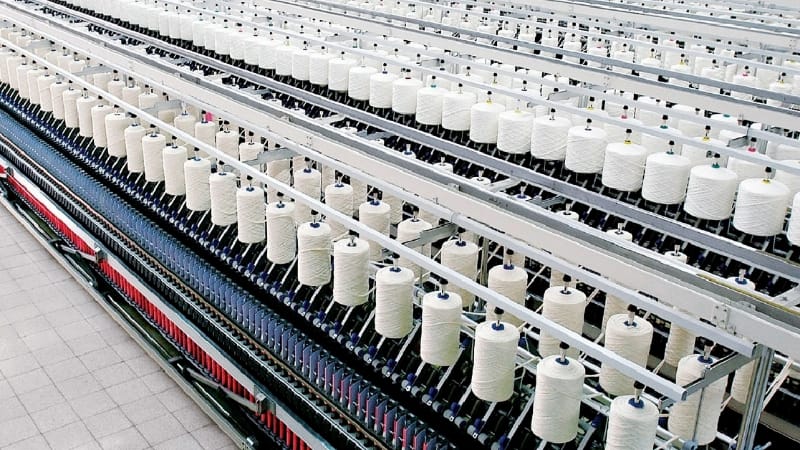
Leaders in Bangladesh’s spinning industry on Thursday urged the government to take immediate measures to protect the sector from what they described as a “deepening crisis,” which has already forced nearly 40% of factories to shut down and rendered more than 100,000 workers jobless.
"We have international quality, qualified manpower and capacity to ensure full support to the garment sector. If the government fails to take immediate action, we will take to the streets to restore," he said.
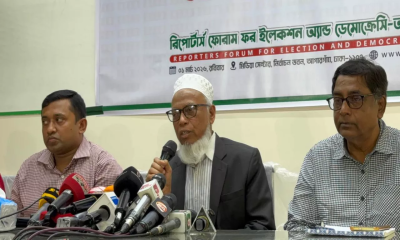
The appeal came at a press conference in Dhaka, where Salma Group CEO Azhar Ali presented a set of proposals on behalf of workers, employees and officials associated with the spinning sector.
Industry representatives said the spinning sector — a key backward linkage to Bangladesh’s apparel industry — has been struggling for years due to Covid-19 fallout, the Russia-Ukraine war, dollar shortages, and sharp hikes in fuel and energy prices. Rising production costs and declining competitiveness have pushed many factories to the brink of closure, they said.
Speakers said that due to prolonged challenges, around 40% of spinning mills have halted production, while the remaining factories are operating at 50–60% capacity because of reduced access to imported raw materials and rising operational expenses.
They warned that unless urgent steps are taken, more factories may be forced to suspend operations, affecting the livelihoods of several hundred thousand people directly and indirectly dependent on the sector.
The sector placed five major proposals for the government’s immediate consideration:
Restore and expand export incentives
The government previously reduced the 5% export incentive for the garment sector to 1.5%. Leaders demanded reinstating the earlier rate and introducing a 10% cash incentive for exporters using locally produced yarn.
They also called for a 10% safeguard duty on imported yarn to protect domestic producers.
After energy prices rose by up to 350% in three phases, production costs increased sharply. The sector demanded a 30% rebate on gas and electricity bills for all export-oriented factories for at least two years.
Industry representatives said subsidized yarn from exporting countries is entering the domestic market at prices lower than local production costs. They urged the Ministry of Commerce to impose anti-dumping or safeguard duties. They cited the example of Indonesia’s KPPI, which recently announced safeguard duties on cotton yarn for three years (45 cents per kg in the first year, decreasing gradually).
The spinning sector demanded reinstatement of the Bangladesh Bank’s Export Development Fund (EDF) facility — previously worth around $8 billion — for the next two years to support backward linkage industries.
They also urged the government to require export-oriented industries to source at least 70% of raw materials domestically. Additionally, the sector sought an additional 5% incentive for recycled and sustainable yarns, along with 10-year loans at 5% interest for modernizing machinery.
They asked for increasing import capacity for raw materials. Due to the depreciation of the taka, raw material import capacity has declined by around 40%, they said. The industry requested measures to increase import limits so factories can return to full production.
Mohammad Shahinul Haque, speaking on behalf of workers and industry personnel, said the spinning sector is vital for Bangladesh’s export competitiveness and deserves urgent policy support.
He said the sector is hopeful that the government will “take the matter seriously and act promptly to prevent further deterioration.”







-20260302065048.webp)










-20260224075258.webp)


-20260225072312.webp)