

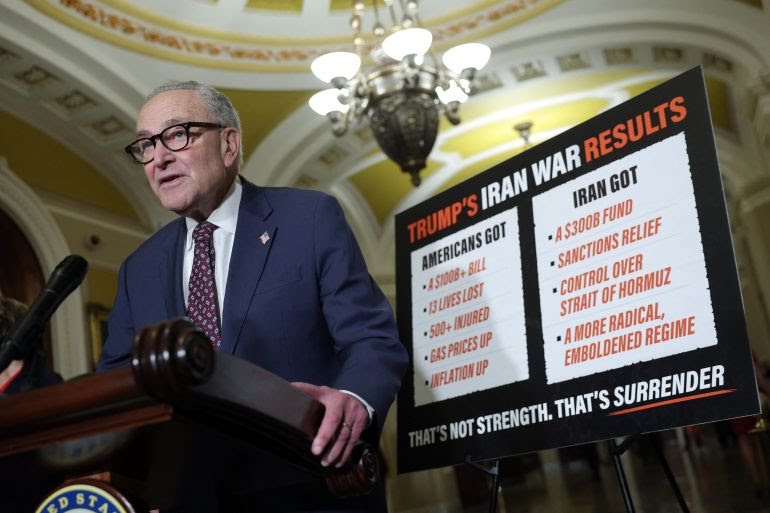
The US Senate on Tuesday approved a resolution calling for an end to military hostilities with Iran, marking a significant political setback for President Donald Trump as his administration pursues negotiations with Tehran on a broader peace agreement.
The measure, which previously passed the House of Representatives, was approved by a narrow 50-48 vote.
It urges the president to withdraw American forces from the conflict unless Congress formally authorizes military action.
Although the resolution does not require the president`s signature and is not legally binding, its passage signals growing opposition within Congress to the conflict that erupted earlier this year and expanded tensions across the Middle East.
The vote places both chambers of Congress on record in favor of limiting further US involvement in the war, which began following American and Israeli strikes on Iran and later affected regional stability, energy markets and international trade routes.
Trump dismissed the Senate action shortly after the vote, describing it as ineffective and poorly timed.
He argued that the resolution could complicate ongoing diplomatic efforts with Tehran.
The administration is currently engaged in negotiations aimed at transforming a temporary understanding with Iran into a comprehensive agreement covering issues such as sanctions relief, nuclear activities and the future of the Strait of Hormuz.
Senate Democratic leader Chuck Schumer pushed for the vote, saying lawmakers should publicly state their position on the conflict and the administration`s handling of it.
The resolution also attracted support from a small number of Republicans, reflecting unease within parts of Trump`s own party over both the war and the diplomatic strategy that followed.
Critics of the administration argue that military operations against Iran were launched without congressional approval, while supporters of the White House maintain that the president acted within his authority and that efforts are now focused on securing a lasting settlement.
The debate has revived questions about the scope of presidential war powers under US law, particularly the 1973 War Powers Act, which limits how long military operations can continue without authorization from Congress.
Meanwhile, negotiations with Iran remain complicated by disagreements over key issues. Iranian officials have continued to reject some US claims regarding nuclear inspections, while disputes also persist over the future management of the Strait of Hormuz, a vital route for global energy shipments.
Despite the political divisions in Washington, both sides remain engaged in talks aimed at preventing a return to wider regional conflict and reaching a long-term agreement in the coming weeks.




-20260621075254.jpg)
-20260624064612.webp)












-20260623093601.jpg)
-20260617204301.webp)