

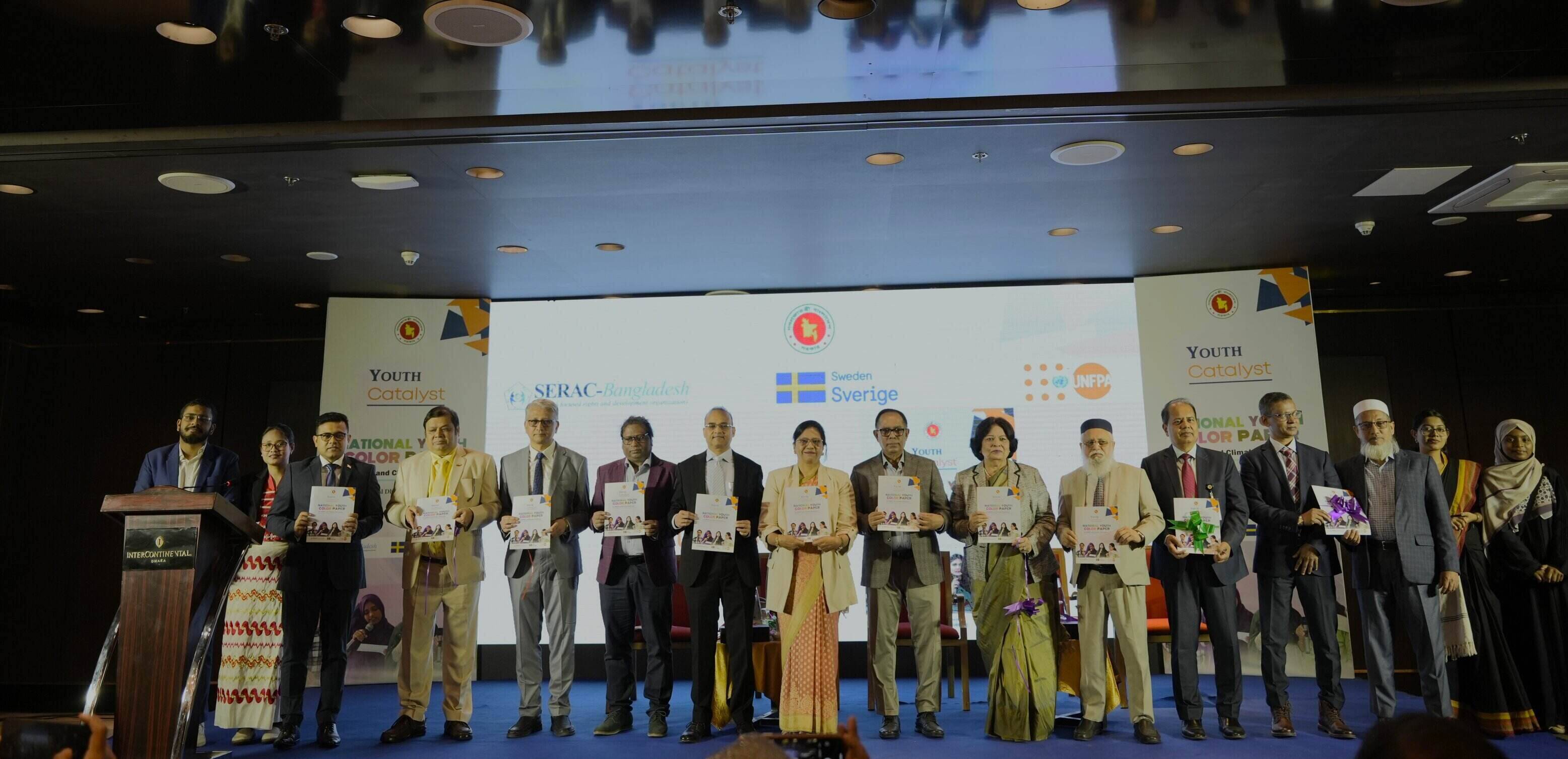
A National Youth Color Paper outlining 32 demands and policy recommendations on sexual and reproductive health and rights (SRHR) integrated with climate resilience was handed over to the Ministry of Health and Family Welfare today.
Organized by SERAC-Bangladesh as part of UNFPA Bangladesh`s Youth Catalyst Initiative – supported by the Swedish International Development Cooperation Agency (Sida) – the dissemination event began with the national anthem and the formal presentation of the document, titled “Sexual and Reproductive Health and Climate Resilience”.
Health Services Division Secretary Md Saidur Rahman inaugurated the programme.
In his welcome address, SERAC Executive Director SM Shaikat highlighted the paper`s development through nationwide youth-led consultations.
"It captures 32 demands from seven thematic areas, including child marriage, gender-based violence, and climate impacts, reflecting young people`s lived experiences," he said.
UNFPA Bangladesh Health Chief Dr Vibhavendra Singh Raghuvanshi emphasized youth as "active agents of change," urging their voices in policy formulation. Sweden Embassy Health Advisor Dr Zahirul Islam praised the document as a "youth-centred" tool amid challenges like youth migration.
As chief guest, Secretary Rahman stressed addressing youth health barriers, including rising rural child marriages.
"Teachers, institutions, and stakeholders must join coordinated efforts with youth," he urged.
A plenary session, moderated by UNFPA SRHR Specialist Dr Abu Sayed Mohammad Hasan, featured commitments to youth-friendly services, public-private collaboration, and resilient health systems.
Key attendees included DGHS Professor Dr Md Abu Zafar, DGFP`s Dr Ashrafi Ahmed, and officials from NDF, Bangladesh Red Crescent, and other divisions.
Over 50 youth representatives from across Bangladesh shared challenges in an open forum, joined by development partners.







-20260824063249.webp)
-20260823124453.webp)
-20260823105444.webp)










-20260817061349.jpg)