

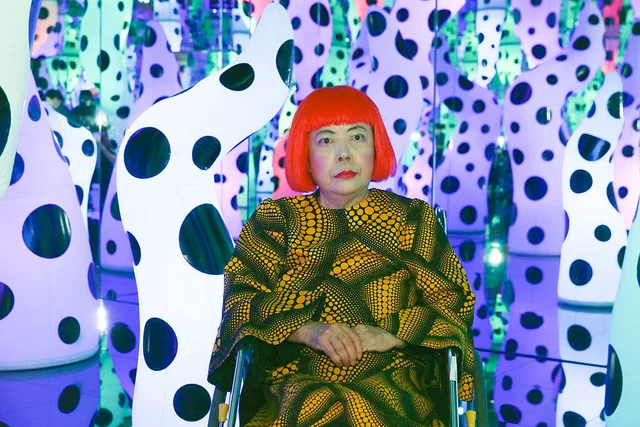
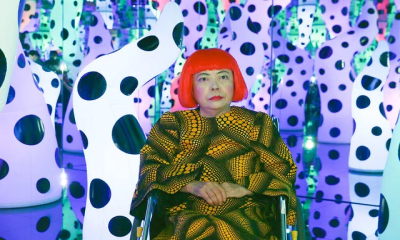
Japanese contemporary artist Yayoi Kusama, whose iconic polka-dot works made her one of the world’s most recognisable artists, has died at the age of 97, her studio said Thursday.
Kusama died on August 14 at a hospital in Tokyo. Her cause of death was not disclosed. According to her studio, she continued working until her final days, remaining focused on themes of “forever love and eternal soul.”
Kusama became internationally known for her distinctive use of dots, repeating patterns, nets and swirling forms across paintings, sculptures and large-scale installations. Her work was displayed at leading museums around the world, including the Museum of Modern Art and the Whitney Museum of American Art in New York, as well as Museum Ludwig in Germany.
Her fascination with repetition was closely connected to experiences she said began in childhood, when she experienced hallucinations that made her see the world covered in dots.
Despite spending much of her life in psychiatric institutions, Kusama moved to New York in 1957 to pursue her career as an artist. She initially struggled financially and received little recognition, but continued developing the highly personal style that would later bring her global fame.
Her influence eventually extended beyond the art world. She collaborated with luxury fashion house Louis Vuitton and became the subject of numerous licensed products and international exhibitions.
One of her works sold for $5.8 million at a Christie’s auction in 2008, while Japan honoured her with the Order of Culture in 2016.
At the time, Kusama said she remained determined to continue making art and described her devotion to her work as an important part of her legacy.
“I feel there is little left in my life, but I am now still fighting to the death for my art,” she said after receiving the award.
Kusama worked across a wide range of mediums, including painting, sculpture, film and literature. Her books included Macaroni Girl, The Visionary Flowers and Mirrored Corridor.
Over her long career, she was also connected with influential artists including Andy Warhol, Georgia O’Keeffe and Joseph Cornell.
Although Kusama often described herself as an artistic revolutionary, she also openly discussed fear and vulnerability, themes that remained intertwined with her work throughout her career.









-20260827071113.webp)









-20260824112248.jpg)



-20260823124453.webp)