
Bangladesh bade farewell to 2025 standing at a crossroads expecting to lead the South Asian nation to a new political and social transition against the backdrop of renewed public expectations. The year unfolded amid post–July Uprising realities, with governance reforms, electoral preparedness, and democratic accountability dominating the national discourse.
The outgoing year heralded with youths as vocal stakeholders in shaping the nation’s future, which many describe as demographic dividend for the country in terms of population ratio as well.
This development particularly made 2025 a year of reckoning and reorientation for Bangladesh, expecting to set the tone for the path ahead.
Following were the major incidents of 2025:
Begum Zia’s demise:
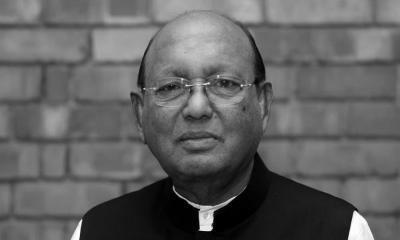
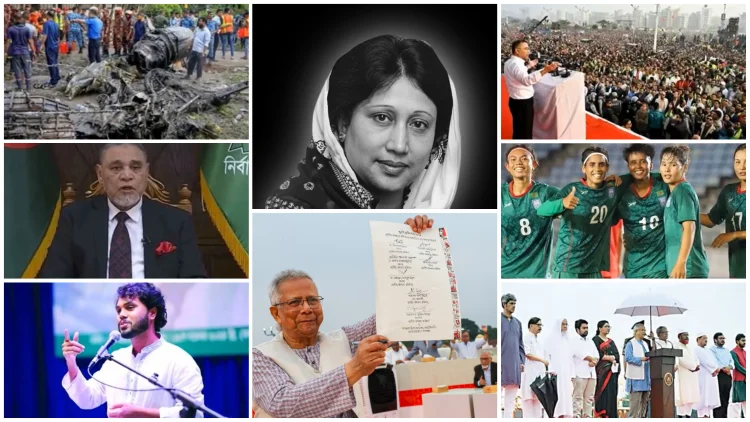
A sad episode, however, marked the year end as the country lost former prime minister and Bangladesh Nationalist Party (BNP) Chairperson Begum Khaleda Zia on December 30.
During her strongly visible presence in the country’s political landscape for over four decades Begum Zia lived with dignity and demised with honour though her career included spells in prison and house arrest.
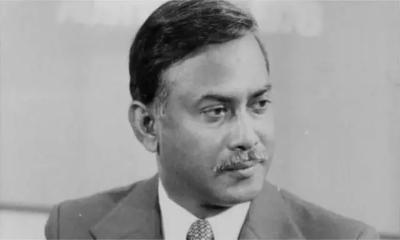
Begum Zia was the first woman prime minister of Bangladesh and the second in the Muslim world though her appearance as a public figure in political arena at the age of 35 was not planned debut and rather is widely viewed as accidental.
But she broke through a male-dominated political landscape and transformed into one of the region’s most formidable leaders though as the wife of Bangladesh`s slain former president Ziaur Rahman, she was a reserved presence alongside her famous husband.
Thrust into the political scene following her husband’s 1981 assassination, she took up his mantle, quickly learnt the art of politics and leadership and gained a nationwide with her uncompromising stance against the military dictatorship, maintaining her widely acknowledged kindheartedness.
The public in general call her “Uncompromising Leader” and her demise prompted a leading newspaper to make the headline of her obituary report -- “Khaleda Zia: The uncompromising light goes out”, as doctors declared her dead at the dawn of December 30, at the age of 80 after her protracted ailments.
Apart from countrymen and people cutting across their political affiliations, she drew tributes from international leaders including premiers of India and Pakistan – the two bitter adversaries – who promptly issued statements mourning her death soon after the news of her demise broke.
All major media outlets across the globe prominently carried the report highlighting her achievements as the South Asian nation’s leader while Bangladesh observes a three-day state mourning from December 31.
The three-time premier Begum Zia made her last public appearance on December 21 when she joined the Armed Forces Day reception at Dhaka Cantonment and two days later she was admitted to Dhaka’s Evercare Hospital.
She breathed her last at the facility five days after the return of her elder son Tarique Rahman, BNP’s Acting Chairperson, after 17 years of self-exiled life in London.
Her Namaj-e-Janaza drew millions of people while prominent foreign dignitaries attended the funeral at the Manik Mia Avenue. Begum Zia was buried beside the mausoleum of her slain husband Shaheed President Ziaur Rahman at the nearby Zia Udyan.
Signing of National July Charter:
On October 17, the landmark "July National Charter-2025" was signed after a protracted consultation between the political parties and the National Consensus Commission, headed by interim government’s Chief Adviser Professor Dr Muhammad Yunus.
During the signing ceremony Nobel Peace Prize winner Professor Yunus said Bangladesh "embraced civilization" with the signing of the document and described the ceremony as the "birth of a New Bangladesh".
“We were living in a barbaric world where there was no law . . . Now we have come into civilization,” he said as senior representatives of different political parties inked the deal at an historic event at the South Plaza of the Jatiya Sangsad Bhaban in the capital.
The 40-page charter outlines the political history of Bangladesh, covering the British colonial period, the historic Language Movement of 1952, the education movements of 1962, the autonomy movement of 1966, the 1969 mass uprising, the 1970 general elections and the subsequent Liberation War of 1971.
The document noted the one-party state through constitutional amendments in 1975 that followed various political developments, the subsequent return to democracy through 1979 elections after reintroduction of a multi-party system in 1978. The charter, however, pointed out that described the democratic path was “short-lived."
It further highlights the period between 2009 and 2024, as a timeframe when state institutions were dominated by autocratic practices favoring certain individuals, families, and groups.
The charter criticized the three consecutive controversial elections of 2014, 2018, and 2024, saying they undermined the electoral system, politicized the judiciary, law enforcement and public administration and facilitated corruption.
The charter also reflects on the persistent democratic movements of the last 16 years, including road safety movement in 2018, subsequent anti-quota movement, and student-led Anti-Discrimination Movement, which culminated in the broad-based mass uprising against fascism in July 2024.
Finally, the charter contains a seven-point commitment, urging the signatory political parties to uphold it as the will of the people expressed in the July 2024 Uprising ad grounded in democratic principles and national consensus.
Launching of NCP:
On February 28, National Citizen Party (NCP) comprising the students and youths who spearheaded the 2024 July Uprising emerged as a political party vowing to pursue politics of national unity over division and to materialize their vision for a “second republic”.
July martyr Ismail Hossain Rabbi’s sister Mim Akhter announced the top leadership of the NCP central committee at its inaugural rally at Manik Mia Avenue in front of Jatiya Sangsad Bhaban in the capital with one of the top July Uprising leader Nahid Islam as its convener and Akhter Hossen as Member Secretary.
Unveiling of the July Declaration:
On August 5, Professor Yunus unveiled the `July Declaration` before the nation at a public gathering at South Plaza of the Jatiya Sangsad (JS) Bhaban. The event was arranged commemorating the July Uprising Day.
Tarique Rahman’s homecoming:
Bangladesh’s transitional political landscape witnessed a significant event when Bangladesh Nationalist Party (BNP) Acting Chairman Tarique Rahman returned to Bangladesh on December 25 after 17 years in exile in the UK.
Hundreds of thousands of people welcomed him rallying on the streets stretching from Hazrat Shahjalal International Airport to July 36 Expressway, popularly known as 300-Feet Road, where he addressed a mammoth public reception.
Coming out from the airport building he touched in barefoot the soil with dew dropped grasses, grasped a fist of soil, brought it to nose and sniffed before traveling to a brief public event venue at July 36 Expressway.
A motorcade escorted Tarique Rahman`s bus to the venue as millions of people standing on the both sides of airport road bound to the 300-feet waving hands and chanting slogans like `Tarique Rahman Asche, Ma-Mati Dakche`, `Desh Neta Asche, Bangladesh Kapche` and `Ajker Ei Din e, Shaheed Zia Mone Pore`.
With waving hands and smiling face onboard a bus he responded to the crowd making an extra-ordinary emotional scenario and after reaching the reception venue he said “I have a plan” to build a developed and prosperous Bangladesh with collective efforts of all, calling upon all to maintain peace and order at any cost.
“We want peace . . . we want to build a safe Bangladesh for all. We have to keep calm and patience in facing any provocation,” he said.
Referring to a popular quote from US civil right activist Martin Luther King “I Have a dream”, Tarique Rahman said, “I have a plan for the people of my country and for my countrymen” and sought people’s cooperation to realize his plan.
Disbanding of Awami League:
On May 12, the government banned all activities of deposed prime minister Sheikh Hasina’s Awami League and its associated and affiliated organizations under Bangladesh’s tough Anti-Terrorism Act, on allegations of killings, genocide, crimes against humanity, and other grave offences to tame the July uprising, issuing an executive order.
Coinciding with the order the Election Commission (EC) on the same day suspended Bangladesh Awami League’s registration disqualifying it from contesting the upcoming general elections.
Sheikh Hasina’s trial:
On November 17, the International Crimes Tribunal (ICT-BD-1) sentenced to death deposed premier Sheikh Hasina and former home minister Asaduzzaman Khan Kamal after their trial in absentia.
The three-judge panel headed by Justice Golam Mortuza Mozumder convicted them on charges of committing crimes against humanity on grounds of superior command responsibility for offences committed during the July Uprising.
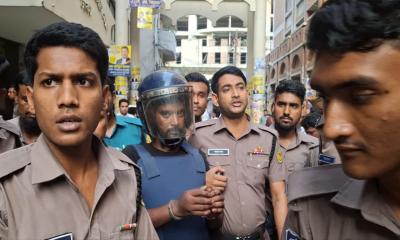
The tribunal simultaneously handed down a five-year prison term to co-accused police’s former inspector general (IGP) Chowdhury Abdullah Al-Mamun as he faced the trial in person under custody and appeared as an “approver” or state witness confessing his guilt.
Osman Hadi killing:
The fag-end of the year witnessed the fatal attack on Sharif Osman Hadi, the leader of cultural group Inqilab Mancha, imbued with the July Uprising spirit, and his subsequent death on December 18, sparking a nationwide protest and uproar.
Masked gunmen shot Hadi, a ranking leader of the July Movement as well, in the head and six days later he died at a Singapore Hospital where he was flown under government arrangements for advanced treatment.
Following his death Bangladesh observed a state-mourning on December 20 as declared by Chief Adviser Professor Yunus, who immediately after Hadi’s death appeared on the TV to make a nationwide address.
"Today, I came before you with very heartbreaking news. Sharif Osman Hadi, the fearless frontline fighter of the July Uprising and spokesperson of the Inqilab Mancha, is no more among us,” he told the nation.
Hadi’s namaz-e-janaza at the South Plaza of Jatiya Sangsad Complex drew tens of thousands of people on December 20 while it joined as well by the chief adviser and his advisory council members and senior government officials in civil and military services while he was buried later beside National Poet Kazi Nazrul Islam’s Mausoleum on the Dhaka University campus.
Milestone School Tragedy:
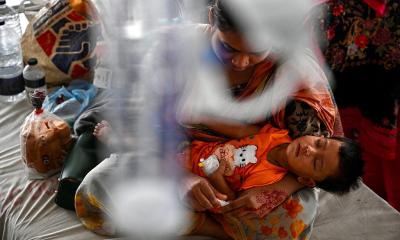
On July 21, a Bangladesh Air Force training jet crashed into a building on the campus of Milestone School and College at Diabari of the capital’s Uttara area killing at least 36 people mostly school children with rests being staff, teachers and the fighter jet’s pilot.
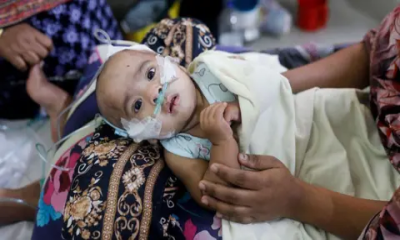
Over 170 people were injured, with many suffering severe burns; hospitals, especially the National Institute of Burn and Plastic Surgery, were overwhelmed with patients.
On July 22, the nation observed a one-day state mourning over deaths and injuries in the tragic crash of training jet while the tragedy sparked public outrage, with families and guardians demanding justice, proper compensation, and relocation of the school away from the flights path.
Earthquake:
At least 10 people including two children were killed several hundreds wounded on November 21, as a 5.7-magnitude earthquake with its epicenter being at Madhabdi of Narsingdi, 13km east off the met office’s seismic centre at Agargaon in Dhaka shook the capital and several other parts of the country.
The United States Geological Survey (USGS), however, confirmed that the epicentre of the tremor occurred at 10:38 am was located 14 kilometres west-southwest of Narsingdi, 10 kilometres beneath the surface level.
Buildings in Dhaka and neighboring districts suffered cracks, partial collapses and structural damages while the few seconds jolt prompted people inside concrete structures to rush outdoors in panic amid expert fears that had the tremor lasted for few more seconds it could have caused a greater havoc.
The country thereafter experienced few more subsequent quakes.
Student union elections in universities:
After a long impasse, authorities staged central student union elections at premier Dhaka University, Jahangirnagar University, Chittagong University and Rajshahi University in September and October.
Long-awaited Dhaka University Central Students’ Union (DUCSU) elections were held on September 9 after a six-year pause.
Chittagong University Central Students’ Union (CUCSU) and Rajshahi University Central Students` Union (RUCSU) elections were held on October 15 and 16 respectively after long 35 years while Jahangirnagar University Central Students` Union (JUCSU) polls were held on September 11 after 33 years.
Jagannath University Central Students` Union (JnUCSU) staged its first such election on December 30.
Bangladesh women football team’s success:
On July 2, Bangladesh women`s football team created history by qualifying in the AFC Women`s Asian Cup 2026 for the first time following their outstanding 2-1 triumph over host Myanmar in their second group match held at the Thuwunna Stadium in Yangon.
The success earned the team the Ekushey Padak 2025.
Bangladesh’s U-20 women’s football team won the 2025 SAFF U-20 Women’s Championship, held from July 11 to 21 at the Bashundhara Kings Arena and Sports Ground in Dhaka.
The hosts emerged unbeaten champions, securing their fifth title with six consecutive wins in a double round-robin format.