
The government has unveiled a extensive water resources agenda in the proposed national budget for FY2026-27, placing river restoration, flood protection, canal excavation, and the landmark Padma Barrage project at the forefront of its strategy for climate resilience, food security, and sustainable water management.
In his budget speech, Finance Minister Amir Khosru Mahmud Chowdhury announced a proposed allocation of Tk 10,533 crore for the Ministry of Water Resources, signalling a major investment in the country`s rivers, irrigation systems, and flood-control infrastructure.
One River in Every Division to Be Freed from Encroachment
As part of efforts to restore ecological balance and revive dying waterways, the government has undertaken special initiatives to recover at least one river in each division from illegal occupation and encroachment.
Under seven ongoing projects, authorities are implementing measures to remove encroachments and restore the natural flow of eight rivers-Dhaleshwari, Louhajang, Alaikuri, Mogra, Salta, Sutang, Bakkhali, and Barnai.
Officials believe the river restoration drive will help improve biodiversity, strengthen local ecosystems, and reduce waterlogging and drainage problems in surrounding areas.
Technology-Driven Water Management
In a notable shift toward data-based governance, the government has developed a Water Quality Index (WQI) for rivers surrounding Dhaka, enabling more systematic monitoring of river health.
At the same time, an AI and deep learning-based real-time groundwater monitoring dashboard has been introduced. The system is expected to provide continuous information on groundwater levels, helping policymakers make informed decisions on water conservation and sustainable extraction.
Water sector experts view these technological interventions as an important step toward modernizing Bangladesh`s water resources management framework amid growing climate and environmental challenges.
Massive Canal Excavation Programme
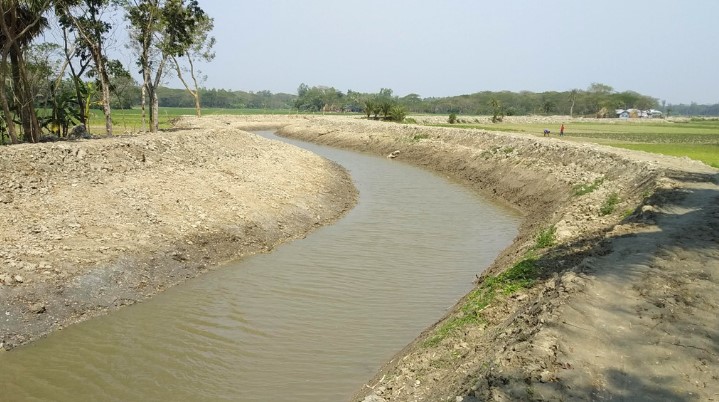
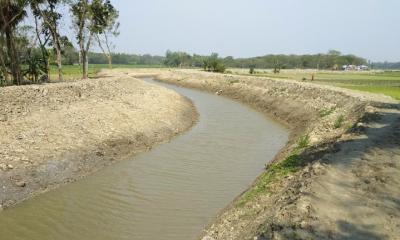
The Ministry of Water Resources is implementing a nationwide programme titled "Excavation and Re-excavation of Rivers, Canals and Water Reservoirs."
The initiative is linked to the government`s broader target of excavating 20,000 kilometres of canals, rivers and drainage channels over the next five years through coordinated efforts of relevant ministries.
For FY2026-27 alone, the ministry plans to excavate and re-excavate 680 kilometres of canals, irrigation channels and drainage canals.
In addition, a major project titled "Identification and Classification of Canals in Bangladesh and Development of a Geo-Informatics Database" will map canals across the country and establish a Geographic Information System (GIS)-based canal network database, creating a comprehensive digital inventory of the nation`s waterways.
Flood Protection and River Navigation
The budget outlines extensive flood-management works for the coming fiscal year. Targets have been set to construct, reconstruct and rehabilitate embankments and flood walls covering 309 kilometres and improve river navigability and remove submerged shoals along 484 kilometres of waterways.
Meanwhile, under the government`s ongoing 180-Day Programme for Flood Protection, construction and rehabilitation work covering 292 kilometres of embankments and flood walls is already in progress.
The measures are expected to strengthen protection against seasonal flooding while improving water flow and river transport.
Padma Barrage: A Mega Project for the South-West
The centrepiece of the water resources budget is the newly approved Padma Barrage (Phase-I) Project, which policymakers describe as a transformative initiative for agriculture, fisheries and water management in the country`s south-western region.
Approved by the Executive Committee of the National Economic Council (ECNEC), the project will be implemented from July 2026 to June 2033.
The project includes construction of a 2.1-kilometre-long main barrage on the Padma River at Pangsha in Rajbari; establishment of a hydropower plant and conservation and regulation of Padma River water to ensure dry-season freshwater availability.
According to government estimates, the project will store 2.9 billion cubic metres of water annually, prevent salinity intrusion across the Padma basin, including the Sundarbans, restore navigability in five distributaries and tributaries, provide irrigation support to 2.88 million hectares of agricultural land, increase annual rice production by 20.39 million tonnes, and boost annual fish production by 2.34 million tonnes.
The government expects the project to directly and indirectly benefit residents of 120 upazilas in 19 districts across four divisions, covering nearly 37 percent of Bangladesh`s population.
Focus on Teesta Restoration
The budget speech also highlighted concerns over reduced water flows caused by upstream dams on the Teesta and Padma rivers, which have affected agriculture, irrigation, fisheries and biodiversity.
To address these challenges, the government is moving forward with initiatives to implement the Teesta Master Plan, formally known as the Comprehensive Management and Restoration of the Teesta River Project.
The initiative aims to improve livelihoods and living standards across northern Bangladesh through better river management, water conservation and economic development.
A Water-Centric Development Vision
The proposed FY2026-27 budget demonstrates the government`s growing emphasis on water security as a foundation for economic growth, climate adaptation and environmental sustainability.
From restoring encroached rivers and deploying artificial intelligence in groundwater monitoring to undertaking one of the country`s largest water infrastructure projects through the Padma Barrage, the budget outlines a broad strategy aimed at securing Bangladesh`s water future while boosting agricultural production, fisheries, navigation and ecological resilience.





-20260618075143.jpg)





-20260617204301.webp)



-20260617100108.webp)
-20260611112822.png)