
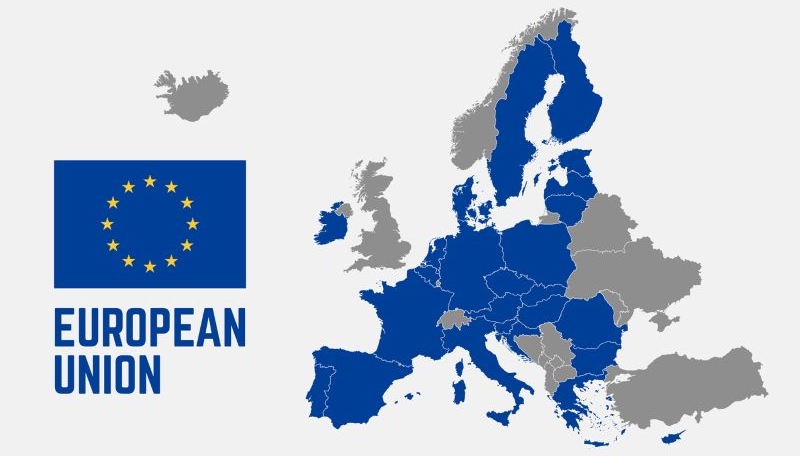
The recent conflict involving Iran and the resulting volatility in global energy markets have accelerated European efforts to secure alternative trade and energy routes that reduce dependence on the Strait of Hormuz.
European leaders are increasingly looking at new partnerships and infrastructure projects linking Europe with the Middle East and Asia as part of a broader strategy to strengthen energy security and protect supply chains from future geopolitical disruptions.
At the center of these discussions is the India-Middle East-Europe Economic Corridor (IMEC), an ambitious initiative designed to connect Europe and India through a network of transport, energy and digital infrastructure crossing the Middle East.
European Commission President Ursula von der Leyen recently highlighted the importance of developing alternative export and supply routes, describing IMEC as a key component of Europe`s efforts to diversify trade and energy links.
Although the European Union has already signed a memorandum of understanding on the project, only a limited number of member states have formally joined. Nevertheless, officials say political support for the initiative remains strong across the bloc.
Diplomatic discussions are now focused on transforming the proposal into concrete infrastructure projects. These may include transport networks, energy pipelines, electricity connections and digital communication links aimed at improving connectivity between Europe, the Gulf region and South Asia.
The renewed urgency follows sharp increases in energy costs during the Iran conflict. European officials estimate the bloc spent billions of euros more on oil and gas imports during the early stages of the crisis, underscoring the risks associated with reliance on conflict-prone shipping routes.
As a result, EU policymakers are exploring closer cooperation with Gulf nations to develop infrastructure capable of bypassing chokepoints such as the Strait of Hormuz.
Existing projects, including Saudi Arabia`s East-West Pipeline, have demonstrated the value of alternative export routes during periods of regional instability. Energy experts believe future investments may initially focus on oil and gas transport systems before expanding to support cleaner energy sources such as hydrogen.
Another project gaining attention is the Great Seas Interconnector, a planned undersea electricity cable linking Europe with Cyprus and Israel. Supporters argue that the initiative could strengthen regional energy integration and contribute to long-term renewable energy goals.
The success of some of these projects, however, may depend on broader diplomatic developments in the Middle East. Analysts note that deeper regional cooperation, including improved relations between Israel and Saudi Arabia, could be crucial for the implementation of large-scale connectivity initiatives.
The United States has also expressed interest in supporting regional energy cooperation, particularly in the Eastern Mediterranean, where several countries are seeking to expand energy production and infrastructure.
With concerns over energy security rising, European leaders increasingly view alternative corridors and diversified supply routes as essential to reducing vulnerability to future conflicts and ensuring long-term economic stability.













-20260824112248.jpg)


-20260828064640.webp)