
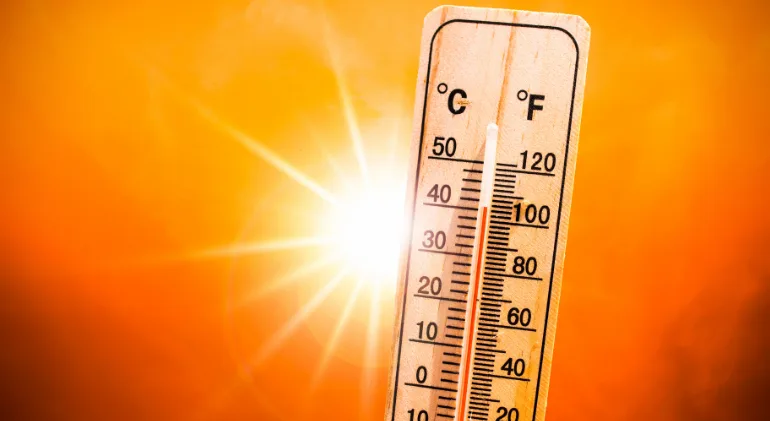
Western Europe experienced its hottest June-July period on record this year, with average temperatures reaching 21.62°C (70.92°F), according to the European climate service Copernicus.
The region has faced repeated heatwaves since May, worsening drought conditions and helping fuel major wildfires. The prolonged heat is also expected to have caused thousands of heat-related deaths.
Copernicus said the previous record for the June-July period was set in 2022.
The extreme heat in Europe is part of a wider rise in global temperatures.
So far, 2026 is the third-hottest year on record, behind 2024 and 2025. Scientists say the year could still end as the hottest ever recorded because of continued human-driven global warming and a strong El Niño weather pattern.
El Niño, which warms parts of the Pacific Ocean, can influence temperatures and weather patterns around the world.
The world`s oceans also reached a new July record last month. Average sea surface temperatures across areas outside the seasonal polar ice zones rose to 20.96°C (69.73°F), slightly above the previous July record of 20.89°C (69.60°F) set in 2023.
However, the global average surface air temperature in July was 16.90°C (62.42°F), making it the joint second-warmest July on record, alongside July 2024.
Samantha Burgess, strategic lead for climate at the European Centre for Medium-Range Weather Forecasts, said persistent high-pressure systems trapped heat over western Europe and made the drought worse.
As the soil dries, it loses its natural ability to cool the surface, allowing temperatures to rise more quickly, she said.
Burgess said the latest heatwave was another example of how climate change is making extreme heat more severe, with heat and drought increasingly making each other worse.




















-20260824112248.jpg)

-20260823124453.webp)