
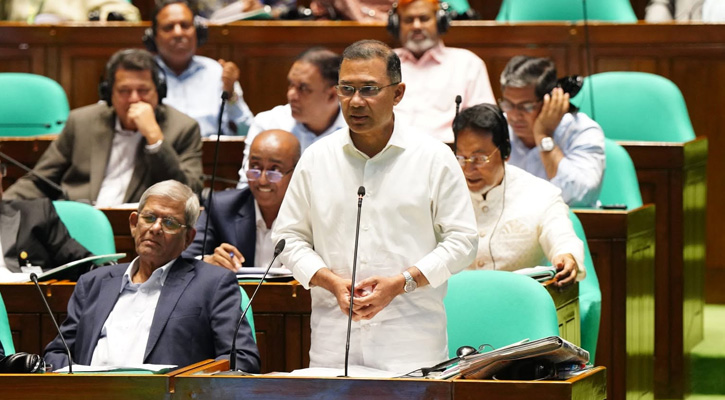
Prime Minister Tarique Rahman on Wednesday provided a detailed explanation of the widely discussed “I Have a Plan” initiative during the question-and-answer session on the ninth day of the second and first budget session of the 13th National Parliament.
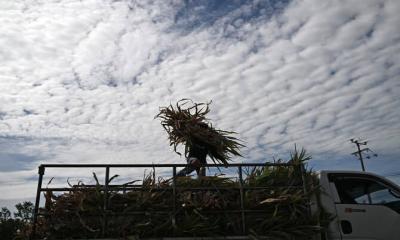
Responding to a written question from Sirajganj-1 lawmaker Md. Selim Reza, who asked about the measures to be implemented under the initiative to boost agricultural production and improve farmers’ livelihoods, the prime minister outlined the government’s vision for the agricultural sector.
He said the government’s primary goal is to build a self-reliant, climate-resilient, technology-driven, and farmer-centered modern agricultural system. Under this vision, production and marketing will become data-driven, marginal farmers will be empowered as entrepreneurs, and agriculture will emerge as one of the key drivers of national prosperity.
Highlighting ongoing government initiatives, the prime minister said the distribution of farmer cards began on April 14 this year to ensure farmers have unique identification and receive agricultural inputs, subsidies, incentives, irrigation support, and machinery on fair and accessible terms. The pilot phase is currently being implemented in 11 agricultural blocks across 11 upazilas in 10 districts under eight divisions. So far, 20,832 farmer cards have been distributed.
He also announced that agricultural loans of up to Tk10,000 in the crop, livestock, and fisheries sectors have been fully waived. For this purpose, Tk1,567.96 crore has been allocated in the 2025–26 fiscal year budget, benefiting approximately 1.317 million farmers.
The prime minister said the government has launched a nationwide initiative to excavate and re-excavate 20,000 kilometres of canals. The project is expected to reduce pressure on groundwater resources, alleviate waterlogging, improve irrigation facilities, and create rural employment opportunities.
He added that urea, DAP, TSP, and MOP fertilizers are being supplied to farmers at affordable prices, while the Bangladesh Agricultural Development Corporation (BADC) is ensuring the distribution of high-yielding and climate-resilient seeds.
According to the prime minister, special emphasis is being placed on developing high-yielding and stress-tolerant crop varieties, as well as promoting smart agriculture and precision farming. To ensure fair prices for farmers’ produce, the government is directly procuring rice and wheat and plans to establish “Farmers’ Markets” across the country.
He further said short-, medium-, and long-term plans are being formulated to expand the use of sensors, artificial intelligence (AI), the Internet of Things (IoT), and drone technology in agriculture.
Meanwhile, in response to a question from Tangail-6 lawmaker Md. Robiul Awal, the prime minister outlined the government’s plans to address the impacts of climate change.
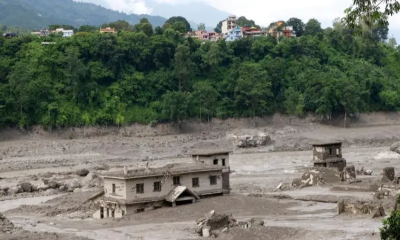
He said Bangladesh remains one of the world’s most disaster-prone countries due to its geographical location, high population density, extensive river network, and coastal characteristics. Climate change is intensifying disasters such as storm surges, floods, flash floods, river erosion, droughts, excessive rainfall, lightning strikes, heatwaves, and salinity intrusion, all of which are adversely affecting livelihoods, agriculture, infrastructure, the environment, and the economy.
The prime minister noted that tackling climate change has been given priority in the government’s election manifesto. To this end, a range of initiatives has been undertaken in the water resources sector, including the implementation of the Padma Barrage project, the Teesta Master Plan, riverbank protection measures, flood prevention programmes, and efforts to reduce soil salinity in agricultural lands.
He also highlighted several government measures aimed at mitigating the adverse effects of climate change. These include a programme to plant 250 million trees over the next five years and the implementation of research, innovation, training, and outreach activities through the Bangladesh Climate Change Trust.
As part of these efforts, natural rural reservoirs will be developed in coastal districts to harvest rainwater and ensure access to safe drinking water for local communities.


















-20260824112248.jpg)



-20260828064640.webp)