
The government is preparing a long-term economic strategy aimed at turning Bangladesh into a one-trillion-dollar economy by 2034 while ensuring that growth benefits reach all sections of society, according to a top adviser to the Prime Minister.
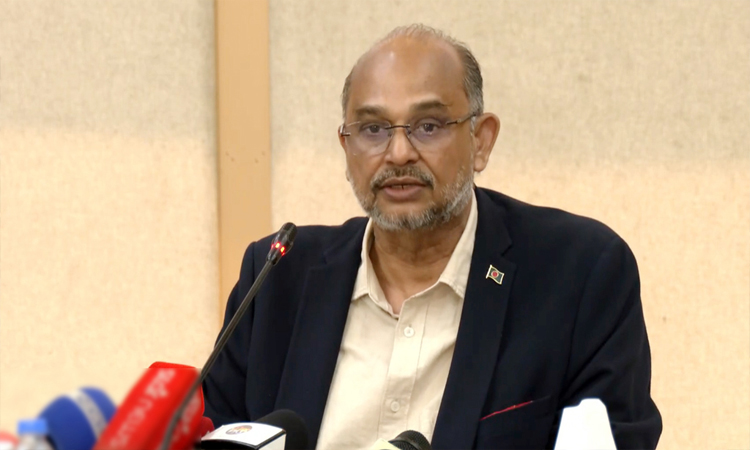
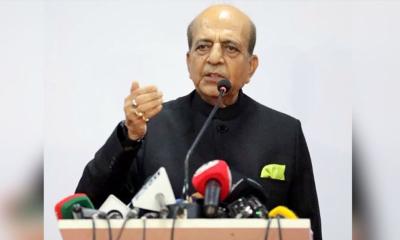
Prime Minister’s Adviser on Finance and Planning Dr. Rashed Al Mahmud Titumir shared the outlook while speaking at a roundtable discussion on the national budget for the fiscal year 2026–27 held in Dhaka on Saturday.
He said the government is working under a broader vision of inclusive development, often described as a “Bangladesh for all,” with a focus on reducing inequality alongside economic expansion.
The adviser highlighted ongoing plans for administrative reforms, simplification of bureaucratic procedures, and the creation of a more investment-friendly environment for both local and export-oriented industries.
He also said a restructuring package worth Tk 60,000 crore is being prepared to revive closed industrial units.
Alongside this, efforts are underway to strengthen agriculture through improved water management and to improve efficiency in key public sectors such as health, education, and grassroots service delivery.
The discussion was held at the ATM Shamsul Haque Auditorium of the CIRDAP International Conference Centre in Dhaka, organized by the online platform Chaarcha.com.
Several policy experts, business leaders and economists took part in the event.
They stressed the need for major reforms to address inflation, sluggish investment, employment challenges and global economic uncertainty.
Speakers called for modernizing tax administration, improving productivity in agriculture and industry, strengthening financial sector governance, and ensuring long-term policy stability to support sustainable growth.
From the private sector, Apex Footwear Managing Director Syed Nasim Manzur urged lowering the corporate tax rate from 27.5 percent to 20 percent, maintaining a stable tax structure for at least three years, and introducing digital and risk-based audit systems in tax management.
He also pointed to inefficiencies in cargo handling at airports and raised concerns that a significant share of healthcare costs in Bangladesh is still paid directly by citizens.
Agriculture-focused recommendations included increasing the sector’s budget allocation from 5 percent to 10 percent, expanding access to modern farming equipment, strengthening rural procurement networks, and improving cold storage facilities to reduce post-harvest losses.
The roundtable brought together policymakers, researchers and private sector representatives to discuss pathways for long-term economic stability and growth.








-20260824112248.jpg)







-20260824063249.webp)
-20260823124453.webp)