
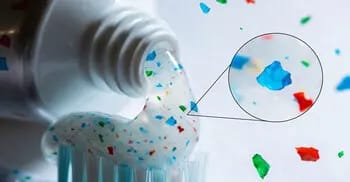
A new study has found that microplastics are present in many toothpaste brands sold in Bangladesh, raising fresh concerns about consumer health and the need for stricter product regulations.
The study, conducted by the Environment and Social Development Organization (ESDO), found microplastic particles in 26 out of 34 toothpaste samples collected from the local market.
However, eight toothpastes were found to be completely free of microplastics.
The year-long research was carried out between July 2025 and June 2026. Researchers collected 34 toothpaste products representing 19 local and international brands from supermarkets, retail shops and wholesale markets across the country.
The laboratory analysis was conducted at the Environmental Health and Ecotoxicology Laboratory under the Department of Environmental Sciences at Jahangirnagar University.
Up to 320 microplastic particles found
The study found between 20 and 320 microplastic particles in every 100 grams of toothpaste tested.
Mediplus Fluoride Gel recorded the highest level, with 320 particles per 100 grams. Closeup Red Hot and Closeup Menthol Fresh each contained 160 particles, while Kodomo Ultra Shield Formula had 140 particles.
Eight toothpastes showed no microplastics
Researchers found no microplastic particles in the following eight toothpaste products:
Zenfresh (Bangladesh)
Parachute Just for Baby (Mango) (Bangladesh)
Closeup Red-Hot Zinc Fresh Technology (Bangladesh)
Parodontax Expert Gum Care (India)
Sensodyne Fresh Gel (India)
Colgate MaxFresh (India)
Colgate Active Salt (India)
Kodomo Orange Toothpaste (Thailand)
Most locally made products contained microplastics
According to the study, 22 of the 25 locally produced toothpaste samples contained microplastics.
Among imported products, both samples from Vietnam tested positive.
One of the two samples from Thailand contained microplastics, while only one out of five toothpaste samples imported from India showed the presence of plastic particles.
Children`s toothpaste also affected
The research also examined toothpaste marketed for children.
Four out of six children`s toothpaste samples contained microplastics.
Only Parachute Just for Baby (Mango) and Kodomo Orange Toothpaste were found to be free of the particles.
No labeling on toothpaste packaging
ESDO also found that none of the toothpaste products tested mentioned the use of microplastics or synthetic polymers on their packaging or labels.
The organization said the lack of labeling makes it difficult for consumers to make informed choices and limits the ability of regulators to monitor such products effectively.
Alongside the laboratory tests, ESDO conducted a nationwide survey involving 2,760 people.
The survey found that nearly 42% of respondents had never heard of microplastics in toothpaste. More than 31% said they had only limited knowledge of the issue, while just 26.9% said they were aware of the potential risks.
ESDO said this is the first scientific study to examine microplastics in toothpaste sold in Bangladesh.
The organization noted that Bangladesh currently has no approved limit for microplastics in toothpaste, no standard testing guidelines, and no mandatory labeling policy.
It urged the government to introduce clear regulations and monitoring measures to better protect consumers.









-20260906063831.webp)