

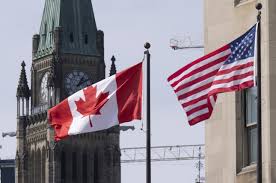
Canada has announced counter-tariffs of up to 50% on US goods, escalating a growing trade dispute with its biggest trading partner after negotiations between Ottawa and Washington broke down.
The new tariffs, ranging from 15% to 50%, will take effect on September 8, Finance Minister Francois-Philippe Champagne said Tuesday.
The measures will target products including steel, dairy goods, electronics, appliances, fish and industrial equipment.
US steel and aluminum products that already face a 25% Canadian tariff will see the rate rise to 50%. Other US products, including cheese, household appliances and some steel and aluminum derivatives, will face 25% duties, while selected electrical equipment and tools will be subject to 15%.
The affected products account for about 7.3% of Canada’s imports from the United States based on 2024 figures.
Ottawa has also announced a C$7.5 billion ($5.4 billion) support package for affected companies and workers.
“This is an unprecedented challenge imposed on Canada. But Canada will meet the moment,” Champagne said, urging Canadians to support domestic businesses.
Industry Minister Melanie Joly said the government would seek new trading partners and warned that Canada would respond if US tariffs on Canadian automobiles were raised to 50%.
The latest move follows US President Donald Trump’s decision to impose 50% tariffs on certain Canadian goods, affecting about $20 billion worth of Canadian exports to the United States.
Trump has also threatened to increase tariffs on Canadian automobiles to 50% from the current 25% for non-US content beginning in 2027.
The threats have triggered a sharp response from Canadian provincial leaders. Ontario Premier Doug Ford has threatened to impose a surcharge on electricity exports to the United States.
The dispute has also become increasingly personal.
Trump has repeatedly pushed the idea of Canada becoming the 51st US state and on Tuesday said he was considering calling Lake Ontario “Lake America”.
Economists have warned that further rounds of retaliatory tariffs could hurt businesses and consumers on both sides of the border.
Oxford Economics estimates that the latest US tariffs will raise the effective tariff rate on Canadian exports to the United States from 5.1% to 6.9%. Manufacturers in Quebec, New Brunswick and Ontario are expected to be among those most affected.
Canadian Prime Minister Mark Carney previously said US negotiators made last-minute demands that Ottawa considered unacceptable, including restrictions on Canada`s trade agreements with other countries.
Carney also said US officials had made threats involving the French language and Quebec’s culture.
Trump rejected that claim, saying he would “never interfere with Canadians speaking French” and accusing Carney of using the issue for political support.
The United States remains Canada`s largest trading partner, accounting for around 70% of Canadian exports. Canada is also the second-largest US trading partner in goods this year, behind Mexico.
Recent polling suggests many Canadians support Carney’s decision to walk away from the latest negotiations, although concerns remain about the economic impact of a prolonged trade conflict.






-20260822055951.webp)



-20260826082211.png)





-20260826073100.jpg)

-20260825123740.webp)








-20260824112248.jpg)


-20260823124453.webp)