

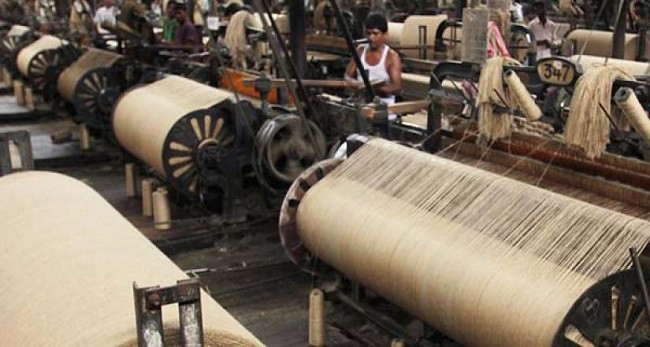
Production at 23 private jute mills in the Khulna region will stop from Sunday because of a serious shortage of raw jute.
Jute mill owners said heavy rainfall damaged jute farming in Shariatpur, Madaripur and Gopalganj, causing much lower production than expected. As a result, mills are not getting enough raw jute to continue normal operations.
To support local mills, the government banned jute exports from September 8. However, mill owners said the move has not helped ease the crisis.
According to the Jute Mill Owners Association, raw jute has become scarce and prices in local markets have increased unusually. Because of this situation, the association decided to suspend production at 23 mills in Khulna.
Millers said excessive rain during May and June badly affected jute cultivation in the southern region. Although the jute season officially started on July 1, the expected supply did not reach major markets in Daulatpur, Khulna and Narayanganj.
The problem became worse after India stopped jute exports to protect its own farmers. This decision affected Khulna-based exporters and added pressure to the local market.
Mill owners also accused some traders of illegally hoarding jute to take advantage of the shortage. Despite no export opportunities, jute prices rose sharply in markets such as Chuknagar, Kapilmuni, Terokhada, Jhaudanga, Tala, Kalaroa and Parulia. This made it even harder for mills to buy raw jute.
The mills set to close include Daulatpur Jute Mill, Khalishpur Jute Mill, Star Jute Mill, Sagar Jute, Jute Textile, Joy Jute, Habib Agro Jute, Ayan Jute, Jessore Jute, Nomani Jute, Ohab Jute, Faruk Jute, Web Jute, Super Jute, FR Jute, Quality Jute and Yasin Jute, among others.
In a letter to the government, the association said shortages of raw jute and sharp price increases caused by middlemen have created an artificial crisis and are pushing mills toward shutdown.
Bangladesh Jute Spinners Association Chairman Tapas Pramanik said hoarders are controlling the market and warned that prices may rise further due to manipulation by exporters.
Sarjit Sarkar, acting assistant director of the Jute Department in Khulna, said raw jute is currently selling at Tk 4,800 to Tk 5,000 per maund in southern markets. He added that prices dropped slightly by around Tk 200 per maund on Wednesday. He also said farmers usually do not keep jute stocks at home at this time of year.
Meanwhile, Mongla Custom House Assistant Commissioner Lopa Saha said in a letter dated January 20 that no jute exports have taken place from Mongla Port during the 2025–26 fiscal year.




-20260822055951.webp)






-20260824063249.webp)
-20260823124453.webp)


-20260823105444.webp)












-20260817061349.jpg)