
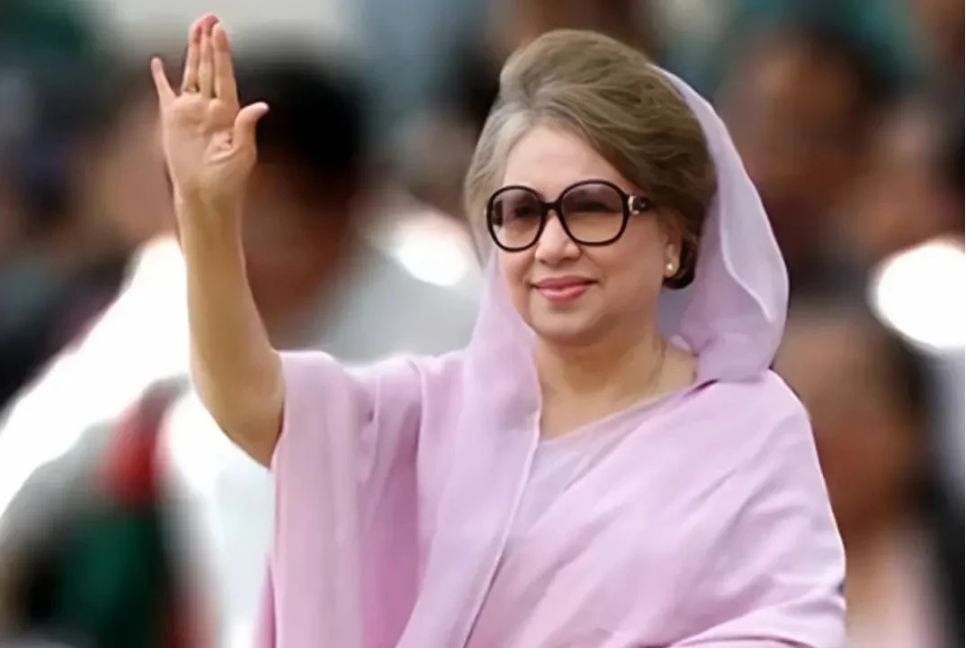
The death of former Prime Minister and BNP Chairperson Begum Khaleda Zia has drawn widespread global attention, with leading international news outlets highlighting her passing as the conclusion of a defining chapter in South Asian politics rather than merely the death of a political leader.
Agencies such as Reuters and the Associated Press were among the first to report her death, describing her as a “towering figure” whose decades-long political rivalry with Sheikh Hasina shaped Bangladesh’s political landscape.
The BBC and The Guardian emphasized her historic achievement as the country’s first female prime minister and her transformation from a “shy housewife” into a formidable democratic leader.
Al Jazeera in the Middle East noted her “life of power and resistance,” highlighting her leadership during the 1990 anti-autocracy movement and her later legal and health struggles.
Major international outlets continue to follow the story, recognizing Khaleda Zia’s passing as the end of an era that profoundly influenced modern Bangladesh.
New York Times described her as Bangladesh’s first female prime minister, whose decades-long rivalry with Sheikh Hasina defined the nation’s fate.
BBC reported she passed away at 80 after a prolonged illness, recalling her rise to power in the country’s first democratic election in 20 years.
Reuters noted her leadership beginning in 1991 and her bitter political rivalry with Sheikh Hasina. Her doctors cited advanced liver cirrhosis, arthritis, diabetes, and heart and chest problems.
Washington Post and AP highlighted her pivotal role in shaping the country’s politics for a generation, stressing the significance of her death for both Bangladesh’s political life and the BNP.
Al Jazeera and DW confirmed her passing at 6 a.m. local time in Dhaka, emphasizing her position as the first woman elected as prime minister of Bangladesh.
Bloomberg, Nikkei Asia, and The Independent reflected on her role in restoring democracy following years of military rule and noted her involvement in legal battles, including a Supreme Court acquittal in January 2025 that allowed her to remain politically active.
Khaleda Zia, who passed away at the age of 80 after a long illness, leaves behind a legacy as one of the two most influential political leaders in Bangladesh’s modern history, alongside Sheikh Hasina. Her leadership, struggles, and enduring rivalry with Hasina have become defining elements of Bangladesh’s political narrative.

-20260824063249.webp)
-20260823105444.webp)


-20260824112248.jpg)






-20260823124453.webp)