
Thousands of people gathered in South Korea over the weekend, calling for a rerun of recent local elections after ballot paper shortages disrupted voting in several areas and triggered widespread public anger.
The protests stretched late into the night in Seoul, where demonstrators demanded accountability from the National Election Commission (NEC) and questioned the fairness of this week’s vote.
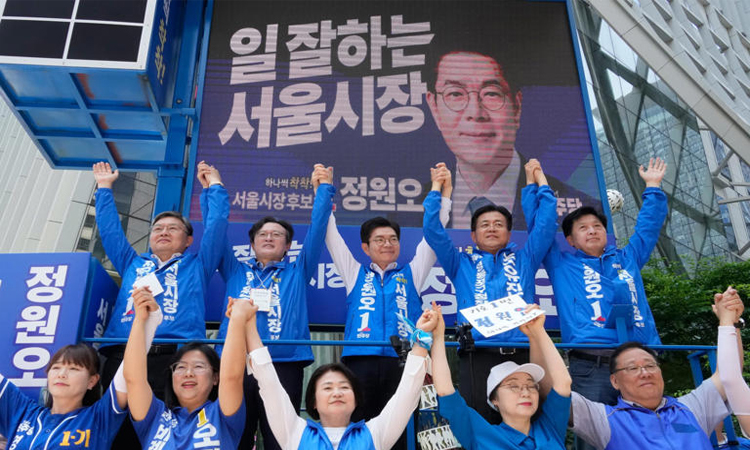
The controversy began during Wednesday’s nationwide local elections, the first major polls held since President Lee Jae Myung took office following the removal of former President Yoon Suk Yeol over his short-lived martial law declaration in 2024.
While the ruling Democratic Party secured victories in most mayoral and local council races, it failed to win control of key positions, including the Seoul mayoral office.
However, the election was overshadowed by reports of ballot paper shortages at around 50 polling stations across the country. The NEC later acknowledged that voter materials were insufficient in multiple locations, including several in the capital.
Public outrage intensified after NEC chief Rho Tae-ak stepped down on Friday, following criticism over the handling of the vote.
On Saturday night, an estimated 10,000 people gathered at the SK Olympic Handball Stadium in Seoul, where ballots were counted. By early Sunday morning, around 1,000 protesters were still present, waving national flags and chanting calls for a new election.
Many participants, particularly young people in their 20s and 30s, remained at the site through the night. Volunteers distributed water, coffee and snacks as demonstrators continued their vigil.
Protesters said the shortage had undermined confidence in the electoral process. Some argued that the issue amounted to a violation of basic democratic rights.
The NEC explained that ballots had been printed for only half of eligible voters due to a high volume of unused ballots in previous elections linked to increased early voting. It also said some voters may have left without casting their ballots.
However, many demonstrators rejected this explanation, calling for a full investigation and a fresh election.
The protests followed earlier disruptions, including a 35-hour blockade of a polling station in Seoul where demonstrators prevented the removal of ballot boxes before counting. Riot police later cleared the area, with clashes reported between officers and protesters.
Although the NEC chairperson resigned shortly after the incident, demonstrations continued at the stadium, reflecting ongoing public frustration.
The dispute has also been fueled by online claims and political commentary questioning the commission’s credibility, though these allegations remain unverified.
Analysts say the election body has long faced criticism over internal oversight and accountability mechanisms, and that the latest controversy has further damaged public trust.
Experts warn that the situation highlights the need for stronger safeguards to ensure transparency and confidence in South Korea’s electoral system.



-20260725074113.jpg)