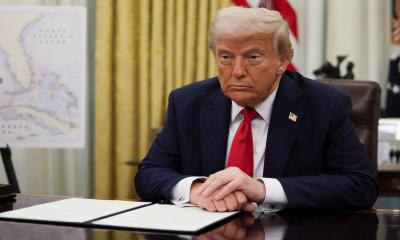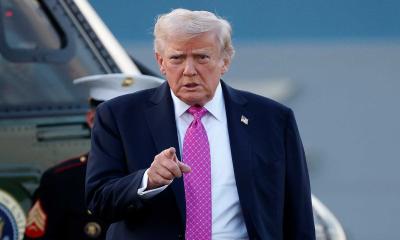

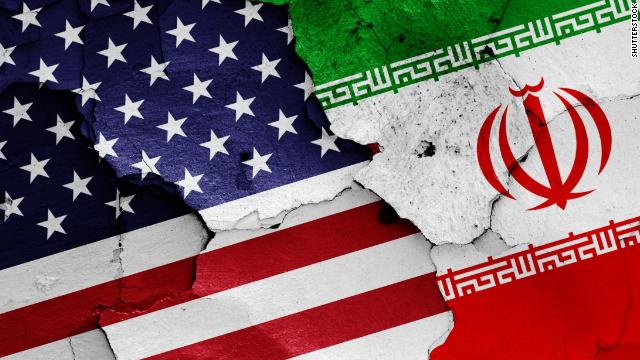
US President Donald Trump said Monday that American military operations in Iran would end soon, seeking to reassure global markets shaken by the ongoing conflict across the Middle East.
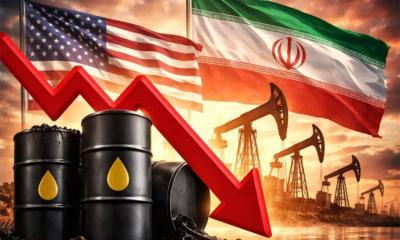
Financial markets had tumbled and oil prices surged earlier in the day as Iran, under newly appointed leader Mojtaba Khamenei, launched fresh missile strikes at Gulf states and signalled that the strategic Strait of Hormuz would likely remain closed.
However, Wall Street recovered into positive territory after Trump indicated the war would be short.
Markets in Tokyo and Seoul also opened stronger on Tuesday, while oil prices dropped by as much as five percent after earlier surging past $100 per barrel - their highest level since Russia’s 2022 invasion of Ukraine.
“It’s going to be ended soon, and if it starts up again they’ll be hit even harder,” Trump told a news conference in Florida, describing the campaign as a “short-term excursion.”
Iran’s Islamic Revolutionary Guard Corps (IRGC), however, responded that Tehran - not Washington would determine when the war ends.
Rising regional tensions
The conflict intensified as Iranian forces launched new waves of missile and drone attacks targeting Saudi Arabia, Bahrain, Qatar, the United Arab Emirates and Israel.
Another missile was also fired toward NATO member Turkey, the second such incident within five days, though the alliance’s air defence systems intercepted it before it reached its target.
The strikes came as Mojtaba Khamenei, son of the slain leader Ali Khamenei, assumed power after being appointed by Iran’s Assembly of Experts.
Strait of Hormuz crisis
Diplomatic efforts have focused on reopening the Strait of Hormuz, a critical global energy route through which about 20 percent of the world’s oil supply normally passes.
The waterway has been largely blocked to oil tankers since Iran shut it in retaliation for US-Israeli attacks.
French President Emmanuel Macron said allies were considering a “purely defensive” mission to escort commercial vessels once the most intense phase of the conflict ends.
Meanwhile, Iran’s foreign policy adviser Kamal Kharazi said Tehran believes economic pressure from the crisis could eventually push other countries to intervene to end the war.
Energy and shipping risks
Energy markets remain on edge as attacks continue around Gulf oil infrastructure.
Shipping experts say at least 10 vessels near the Strait of Hormuz have come under attack since the blockade began.
Global shipping company MSC announced it would halt some export shipments from the Gulf, while Bahrain’s state energy firm Bapco declared force majeure after strikes triggered a fire at the Al Ma’ameer oil facility.
Saudi Arabia also reported intercepting a drone attack targeting an eastern oil field near the Emirati border.
Analysts say the evolving conflict and threats to energy supply routes continue to pose serious risks to the global economy.

-20260824063249.webp)
-20260823105444.webp)



-20260824112248.jpg)




-20260823124453.webp)