

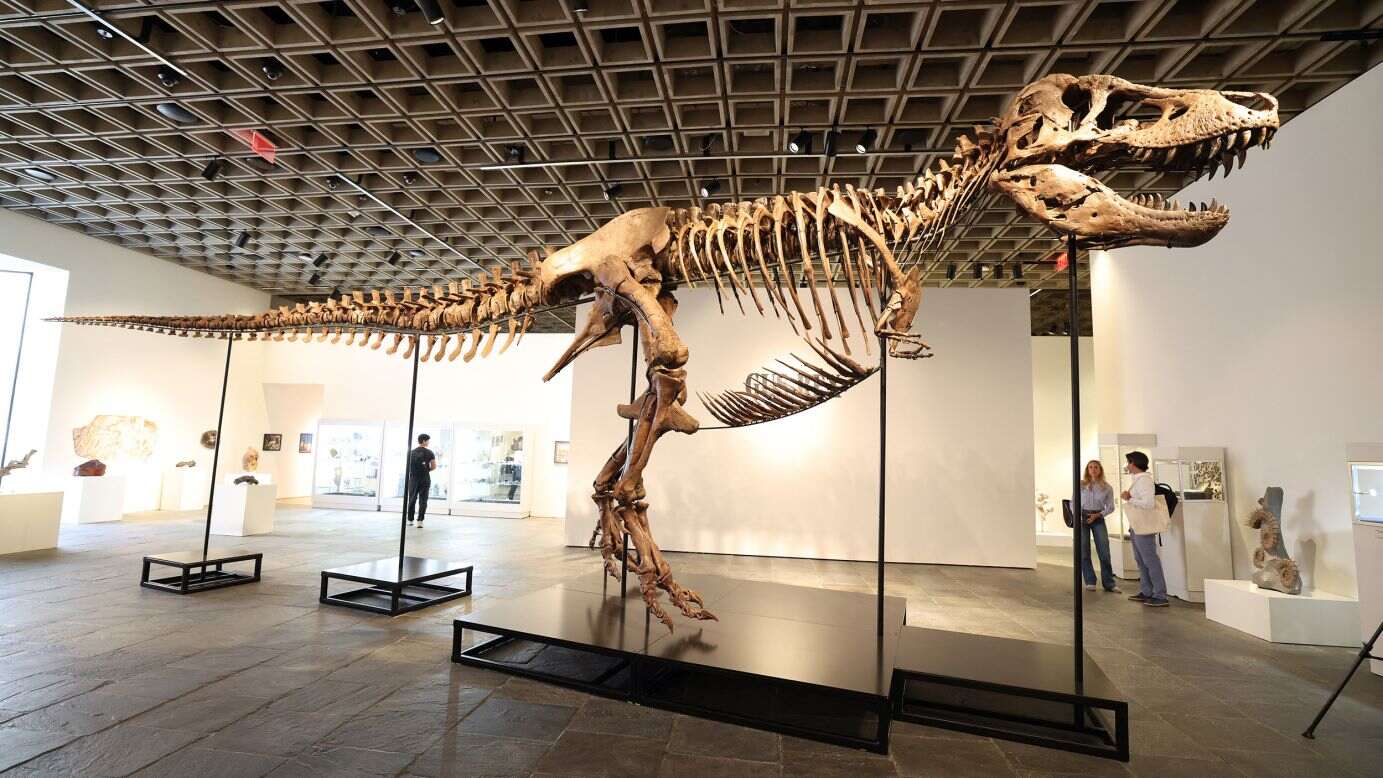
A remarkably preserved Tyrannosaurus rex fossil has become the most expensive dinosaur specimen ever sold, fetching £37.4 million ($50.1 million) at a Sotheby`s auction in New York.
Nicknamed Gus, the 67-million-year-old fossil stands more than four metres tall and is considered one of the most complete T. rex skeletons ever found, with more than 60 percent of its bones recovered.
Sotheby`s confirmed the sale on Tuesday but did not disclose the identity of the buyer.
The fossil was unearthed in 2021 on a remote ranch in South Dakota and underwent years of excavation, restoration and scientific preparation before going under the hammer.
Cassandra Hatton, Sotheby`s global head of science and natural history, described Gus as an extraordinary specimen, saying years of careful excavation, documentation and preservation contributed to its record-breaking value.
The sale surpassed the previous auction record held by the stegosaurus fossil Apex, sold in 2024, and made Gus the first dinosaur fossil to sell for more than $50 million.
The excavation was carried out over three summer seasons between 2021 and 2023, followed by another three years of laboratory work to clean, analyse and reconstruct the skeleton.
Scientists found healed rib fractures and bite marks on the skull, indicating the dinosaur survived serious injuries during its lifetime, possibly from battles with rivals or encounters while scavenging.
Palaeontologists say the record-setting sale highlights growing interest among wealthy collectors in rare fossils, although some researchers have expressed concern that important specimens could increasingly end up in private hands.
Despite the private purchase, Gus may still be displayed publicly in the future. The previous record-holder, Apex, was loaned by its owner to the American Museum of Natural History, raising hopes that Gus could also eventually be exhibited in a museum.






















-20260828064640.webp)







-20260828120358.webp)