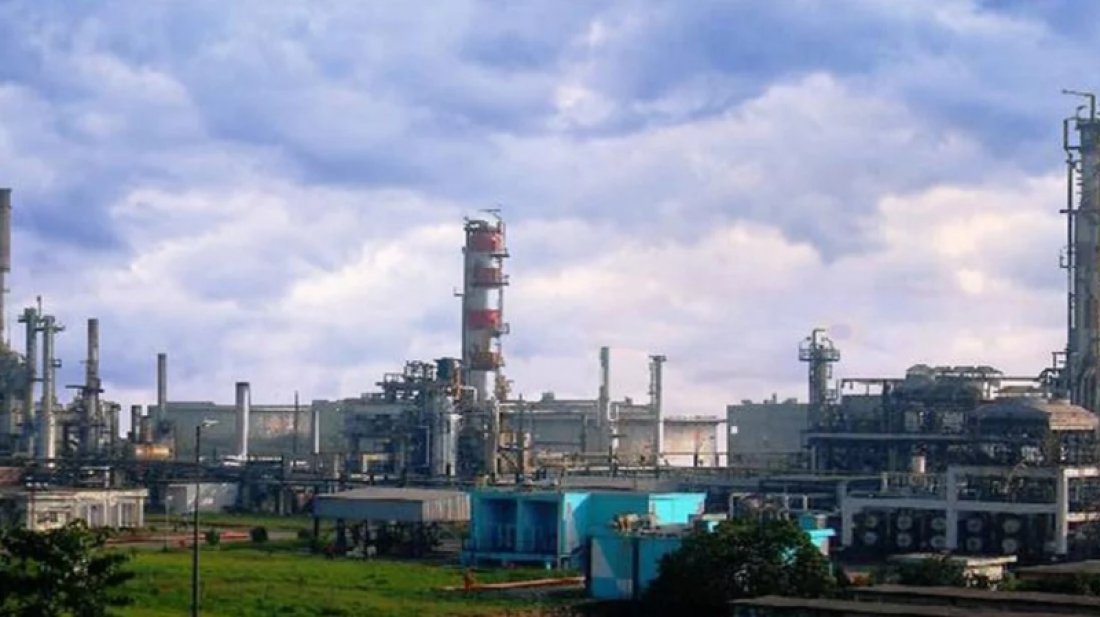
Bangladesh’s only state‑owned oil refinery, Eastern Refinery Limited (ERL), has been forced to shut down its refining operations due to a severe shortage of crude oil. Two officials of the refinery told The Banglatribune that the last refining activity took place Sunday afternoon.
The disruption in crude‑oil imports has lasted for about two months, triggered by instability following the conflict between Iran, Israel, and the United States.
No crude shipment has reached the country since 18 February.
The war in the Gulf blocked the Strait of Hormuz, causing two 100,000‑tonne crude cargoes—one from Saudi Arabia and another from the United Arab Emirates—to be cancelled.
As a result, Bangladesh has gone 54 days without any crude tankers arriving.
ERL used to refine roughly 4,500 tonnes of crude daily, but over the past few weeks, that had been reduced to between 3,500 and 3,800 tonnes as supplies dried up.
In the final phase, the refinery kept running by drawing about 5,000 tonnes of crude from the Single Point Mooring (SPM) pipeline off Maheshkhali in Cox’s Bazar and using deadstock—the residual crude settled at the bottom of storage tanks.
By Sunday afternoon, however, the layer of deadstock at the bottom of the tanks had thinned to below one metre, making it unsafe to use.
At that point, the refinery management suspended refining operations to prevent damage to pumps and equipment.
Despite the shutdown at ERL, Bangladesh Petroleum Corporation (BPC) data indicate that the country still holds sufficient stocks of refined fuels, and the Fuel Division has assured the public that there will be no immediate fuel‑supply crisis.
Bangladesh imports about 65–68 million tonnes of fuel oil annually, of which roughly 15 million tonnes of crude are processed at ERL. The remaining 45 million tonnes—diesel, petrol, LPG, kerosene, furnace oil, and other petroleum products—are imported in refined form from India, China, Malaysia, Singapore, and other countries.
Officials say that even though ERL’s operations are temporarily halted, there is currently no fear of an immediate nationwide fuel shortage, as the government has ramped up refined‑fuel imports, albeit at higher costs, to keep supplies stable.

















-20260530114036.webp)






-20260527062401.jpg)