
-20260412180017.jpg)
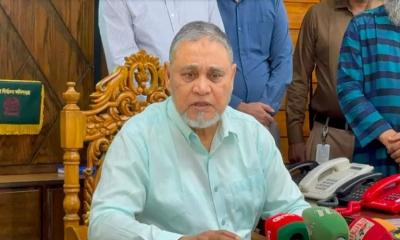
Opposition Leader and Jamaat-e-Islami Ameer Shafiqur Rahman yesterday blamed “political syndicates” for the ongoing fuel supply crisis, alongside the impact of the Middle East conflict centred on Iran.
He alleged that the ruling Bangladesh Nationalist Party has long been linked to major syndicates in the country, including in the energy sector.
He made the remarks as chief guest at a seminar titled “Impact of the global energy crisis on Bangladesh’s agriculture: ways forward” at the Krishibid Institution Bangladesh auditorium in the capital. The event was organised by the Agriculturist Forum of Bangladesh.
Describing the energy sector as being in “distress”, Shafiqur said that major syndicates continue to operate with the backing of the ruling party, a situation he claimed remains unchanged.
He added that statements by government leaders in parliament give the impression that the country is “floating on oil”, while in reality people are queuing for long hours without getting fuel. “Oil exists only in parliament, not in Bangladesh,” he remarked.
He urged the government to build buffer stocks to tackle the crisis and ensure transparency in managing demand. He recommended maintaining fuel reserves for at least 60 to 90 days, dismantling syndicates, and prioritising alternative energy sources, particularly solar power.
Expressing disappointment with parliamentary proceedings, he said that although some hope remains, parliament has yet to deliver anything significantly beneficial for the country. He added that lawmaking in the public interest should be the core of parliamentary democracy, but the current reality suggests otherwise.
Criticising the broader system, he said the entire society is running on “patchwork and cosmetic fixes”. He also claimed that in sectors such as banking, profits are being shown on paper despite a lack of actual liquidity.
He stressed the need to build a merit-based rather than politicised society.
The Jamaat ameer also raised concerns about the situation at the Krishibid Institution, alleging attempts at a “coup-like takeover” similar to developments at the Bangladesh Cricket Board. He questioned why forceful leadership control would occur in a professional body.
Highlighting the importance of agriculture, he warned that the survival of the country depends on the survival of its agricultural sector.
He said the fuel shortage is disrupting irrigation, posing a serious threat to food security. A collapse in agriculture, he noted, would lead to a national crisis that cannot be offset by foreign assistance.
He also warned that if syndicate-driven control, authoritarian practices, and coercion continue, they will be resisted strongly.
A paper presented at the seminar, chaired by ATM Mahbub-e-Elahi, noted that about 18 percent of the country’s total energy is used in agriculture, and the ongoing crisis could severely disrupt Boro cultivation.



-20260819113854.webp)