
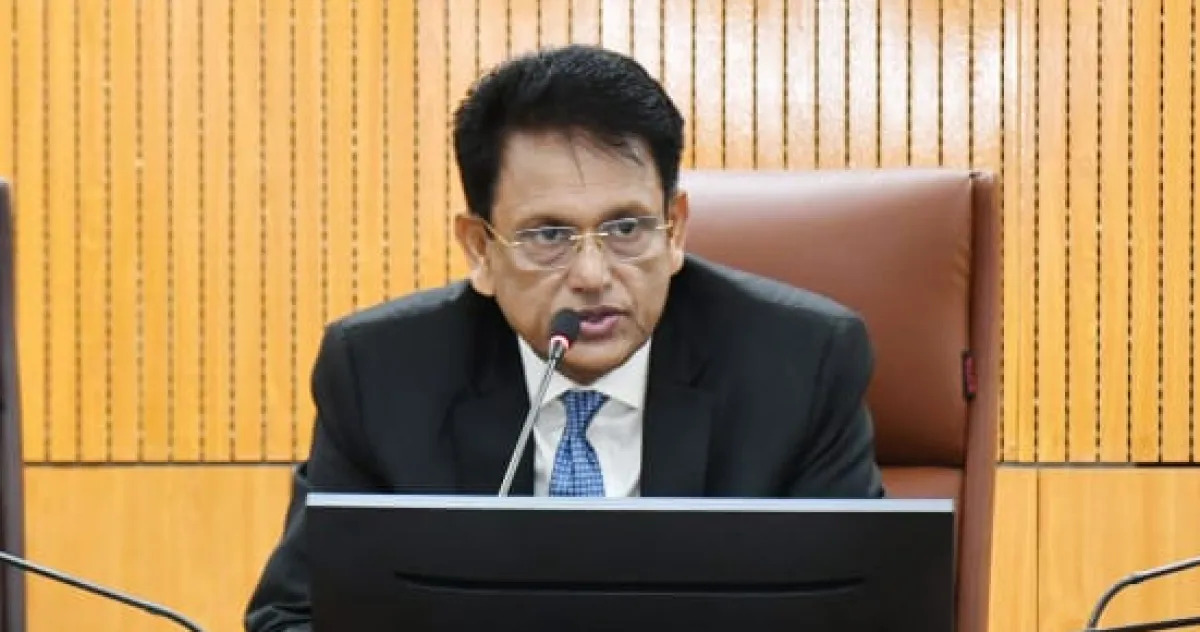
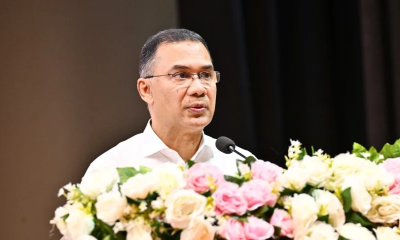
Education Minister ANM Ehsanul Hoque Milon on Sunday said the government is reviewing the current primary school admission process and will decide on the system for 2027 after consulting relevant stakeholders.
He made the remarks in Parliament while responding to a supplementary question from Cumilla MP Abul Hasnat Abdullah.
The minister said admission pressure is mainly concentrated in urban areas, particularly in Dhaka, while rural schools generally do not face the same level of competition due to lower student numbers.
“The lottery system was introduced earlier to address the admission pressure in city schools, but I personally do not think it is a very logical system,” Milon told the House.
He said the government plans to organise seminars and discussions with stakeholders, including parents, to build public opinion before finalising the admission system for January 2027.
During the discussion, Hasnat Abdullah raised concerns about the shift from merit-based admission to the lottery system at the primary level.
He argued that the change has weakened the quality of feeder institutions, which could ultimately affect the standard of students entering universities.
The lawmaker also questioned whether an inclusive education system could be achieved while maintaining three parallel streams in the country — Bangla medium, English medium and madrasa education — which he said largely reflect economic disparities among families.
In response, the education minister acknowledged that Bangladesh currently has multiple education streams and said integrating them is a complex process.
He said the government has already formed a committee to bring English-medium schools under a regulatory framework aligned with national policies.
Milon also said efforts have begun to reform the Ebtedayee (primary madrasa) system and explore ways to incorporate the Qawmi education stream within a broader national education framework.
“We are taking initiatives to gradually coordinate these different streams so that the education system becomes more unified in the future,” he added.









-20260904064352.webp)








-20260828120358.webp)