
Japan`s renewed push toward nuclear energy is bringing an old problem back into focus: what to do with the growing volume of radioactive waste generated by the country`s reactors.
The issue has gained urgency following the restart of the No. 6 reactor at the Kashiwazaki-Kariwa nuclear power plant, the world`s largest nuclear facility. While the move is seen as an important step in strengthening Japan`s energy supply, industry officials warn that storage space for spent nuclear fuel is running out.
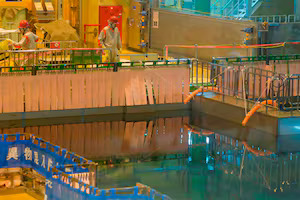
According to data from Japan`s electric power industry, spent fuel pools at several nuclear plants are approaching capacity and could become full within the next few years if additional storage or disposal solutions are not secured.
Officials say the challenge could eventually affect power generation plans, particularly as the government seeks to increase nuclear energy`s role in meeting rising electricity demand.
Japan has spent decades searching for a permanent disposal site for high-level radioactive waste but has yet to identify a final location. The government is now considering the remote Pacific island of Minamitorishima as a possible candidate, a proposal that has already sparked debate among experts, local communities and environmental groups.
The island, located about 2,000 kilometres from Tokyo, is uninhabited and under government control. Supporters argue that its geological conditions may make it suitable for long-term storage, while critics question the environmental and social implications of the plan.
The discussion comes as Japan continues to recover from the legacy of the 2011 Fukushima nuclear disaster, which led to the shutdown of the country`s reactor fleet and prompted a major reassessment of energy policy.
Although some reactors have returned to operation since then, many remain offline. The Kashiwazaki-Kariwa plant itself remained closed for years following the Fukushima crisis.
At the heart of Japan`s strategy is a fuel recycling programme designed to recover usable materials from spent nuclear fuel. The government argues that recycling can reduce waste volumes and strengthen energy security.
However, the programme has faced repeated delays and technical challenges. Critics argue that reprocessing alone will not solve the country`s long-term waste problem and that direct disposal options should also be considered.
Government figures show that spent fuel storage facilities across Japan are already nearing capacity, with thousands of tonnes of radioactive material currently being stored at nuclear plants nationwide.
Experts say finding a permanent disposal site will be a complex process requiring decades of scientific evaluation, public consultation and long-term monitoring.
Meanwhile, Japan`s energy planners face a difficult balancing act. The government views nuclear power as an important tool for reducing carbon emissions and strengthening energy security, but each reactor brought back online also adds to the growing stockpile of radioactive waste.
Industry operators are exploring temporary solutions, including expanded storage facilities and the transfer of spent fuel between sites. However, many observers argue that a long-term disposal strategy must be finalized before Japan significantly expands its nuclear power programme.
With reactor restarts continuing and electricity demand rising, the question of nuclear waste management is becoming one of the most important challenges facing Japan`s energy future.