
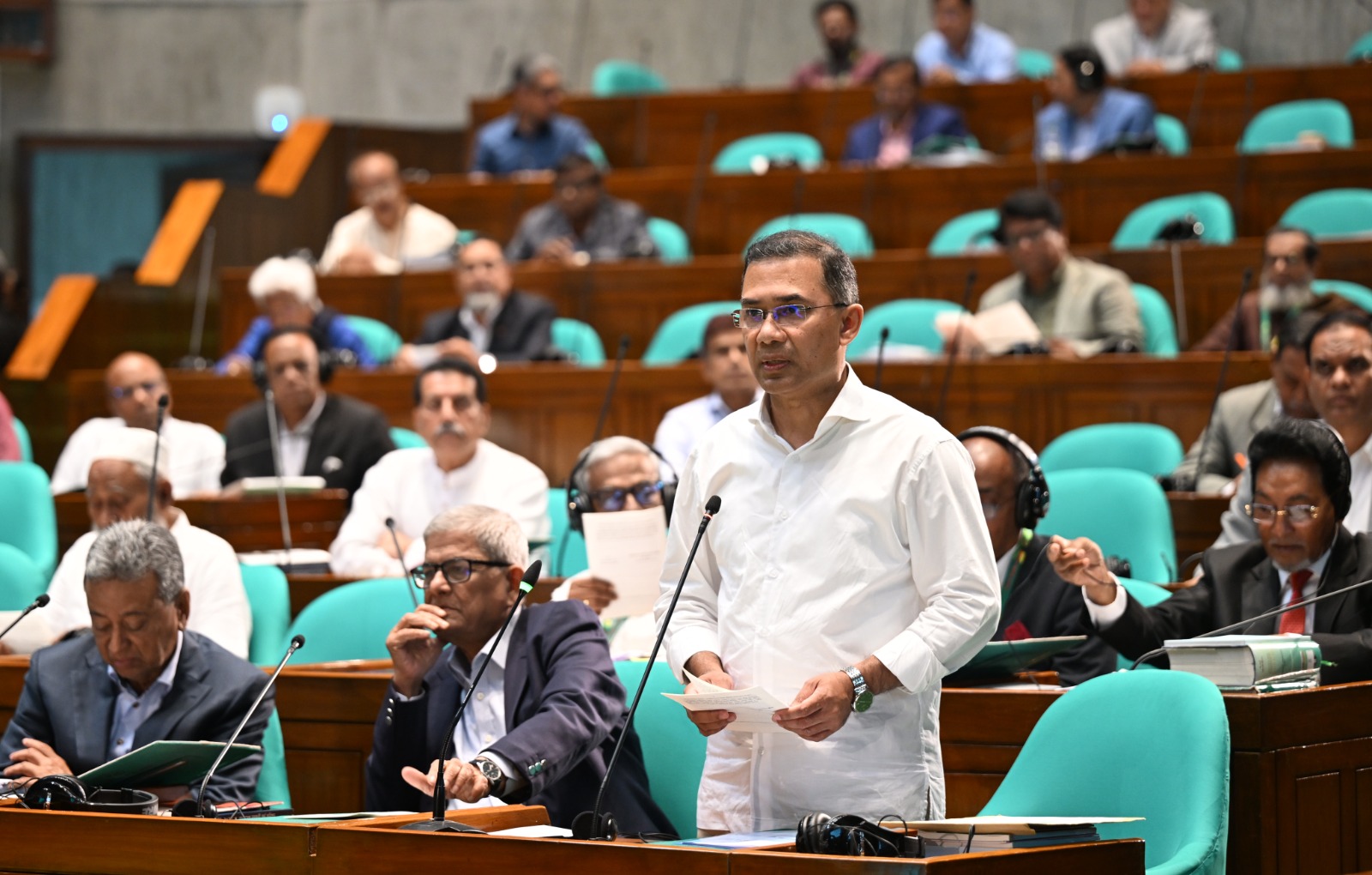
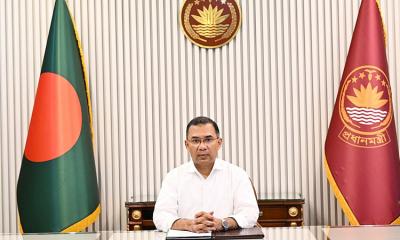
Prime Minister Tarique Rahman on Wednesday said that the government has undertaken short, medium, and long-term initiatives after identifying 43 priority areas, aiming to gradually raise education sector allocation to 5 percent of the GDP.
“The government has announced in its election manifesto a plan to gradually increase the allocation for the education sector to 5 percent of the GDP. In line with this goal, 43 priority areas in the education sector have been identified and short, medium and long-term plans are being implemented,” he said.
He made the statement while responding to a tabled question from treasury bench lawmaker Selim Reza (Sirajganj-1) during the question-answer session in Parliament.
Highlighting the government’s vision, the Prime Minister said education is considered the best investment for the nation, with a firm commitment to building a quality, life-oriented, and inclusive system.
He noted that primary education has been given special priority in the election manifesto.
“As part of this, free school uniforms will be distributed among 200,000 students in government primary schools in the current fiscal year, with plans to expand it gradually to all upazilas,” he said.
Additionally, the government plans to introduce school feeding or mid-day meal programmes in phases across all upazilas to address the nutritional needs of primary students.
The parliamentary session began at around 11:00 am under the chairmanship of Speaker Hafiz Uddin Ahmed, following a 30-minute delay due to a microphone issue. Four questions were listed for the Prime Minister during the session.
In response to a query on preparing the younger generation with globally competitive skills, the Prime Minister said multimedia classrooms will be established in primary, secondary, and equivalent institutions.
To reduce the digital divide, free Wi-Fi will be introduced in 1,500 educational institutions, including schools, colleges, and universities. A unique digital identity, or “Edu-ID,” will also be provided to each student and teacher.
The Prime Minister further stated that technical education will be made compulsory alongside general education at the secondary level. Plans are also underway to establish technical schools and colleges in every upazila and polytechnic institutes in each district in phases.
He added that initiatives have been taken to modernise technical and madrasa education, including the introduction of free Wi-Fi in 2,336 technical institutions and 8,232 madrasa institutions within the next 180 days.
Smart classrooms will also be introduced in madrasa institutions, along with teacher training and the inclusion of technical courses.
Moreover, under the ICT Division, the Bangladesh Computer Council will provide training to students within the next six months in areas such as artificial intelligence, cyber security, mobile app development, Flutter-based design, Python programming, and AI-driven digital marketing.













-20260828064640.webp)