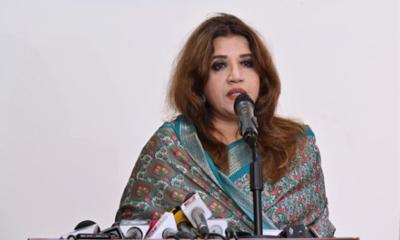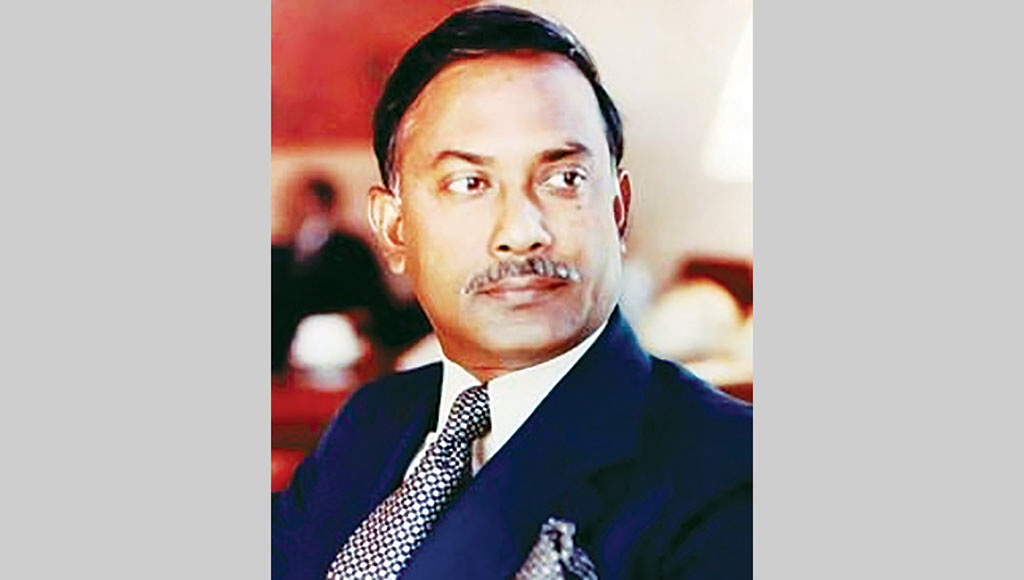
LGRD and Cooperatives Minister and BNP Secretary General Mirza Fakhrul Islam Alamgir said the proclamation of independence by Shaheed President Ziaur Rahman inspired the masses to join the Liberation War of 1971.
“It gave us the courage to make the country independent through a long struggle and movement,” he said in an exclusive interview with BSS at his Secretariat office today.
Analyzing the significance of the declaration of independence by Ziaur Rahman, Fakhrul said, “This declaration of independence by Ziaur Rahman undoubtedly gave our entire nation the opportunity for a new territory, a new flag, and a new identity. We were able to achieve these through a war.”
“But even before that, for a long time, the people of this country had been struggling for autonomy. This declaration of independence by Shaheed President Ziaur Rahman inspired us to join the Liberation War of ’71. It gave us the courage to make the country independent through a long struggle.
He said after a long nine-month war, the nation achieved its ultimate victory in the Liberation War over Pakistani occupation forces.
“March 25 was a black night for us. On this day, the Pakistani forces perpetrated genocide on unarmed people of Bangladesh, killing countless innocent people. Later, on March 26, through the declaration of independence by Shaheed President Ziaur Rahman, the nation entered a new chapter of the Liberation War,” he said.
“Achieving the country’s independence through a huge struggle like this is undoubtedly a matter of great pride for this nation. For this reason, Shaheed President Ziaur Rahman is so relevant, exemplary, and memorable to us,” he said.
Expressing the feeling of hearing the declaration of independence of Ziaur Rahman with his own ears, Mirza Fakhrul said, “This feeling is so deep that it is difficult to express. At that time we were youth folks. We were ready for war, for struggle. The people of the country were also eager to jump into struggle with the passion of independence. Yet there was no direction, no guidance. At that very time, as soon as we heard the declaration of independence of Shaheed President Ziaur Rahman, our blood began to surge inside, it felt like we had found the direction of liberation.”
Mentioning that a blood-soaked struggle can never fail, the BNP Secretary General said, “The struggle of the people of a country for their rights never fails. We also felt that the Liberation War, as a people’s war, would never fail. Due to my active participation in this war, my family members thought I might not return alive. But I never felt that way. We were always very optimistic; it might take a long time, but Bangladesh would certainly become independent.”
Recalling the Liberation War, he said, “When the Liberation War started, I had just passed my master’s. My age might have been 25 or 26. I was in Thakurgaon then. After the crackdown, in Thakurgaon, the BDR commander officer at that time was a West Pakistani. The rest were mostly Bengali. Right after the night of the 25th, BDR imposed a curfew there. At that time, lakhs of people came out onto the streets. From the morning of the 25th, firing started. Three to four people were martyred in the firing. Then everyone went underground. We were then involved with the pre-Liberation War movement in the then Thakurgaon sub-division. We also went underground and took shelter in a house. Then we came to know that resistance had started in different districts of the country.”
“On the night of the 26th, we first heard the declaration of Ziaur Rahman. On the 27th, we heard the full declaration. Hearing this, we all came out onto the streets. We also started calling people to come out. Then we went to the SDPO there and said, open your arms cupboard. After opening it, we took some arms from there. Later, some parts of BDR revolted. They also took shelter with us in the same place. With their cooperation, we broke the bridge on the highway coming from Sayedpur to Thakurgaon, so that the Pakistani forces could not come from Sayedpur. Towards dawn, a part of the Bengal Regiment arrived. The officer of the then Bengal Regiment was named Captain Naser. Later, during the time of Major Ziaur Rahman, he also became the NSI chief,” said Fakhrul.
Mirza Fakhrul said, under the leadership of the then Dinajpur BDR commander Major Nazrul, a commando was formed.
“They took some defensive measures with various weapons. At that time, we established a ‘control room’ in Thakurgaon town. Alongside, arrangements were made for arms training for the Liberation War. On April 14, the Pakistani army organized from Sayedpur and started counter shelling. They attacked the whole of Dinajpur with mortar shells. When shelling increased heavily, our headquarters was destroyed. The BDR and Bengal Regiment members then left Thakurgaon and moved to the Panchagarh border. The place was very close to the Indian border. Everyone started taking shelter there. But we did not take shelter there. We crossed the Nagar River through the Thukrabari border beside us and went to India. My entire family also went to India. That is, all of us who were preparing for the Liberation War went to that side,” he said.
The BNP Secretary General said, “After going there, we took shelter in a house. We took shelter in a sub-division town named Islampur in West Dinajpur. There we stayed in a bicycle store named Dilip’s Cycle Store. We got acquainted with this Dilip during the war. He gave us a place to stay. At night, we used to stay with great difficulty in a small space behind the almirah of his bicycle store. The place was so small that somehow one could just place the head. Seven of us stayed there including my uncle Bablu Mirza.”
He said, “We then tried whether we could arrange a youth camp for training freedom fighters with assistance from India. Later, the West Bengal government shifted us to Islampur High School. Subsequently, we stayed there. We created organizing youth camps at the border. At one time, when we contacted the Chief Minister of Bihar, he arranged some more youth training for us. He also provided necessary clothing for us.”
“After that, several youth camps were created. In the border area, one camp was named Thukrabari Youth Camp. Training started at Thukrabari Youth Camp under the leadership of Subhash, the camp commander of the Border Security Force of India (BSF). Then gradually, when it became more organized, the central government of India became involved. They arranged training in different places. Especially later, they arranged training in the Dehradun area. We recruited our boys there. We ourselves coordinated; we mainly played the role of organizers. After that, the Bangladesh Liberation Force was formed. They started recruitment. In this way, we worked,” said the minister.
The BNP Secretary General said, “March 26 was essentially the beginning, and through the declaration of independence by Shaheed President Ziaur Rahman, we joined the Liberation War. People of the whole country joined the Liberation War. Yet, in the last 15 years, the declaration of independence by Ziaur Rahman has been denied. But that is the reality. Not only me—everyone who was there at that time knows this. True history can never be erased.”
Mirza Fakhrul said, “Sheikh Mujib was captured by Pakistanis and at his own decision he went to their custody. The leaders of the Awami League went to India at the very beginning. They could not provide any leadership at the initial stage. Even after going to India, they started organizing work of the Liberation War much later. At that time, those of us who were active in leftist politics faced another major problem. The Awami League did not want to recognize us. Through Indian intelligence agencies, many of our people were arrested. Even I had to report to the police station many times. For this reason, we formed a front under the leadership of Maulana Abdul Hamid Khan Bhashani with leftist organizations. There, Akbar Khan Rono, Rashed Khan Menon, Kazi Zafar Ahmed—all started working for the Liberation War under that front.”
Highlighting the challenging aspects during the war, Mirza Fakhrul said, “We faced the biggest challenges when, because we were involved in leftist politics, the Indian authorities and Awami League leadership began to consider us as enemies. They tried everything so that we could not get involved in the Liberation War. They were waiting to trap us in any way. Avoiding these issues and continuing work was extremely challenging. Because throughout the Liberation War period, the Awami League never accepted us. Various obstacles and uncertainties kept chasing us. Yet, there was always the dream of victory in our eyes—that we would win. At first there might have been some disappointment, but gradually those faded away.”





-20260429103203.jpg)