
Bangladesh Investment Development Authority (BIDA) Executive Chairman Chowdhury Ashik Mahmud Bin Harun today emphasized that stronger coordination among the government, businesses, and key stakeholders is essential to address Bangladesh’s deep-rooted structural economic challenges and ensure sustainable investment-led growth.
“Bangladesh’s long-term economic progress would depend not only on policy formulation but more importantly on the state’s ability to execute reforms effectively and create a business-friendly environment capable of generating large-scale employment,” he said.
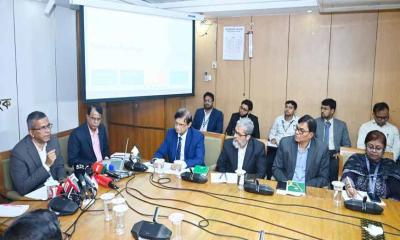
The BIDA chief made the remarks while speaking as the chief guest at an event at the “Trade Policy, Industrial Protection, Investment, and Consumer Welfare” at the PRI Conference Room in the city.
The Policy Research Institute of Bangladesh (PRI) through its Center for Trade and Protection Policy Research (CTPPR) hosted the high-level event to address the critical intersections of trade policy, industrial protection, and their impact on investment and consumer welfare.
The event brought together key government officials, industry leaders, and policy experts to discuss the future of Bangladesh`s economic landscape.
The session was chaired by Dr. Zaidi Sattar, Chairman of PRI, who also delivered the keynote presentation, laying the groundwork for discussions on how protectionist policies influence domestic industry and consumer choice.
A. H. M. Shafiquzzaman, President of the Consumers Association of Bangladesh (CAB) and former Secretary, highlighted the necessity of balancing industrial growth with consumer welfare.
Md. Farid Uddin, a former member of the National Board of Revenue (NBR), offered insights into the fiscal aspects of trade and VAT, while Dr. M. Masrur Reaz, Chairman and Founder of Policy Exchange Bangladesh, contributed analysis on the broader economic policy framework.
In his speech, Ashik Chowdhury said that employment generation and sustainable economic growth must remain at the center of Bangladesh’s development strategy.
He stressed that all stakeholders already broadly understand the country’s economic priorities, but implementation gaps continue to obstruct meaningful progress.
Ashik Chowdhury noted that while policymakers, business leaders, civil society, and senior government officials generally agree on the reforms required for economic advancement, Bangladesh still struggles to ensure efficient execution at the operational level.
He said foreign investment remains important for technology transfer, productivity enhancement, and strengthening Bangladesh’s capital account, while domestic investment continues to serve as the foundation of the country’s industrial growth.
According to him, local investment will remain the “lion’s share” of Bangladesh’s economy, consistent with trends in most developed economies.
The BIDA chief further noted that the government’s economic strategy is increasingly centered on sustainable growth and employment generation, priorities reflected in both fiscal planning and broader national development goals.
“Employment generation is the key issue that must drive the economy forward,” he said, emphasizing the importance of translating strategic understanding into effective grassroots-level implementation.
Calling for integrated policymaking, he referred to the Ministry of International Trade and Industry (MITI) model followed in several developed economies, where trade, industrialization, and investment policies operate in close coordination.
However, he cautioned against blindly replicating foreign systems, arguing that Bangladesh requires locally tailored solutions that reflect its own economic realities and administrative structure.
“We have unique challenges and a unique setting,” he said.
Ashik Chowdhury also revealed that BIDA has submitted a series of logic-based deregulation proposals to the National Board of Revenue (NBR) aimed at improving the country’s investment climate.
The proposals include 46 deregulation recommendations across multiple sectors and 19 additional recommendations from investment promotion agencies.
He stressed the need for transparent taxation systems and uniform protection mechanisms across industries to establish a predictable and fair business environment.
Concluding his remarks, the BIDA executive chairman reiterated that sustained engagement between the government, private sector, investors, and other stakeholders will be critical to overcoming structural economic obstacles and ensuring long-term industrialization, investment expansion, and employment generation across Bangladesh.

















-20260530114036.webp)








-20260527062401.jpg)