Following effective steps taken by the government of Bangladesh, Malaysia has agreed to reopen its labor market for Bangladeshi workers and reduce migration costs.
A fruitful bilateral meeting on labor migration was held here today in this regard between the governments of Bangladesh and Malaysia where fruitful discussions took place on reopening the labor market and lowering costs, said a press release today.
Both the sides agreed to accelerate the process of reopening Malaysia`s labor market for Bangladeshi workers based on sector-specific demand and to ensure a fair, ethical and transparent recruitment system.
Bangladesh`s Minister for Labour and Employment and Expatriates` Welfare Ariful Haque Chowdhury along with Prime Minister`s Adviser Mahdi Amin went to Malaysia on Wednesday to discuss the labor market issues.
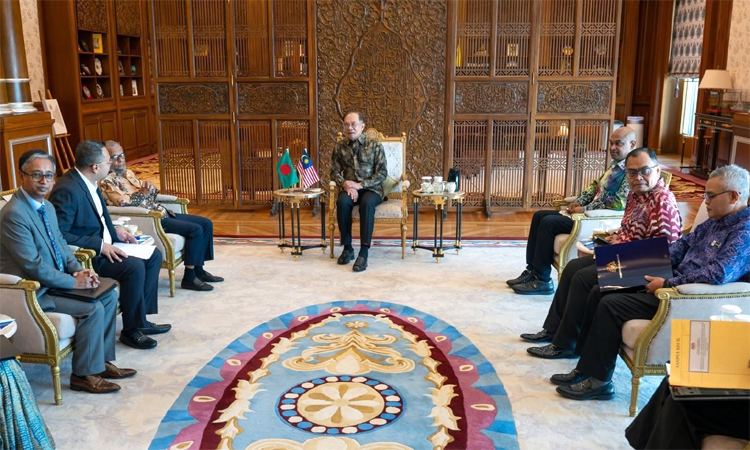
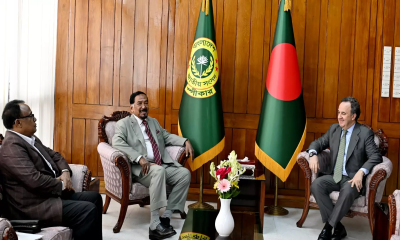
Minister Ariful Haque Chowdhury met Malaysian Prime Minister Anwar Ibrahim at his office in Putrajaya. Adviser Mahdi Amin and the High Commissioner were also present. At the meeting, Prime Minister Ibrahim congratulated Bangladesh`s Prime Minister Tarique Rahman on his election and invited him to visit Malaysia at a convenient time.
According to the press release, Prime Minister Ibrahim praised Bangladesh`s long struggle for democracy and its continued progress. Both the sides held detailed discussions on labor relations and reaffirmed their commitment to preventing worker exploitation by ensuring a transparent, accountable and effective recruitment system. They also discussed ways to enhance bilateral trade and investment, expressing mutual interest in expanding economic engagement.
The two sides further discussed opportunities to deepen people-to-people ties through academic exchanges, institutional collaboration and cooperation in the education sector. Both the parties expressed satisfaction with the positive trajectory of bilateral relations and reaffirmed their commitment to strengthening cooperation across various sectors.
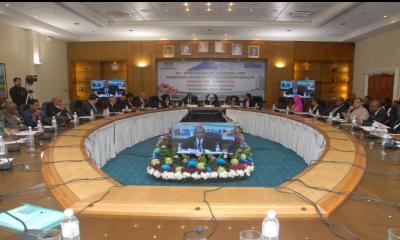
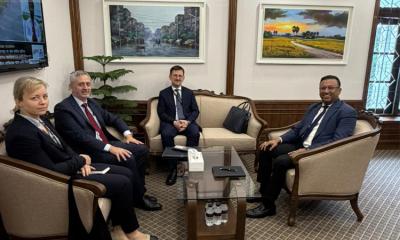
Earlier, a bilateral meeting on labor migration was held in Putrajaya in a cordial and constructive atmosphere. The Malaysian delegation was led by Human Resources Minister Datuk Seri Ramanan Ramakrishnan while the Bangladeshi delegation was led by Minister Asiful Haque Chowdhury, accompanied by Adviser Mahdi Amin.
In a joint statement following the meeting, both countries reaffirmed their long-standing and mutually beneficial partnership in labor migration and expressed commitment to strengthening cooperation through a transparent, inclusive and practical framework. This framework aims to address the existing recruitment challenges while ensuring safe, orderly and regular migration.
Both the sides agreed to accelerate the reopening of Malaysia`s labor market for Bangladeshi workers based on sectoral demand and to ensure a fair and transparent recruitment process by addressing structural barriers to reduce intermediary involvement and migration costs, engaging credible and qualified recruitment agencies and expediting the deployment of stranded workers.
The joint statement also noted Malaysia`s plan to introduce a technology-driven, AI-based recruitment system applicable to all source countries. The initiative aims to minimize intermediaries, reduce migration costs and ensure that employers bear the full cost of recruitment, in line with International Labour Organization (ILO) guidelines under the principle that "the employer pays," ultimately resulting in zero cost for the workers.
Bangladesh expressed full support and readiness to cooperate in implementing such a digital platform as a global initiative involving all labor-sending countries.
The statement further noted that both sides discussed concerns regarding ongoing legal cases related to human trafficking in labor recruitment. Malaysia emphasized the need to address any baseless or malicious activities that could harm its international reputation, while Bangladesh reaffirmed its commitment to the rule of law, due process, accountability and timely justice.
Both the sides also exchanged views on addressing challenges faced by irregular workers and improving alignment between labor supply and market demand through skills development, training, certification and information exchange.








-20260602073210.webp)
-20260602071952.jpg)






-20260527062401.jpg)