
A powerful earthquake that struck southwestern Japan has killed at least 13 people, caused widespread destruction across Kumamoto Prefecture and triggered a massive rescue operation as emergency crews continued searching damaged buildings for survivors on Wednesday.
The 7.1-magnitude earthquake hit Kumamoto on Kyushu island on Tuesday afternoon, flattening homes, sparking fires, damaging roads and bridges, and leaving tens of thousands of households without electricity.
Authorities warned that the casualty toll could rise as search and rescue operations continued.
Prime Minister Sanae Takaichi said the disaster had caused extensive damage across the affected region.
"Extensive damage has been confirmed, including casualties, collapsed buildings, fires and damage to roads," she said while confirming the deaths.
Government spokesman Minoru Kihara said seven people were seriously injured, while more than 9,000 residents had been evacuated to 506 shelters across three areas of Kyushu.
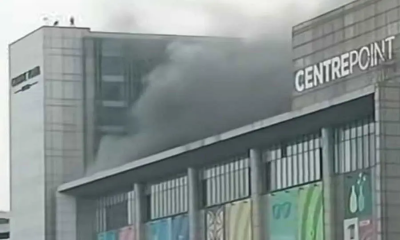
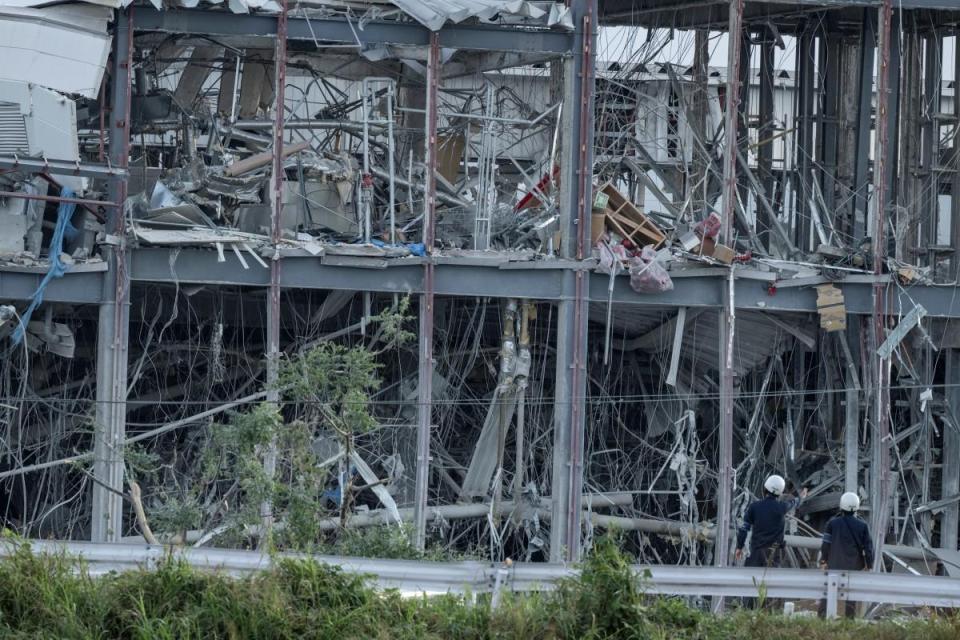
One of the worst-hit locations was a shopping mall in the town of Kashima, where two women were killed after an apparent gas explosion ripped through the building about 30 minutes after the earthquake.
The mall`s operator, Aeon, said the explosion occurred after customers and employees had already evacuated.
Rescue teams pulled eight people from the wreckage, five of whom were injured. Police later said the number of people believed to be trapped inside was lower than initially feared.
Elsewhere, officials said nine workers remained unaccounted for at a Nippon Paper Industries factory in Yatsushiro after part of a towering smokestack collapsed onto the facility.
The earthquake also caused widespread disruption to infrastructure.
Around 36,880 homes and other facilities were still without electricity on Wednesday morning, while damaged roads and bridges hampered rescue efforts.
High-speed Shinkansen train services remained suspended, and a cargo train derailed during the quake.
Historic landmarks were also affected. Parts of the centuries-old Kumamoto Castle collapsed, while Kumamoto Airport temporarily suspended operations before reopening later on Tuesday.
The Japanese military deployed 3,600 personnel and 20 aircraft to assist with rescue operations and assess the scale of the damage.
Residents described the earthquake as the strongest they had ever experienced.
The tremor registered the highest level on Japan`s seven-point shindo seismic intensity scale, indicating shaking so severe that people are unable to remain standing.
"It was the strongest quake I ever experienced," Kanzo Matsumoto, a 73-year-old operator of a luxury hot spring inn in Yatsushiro, told AFP.
Another resident, recruitment agent Chiharu Hara, said panic spread through her office as the building shook violently.
"The office swayed violently side to side. I was afraid it would collapse. Everyone panicked," she said.
The Japan Meteorological Agency measured the earthquake at magnitude 7.1. The US Geological Survey recorded the tremor at magnitude 6.8 and a depth of 10 kilometres.
Japan, which sits along the Pacific "Ring of Fire," is one of the world`s most earthquake-prone countries.
The latest disaster has revived memories of the deadly 2016 Kumamoto earthquakes, which killed hundreds, as well as the devastating 2011 earthquake and tsunami that left around 18,500 people dead or missing and triggered the Fukushima nuclear disaster.
Source: AFP





-20260906063831.webp)