
A powerful 5.3-magnitude earthquake has struck Tibet, with tremors also felt in several parts of Nepal, according to the European-Mediterranean Seismological Centre (EMSC). The fresh earthquake has raised concerns over the disaster situation in the region, coming just days after devastating floods caused widespread damage across areas along the Nepal-Tibet border, reports Al Jazeera.
Citing the EMSC, the report said the earthquake occurred at a depth of 35 kilometres below the Earth’s surface. However, India’s National Centre for Seismology (NCS) measured the quake at magnitude 5.0. No deaths, injuries or significant damage were immediately reported following the earthquake.
The US Geological Survey (USGS) said Tibet was also hit by a 5.1-magnitude earthquake last Thursday. According to a Reuters report, that quake occurred at a depth of 10 kilometres.
Meanwhile, Nepal’s disaster management authorities said the death toll from the devastating floods on August 26 has risen to 1,357, while 5,326 people remain missing. Chinese state media, on the other hand, reported that 43 people had died in floods and related disasters in Tibet, with another 519 still missing. This brings the combined death toll in Nepal and Tibet to 1,400, while the number of missing people stands at 5,845.
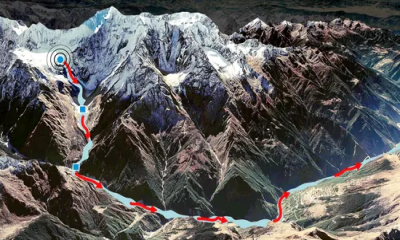
Nepalese authorities are working to verify the number of missing people by compiling information from various parts of the country. Rescue operations in Nepal have entered their 14th day after landslides and glacial debris near the China-Nepal border destroyed roads, bridges and homes.
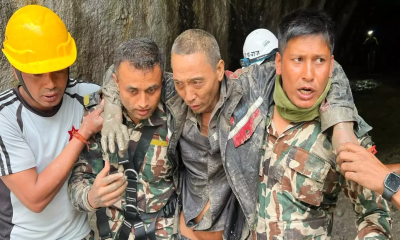
Hundreds of hydropower plant workers are also among those missing. Two Nepalese nationals trapped deep inside a tunnel were rescued on Friday, while a Chinese national was rescued on Saturday. The rescues have raised hopes that more survivors could still be found in the rubble and other hard-to-reach areas.
However, the exact cause of the glacial collapse remains unknown. Experts say the risk of such disasters is increasing as climate change accelerates the melting of glaciers around the world.
The cause of the recent glacial collapse in the Tibet-Nepal border region has also yet to be established. Scientists have long warned that climate change is causing glaciers to melt rapidly in different parts of the world. As a result, the risk of sudden glacial lake outbursts, landslides and flash floods is increasing in mountainous regions.
The risks are also growing across the Himalayan region. Recent floods, landslides and a series of earthquakes have renewed concerns about the region’s capacity to cope with increasingly frequent and complex natural disasters.




-20260906063831.webp)