


Election Commissioner Abdur Rahmanel Masud on Thursday said the Election Commission (EC) cannot take direct action against Satkhira-4 lawmaker Gazi Nazrul Islam solely based on a letter from Jamaat-e-Islami following his expulsion from the party.
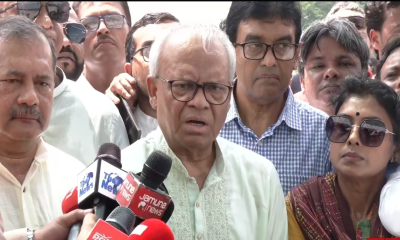
Speaking to reporters at Nirbachan Bhaban in Agargaon, Dhaka, Masud said the question of whether an MP automatically loses parliamentary membership after being expelled from a political party remains a contentious constitutional issue.
"I don`t think there is any scope to take direct action based on a letter alone," he said.
His remarks came a day after Jamaat-e-Islami expelled Gazi Nazrul Islam, citing what it described as "moral lapses" after a video circulated on social media allegedly showing the MP in an intimate situation with a young woman.
Masud said that if the EC receives a formal letter from Jamaat regarding the matter, it will examine the contents before deciding whether any action falls within its jurisdiction.
He explained that if a lawmaker resigns from Parliament, the issue does not come before the Election Commission. However, if Parliament refers a dispute over an MP`s qualification under Article 66 of the Constitution, the EC would investigate the matter, including taking evidence and hearing witnesses before reaching a decision.
The commissioner also noted that if an MP resigns from the political party under which they were elected, the matter could fall within the Commission`s jurisdiction.
Addressing questions about allegations of moral turpitude, Masud said the Election Commission has no authority to initiate proceedings on its own over such accusations.
He said moral turpitude becomes a constitutional ground for disqualification only if a person has been convicted of a criminal offence involving moral turpitude and sentenced to at least two years in prison.
"Otherwise, there is no scope for the Election Commission to take suo motu cognisance of the matter," he added.
Under Article 70 of the Constitution, a member of Parliament elected with the nomination of a political party must vacate the seat if they resign from that party or vote against it in Parliament.
Article 66 of the Constitution also provides grounds for disqualification from Parliament. It states that a person convicted of a criminal offence involving moral turpitude and sentenced to imprisonment for not less than two years is disqualified from contesting or holding parliamentary office unless five years have passed since their release from prison.






-20260823124453.webp)

-20260823105444.webp)























-20260817061349.jpg)